In one sentence
I live in harmony with the Tao, the Way of nature: I act without forcing, stay simple, and let softness overcome hardness.
How someone from Taoism might sum up what they believe. Our summary, not a quotation.
Key thinkers
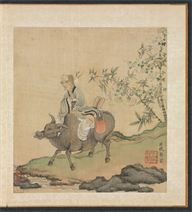 Laozitraditionally 6th century BC · Tao Te Ching
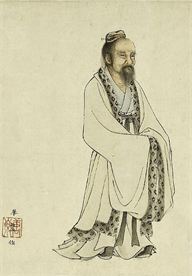 Zhuangzi4th century BC · Zhuangzi (by Zhuangzi and later writers)
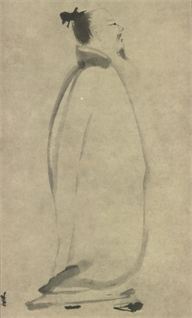 Li Bai701–762 · Quiet Night Thought
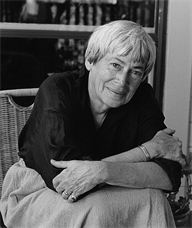 Ursula K. Le Guin1929–2018 · The Dispossessed
Where it leans
A whole worldview, about both. Positions are our estimates; philosophers argue about where many schools belong.
Most unusual position
90%On subjective or objective, it leans further toward subjective than 90% of the 135 schools on the map.
Middle of all schools on the map: 79 · This school: 22 (0 = Subjective, 100 = Objective)
Most typical position
Spirit or matterOn spirit or matter, it sits close to the middle of the schools on the map.
Middle of all schools on the map: 39 · This school: 39 (0 = Spirit, 100 = Matter)
Where it comes from
What came before Taoism and led into it, and what grew out of it. Only links that historians agree on.
Came before it
- The Yijing, or Book of Changes (early 1st millennium BC)
Grew out of it
- Zhuangzi (4th century BC)
- The Way of the Celestial Masters, religious Daoism (2nd century AD)
- Wang Bi and Guo Xiang, Neo-Daoism (3rd century AD)
- Zen Buddhism (Chan, from about the 6th century AD)
One thing to practise
A real practice from Taoism, to try this week. Described in our words.
Fasting of the mind
Sit still and stop chasing thoughts. First listen to the sounds around you, then let go of judging them, and simply stay open and empty, letting things come to you.
From: Zhuangzi, chapter 4 (In the World of Men), the advice Confucius gives Yan Hui
Its strongest argument
The best case Taoism makes against people who see the world very differently, in two sentences. People whose furthest school this is see it on their result.
Water is the softest thing there is, yet over time it wears away stone, and the stiff tree snaps in the storm while the bending grass survives, so forcing things often defeats itself. So if you meet every problem by pushing harder and controlling more, the Taoist would say you are turning yourself into the stiff tree.
The argument in our own words, not a quotation.
Where it sits
On the maps
Each map puts two scales side by side. Each small square is a school, at its exact spot; its name shows where there is room. For the others, point at the square, or tap it once on a phone. The first, Reality & truth, puts spirit or matter across and subjective or objective up and down. Click a school, or tap it again, to open it.
Swipe sideways to see the whole chart.
Thinkers in this school
Pictured thinkers nearest this spot on the map
Neighbours on the map
The six schools closest to this one.
- SkepticismWe cannot know things for certain, so we should doubt claims to knowledge.
- Social ConstructionismMuch of what we take as natural, like categories and norms, is built by society and could have been different.
- HermeneuticsUnderstanding is always interpretation, shaped by the history and point of view the interpreter brings.
- Philosophy of DialogueJewish-German thinkers, above all Buber and Rosenzweig, who hold that a person becomes a self only by truly meeting another, the 'I and Thou', and through that meeting, God.
- PostmodernismSuspicion of grand stories and universal truths; knowledge is local, plural and shaped by language and power.
- AnimismAnimals, plants, places and objects have spirits or souls of their own.
And you, where do you stand?
Take the quiz and see your match with Taoism and the other 134 schools.
Take the quiz