In one sentence
I see spirits or souls of their own in animals, plants, places and objects.
How someone from Animism might sum up what they believe. Our summary, not a quotation.
Key thinkers
 Black Elk1863–1950 · Black Elk Speaks (by John G. Neihardt, from Black Elk's account)
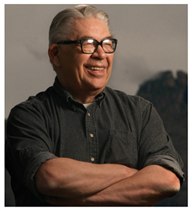 Vine Deloria Jr.1933–2005 · God Is Red
 Robin Wall Kimmererborn 1953 · Braiding Sweetgrass
Where it leans
About what is real and how we know. Positions are our estimates; philosophers argue about where many schools belong.
Most unusual position
81%On facts (subjective or objective), it leans further toward subjective than 81% of the 135 schools on the map.
Middle of all schools on the map: 79 · This school: 35 (0 = subjective, 100 = objective)
Most typical position
Spirit or matterOn spirit or matter, it is nearest to the other schools on the map, though still not in the middle.
Middle of all schools on the map: 39 · This school: 23 (0 = Spirit, 100 = Matter)
Where it comes from
What came before Animism and led into it, and what grew out of it. Only links that historians agree on.
Came before it
- Indigenous and folk religions worldwide (from prehistory)
- Thales of Miletus (6th century BC)
- Edward Burnett Tylor, Primitive Culture (1871), who named it
Grew out of it
- A. Irving Hallowell, on Ojibwa ways of seeing the world (1960)
- Graham Harvey and the new animism (2005)
- Philippe Descola, Beyond Nature and Culture (2005)
One thing to practise
A real practice from Animism, to try this week. Described in our words.
Ask before you take
Before you take something from nature, a flower, a fruit or even firewood, stop and ask permission, take only what you need, use it well and give something back, even if only thanks or care for the place.
From: The Honorable Harvest, Indigenous guidelines described by the Potawatomi botanist Robin Wall Kimmerer in Braiding Sweetgrass (2013)
Its strongest argument
The best case Animism makes against people who see the world very differently, in two sentences. People whose furthest school this is see it on their result.
Animals plainly act for their own ends, plants turn towards the light and defend themselves, and peoples who have lived closely with one landscape for generations treat its rivers, animals and forests as beings to keep relations with, not as mere stuff. So if you see nature as dead material, animists ask whether you learned that by looking, or by not looking.
The argument in our own words, not a quotation.
Where it sits
On the maps
Each map puts two scales side by side. Each small square is a school, at its exact spot; its name shows where there is room. For the others, point at the square, or tap it once on a phone. The first, Reality & truth, puts spirit or matter across and subjective or objective up and down. Click a school, or tap it again, to open it.
Swipe sideways to see the whole chart.
Thinkers in this school
Pictured thinkers nearest this spot on the map
Neighbours on the map
The six schools closest to this one.
- Philosophy of DialogueJewish-German thinkers, above all Buber and Rosenzweig, who hold that a person becomes a self only by truly meeting another, the 'I and Thou', and through that meeting, God.
- RomanticismFeeling, imagination and nature reveal truths that cold reason misses.
- InstrumentalismScientific theories are useful tools for predicting, not literal descriptions of hidden reality.
- Kyoto SchoolJapanese philosophers who joined Zen Buddhism with Western philosophy around the idea of "absolute nothingness".
- Christian ExistentialismKierkegaard's line: each person must face God alone, and faith is a passionate leap rather than a proof.
- HermeneuticsUnderstanding is always interpretation, shaped by the history and point of view the interpreter brings.
And you, where do you stand?
Take the quiz and see your match with Animism and the other 134 schools.
Take the quiz