In one sentence
Like Kierkegaard, I must face God alone, and my faith is a passionate leap, not a proof.
How someone from Christian Existentialism might sum up what they believe. Our summary, not a quotation.
Key thinkers
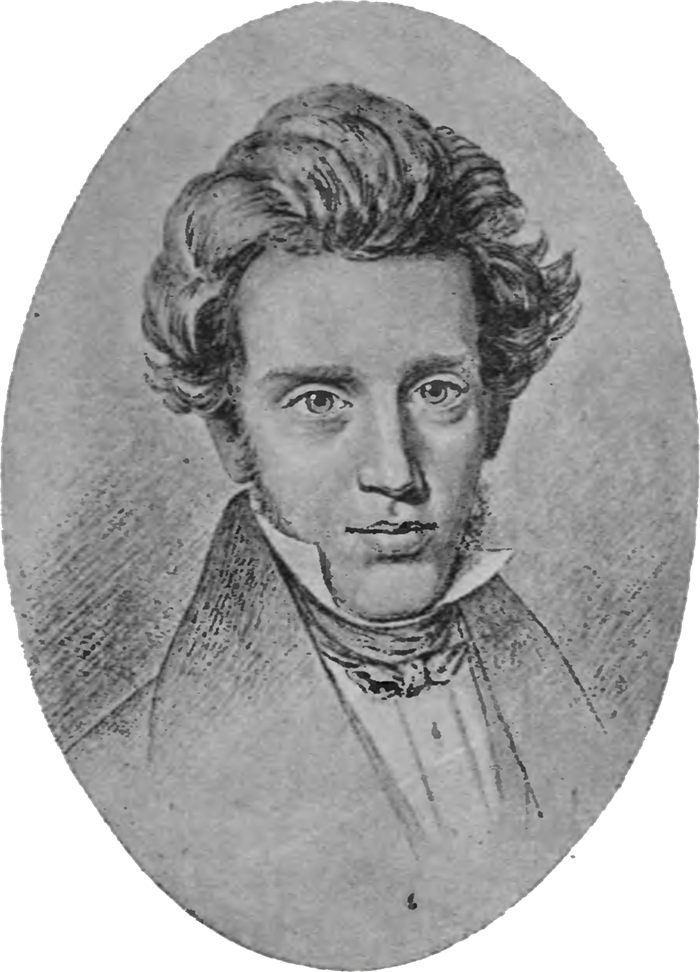
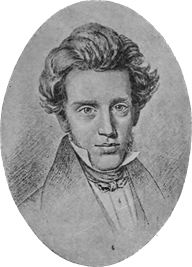 Søren Kierkegaard1813–1855 · Fear and Trembling
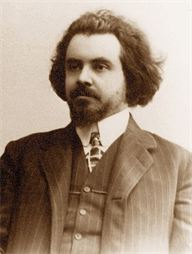 Nikolai Berdyaev1874–1948 · Slavery and Freedom
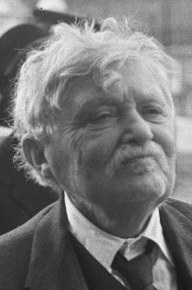 Gabriel Marcel1889–1973 · The Mystery of Being
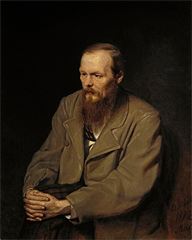 Fyodor Dostoevsky1821–1881 · The Brothers Karamazov
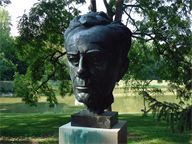 Paul Tillich1886–1965 · The Courage to Be
Where it leans
A whole worldview, about both. Positions are our estimates; philosophers argue about where many schools belong.
Most unusual position
81%On subjective or objective, it leans further toward subjective than 81% of the 135 schools on the map.
Middle of all schools on the map: 79 · This school: 35 (0 = Subjective, 100 = Objective)
Most typical position
Spirit or matterOn spirit or matter, it is nearest to the other schools on the map, though still not in the middle.
Middle of all schools on the map: 39 · This school: 15 (0 = Spirit, 100 = Matter)
Where it comes from
What came before Christian Existentialism and led into it, and what grew out of it. Only links that historians agree on.
Came before it
- Augustine (4th to 5th century)
- Martin Luther (16th century)
- Blaise Pascal (17th century)
- G. W. F. Hegel (19th century), the system Kierkegaard rebelled against
Grew out of it
- Karl Barth (from 1919)
- Nikolai Berdyaev (20th century)
- Gabriel Marcel (20th century)
- Paul Tillich (20th century)
One thing to practise
A real practice from Christian Existentialism, to try this week. Described in our words.
Will one thing
At the end of the day, ask yourself honestly what you actually lived for today. Kierkegaard's test: did you will the good for its own sake, or for a reward, out of fear of punishment, or to be seen doing it?
From: Søren Kierkegaard, Purity of Heart Is to Will One Thing (1847)
Its strongest argument
The best case Christian Existentialism makes against people who see the world very differently, in two sentences. People whose furthest school this is see it on their result.
You can gather every fact and reason about life, but no amount of objective information tells you what to stake your life on; at some point you have to commit. So if you are waiting for proof before deciding what you live for, Kierkegaard says you are already deciding, by default, to let your life pass undecided.
The argument in our own words, not a quotation.
Where it sits
On the maps
Each map puts two scales side by side. Each small square is a school, at its exact spot; its name shows where there is room. For the others, point at the square, or tap it once on a phone. The first, Reality & truth, puts spirit or matter across and subjective or objective up and down. Click a school, or tap it again, to open it.
Swipe sideways to see the whole chart.
Thinkers in this school
Pictured thinkers nearest this spot on the map
Neighbours on the map
The six schools closest to this one.
- RomanticismFeeling, imagination and nature reveal truths that cold reason misses.
- AnimismAnimals, plants, places and objects have spirits or souls of their own.
- Kyoto SchoolJapanese philosophers who joined Zen Buddhism with Western philosophy around the idea of "absolute nothingness".
- Philosophy of DialogueJewish-German thinkers, above all Buber and Rosenzweig, who hold that a person becomes a self only by truly meeting another, the 'I and Thou', and through that meeting, God.
- InstrumentalismScientific theories are useful tools for predicting, not literal descriptions of hidden reality.
- New Age SpiritualityA modern mix of spiritual practices: personal growth, energy, intuition and the idea that everything is connected.
And you, where do you stand?
Take the quiz and see your match with Christian Existentialism and the other 134 schools.
Take the quiz