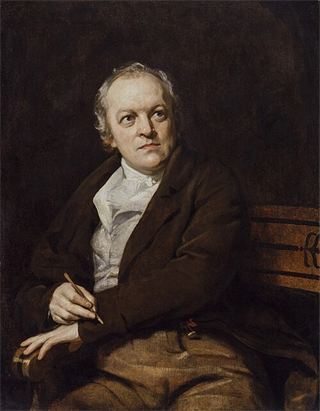
In one sentence
Feeling, imagination and nature show me truths that cold reason misses.
How someone from Romanticism might sum up what they believe. Our summary, not a quotation.
Key thinkers
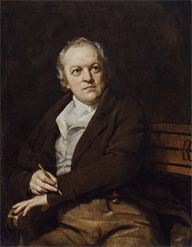 William Blake1757–1827 · The Marriage of Heaven and Hell
 William Wordsworth1770–1850 · The Prelude
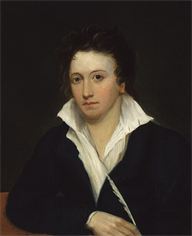 Percy Bysshe Shelley1792–1822 · The Necessity of Atheism
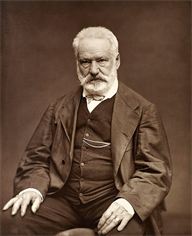 Victor Hugo1802–1885 · Les Misérables
Where it leans
A whole worldview, about both. Positions are our estimates; philosophers argue about where many schools belong.
Most unusual position
81%On subjective or objective, it leans further toward subjective than 81% of the 135 schools on the map.
Middle of all schools on the map: 79 · This school: 35 (0 = Subjective, 100 = Objective)
Most typical position
Spirit or matterOn spirit or matter, it is nearest to the other schools on the map, though still not in the middle.
Middle of all schools on the map: 39 · This school: 21 (0 = Spirit, 100 = Matter)
Where it comes from
What came before Romanticism and led into it, and what grew out of it. Only links that historians agree on.
Came before it
- Jean-Jacques Rousseau (1750s to 1760s)
- Johann Gottfried Herder and the Sturm und Drang (1770s)
- Immanuel Kant, Critique of Judgement (1790)
Grew out of it
- Ralph Waldo Emerson and Transcendentalism (1836)
- John Muir and the conservation movement (late 19th century)
One thing to practise
A real practice from Romanticism, to try this week. Described in our words.
Emotion recollected in tranquillity
Take a walk somewhere green and let yourself feel it fully without analysing. Later, in a quiet moment, call the feeling back and write a few lines about it, which is how Wordsworth said poems are made.
From: William Wordsworth, Preface to Lyrical Ballads (1800)
Its strongest argument
The best case Romanticism makes against people who see the world very differently, in two sentences. People whose furthest school this is see it on their result.
Reason can take a bird apart to learn how it flies, but the living bird is gone once dissected, and a landscape, a poem or a love loses its meaning when reduced to parts. So if you trust only what can be measured, the Romantics would say you know how the world works but not what makes it worth living in.
The argument in our own words, not a quotation.
Where it sits
On the maps
Each map puts two scales side by side. Each small square is a school, at its exact spot; its name shows where there is room. For the others, point at the square, or tap it once on a phone. The first, Reality & truth, puts spirit or matter across and subjective or objective up and down. Click a school, or tap it again, to open it.
Swipe sideways to see the whole chart.
Thinkers in this school
Pictured thinkers nearest this spot on the map
Neighbours on the map
The six schools closest to this one.
- AnimismAnimals, plants, places and objects have spirits or souls of their own.
- Philosophy of DialogueJewish-German thinkers, above all Buber and Rosenzweig, who hold that a person becomes a self only by truly meeting another, the 'I and Thou', and through that meeting, God.
- Kyoto SchoolJapanese philosophers who joined Zen Buddhism with Western philosophy around the idea of "absolute nothingness".
- Christian ExistentialismKierkegaard's line: each person must face God alone, and faith is a passionate leap rather than a proof.
- InstrumentalismScientific theories are useful tools for predicting, not literal descriptions of hidden reality.
- HermeneuticsUnderstanding is always interpretation, shaped by the history and point of view the interpreter brings.
And you, where do you stand?
Take the quiz and see your match with Romanticism and the other 134 schools.
Take the quiz