In one sentence
I treat scientific theories as useful tools for predicting, not as literal pictures of a hidden reality.
How someone from Instrumentalism might sum up what they believe. Our summary, not a quotation.
Key thinkers
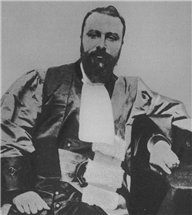 Pierre Duhem1861–1916 · The Aim and Structure of Physical Theory
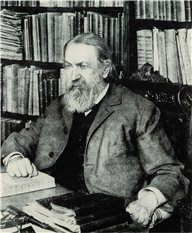 Ernst Mach1838–1916 · The Science of Mechanics
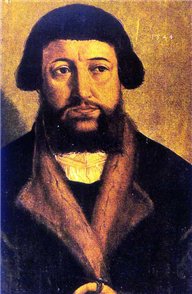 Andreas Osiander1498–1552 · Preface "To the Reader" in Copernicus, On the Revolutions
Where it leans
About what is real and how we know. Positions are our estimates; philosophers argue about where many schools belong.
Most unusual position
80%On facts (subjective or objective), it leans further toward subjective than 80% of the 135 schools on the map.
Middle of all schools on the map: 79 · This school: 38 (0 = subjective, 100 = objective)
Most typical position
Spirit or matterOn spirit or matter, it is nearest to the other schools on the map, though still not in the middle.
Middle of all schools on the map: 39 · This school: 27 (0 = Spirit, 100 = Matter)
Where it comes from
What came before Instrumentalism and led into it, and what grew out of it. Only links that historians agree on.
Came before it
- Andreas Osiander, preface to Copernicus (1543)
- George Berkeley, De Motu (1721)
- Ernst Mach (late 19th century)
- Pierre Duhem, The Aim and Structure of Physical Theory (1906)
Grew out of it
- Logical Positivism (1920s to 1930s)
- Bas van Fraassen, The Scientific Image (1980)
- Stephen Hawking and Leonard Mlodinow, model-dependent realism (2010)
One thing to practise
A real practice from Instrumentalism, to try this week. Described in our words.
The economy of thought
When two explanations predict the same things, choose the one that needs fewer assumptions and less effort to use. Mach held that science is a way of summing up experience as economically as possible.
From: Ernst Mach, The Science of Mechanics (1883), chapter 4, The Economy of Science
Its strongest argument
The best case Instrumentalism makes against people who see the world very differently, in two sentences. People whose furthest school this is see it on their result.
Physics has changed its picture of what light really is several times, from particles to waves to something stranger, while its predictions kept improving, so what lasts in science is the calculating tool, not the story about hidden reality. So if you think theories show how things really are, recall how many firmly held ones were dropped.
The argument in our own words, not a quotation.
Where it sits
On the maps
Each map puts two scales side by side. Each small square is a school, at its exact spot; its name shows where there is room. For the others, point at the square, or tap it once on a phone. The first, Reality & truth, puts spirit or matter across and subjective or objective up and down. Click a school, or tap it again, to open it.
Swipe sideways to see the whole chart.
Thinkers in this school
Pictured thinkers nearest this spot on the map
Neighbours on the map
The six schools closest to this one.
- Philosophy of DialogueJewish-German thinkers, above all Buber and Rosenzweig, who hold that a person becomes a self only by truly meeting another, the 'I and Thou', and through that meeting, God.
- Kyoto SchoolJapanese philosophers who joined Zen Buddhism with Western philosophy around the idea of "absolute nothingness".
- AnimismAnimals, plants, places and objects have spirits or souls of their own.
- RomanticismFeeling, imagination and nature reveal truths that cold reason misses.
- HermeneuticsUnderstanding is always interpretation, shaped by the history and point of view the interpreter brings.
- BuddhismSuffering comes from craving and from clinging to a fixed self; letting go through the Eightfold Path brings freedom.
And you, where do you stand?
Take the quiz and see your match with Instrumentalism and the other 134 schools.
Take the quiz