
In one sentence
A statement has meaning only if experience can check it or it is true by definition, so talk of what lies beyond experience is meaningless.
How someone from Logical Positivism might sum up what they believe. Our summary, not a quotation.
Key thinkers
 Rudolf Carnap1891–1970 · The Logical Structure of the World
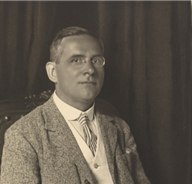 Moritz Schlick1882–1936 · General Theory of Knowledge (Allgemeine Erkenntnislehre)
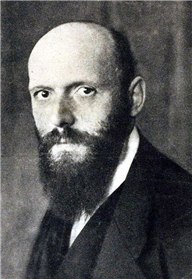 Otto Neurath1882–1945 · The Scientific World Conception: The Vienna Circle (by Rudolf Carnap, Hans Hahn and Otto Neurath)
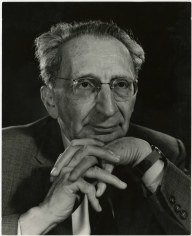 Herbert Feigl1902–1988 · The "Mental" and the "Physical"
Where it leans
About what is real and how we know. Positions are our estimates; philosophers argue about where many schools belong.
Most unusual position
83%On spirit or matter, it leans further toward matter than 83% of the 135 schools on the map.
Middle of all schools on the map: 39 · This school: 83 (0 = Spirit, 100 = Matter)
Most typical position
FactsOn facts (subjective or objective), it is nearest to the other schools on the map, though still not in the middle.
Middle of all schools on the map: 79 · This school: 71 (0 = subjective, 100 = objective)
Where it comes from
What came before Logical Positivism and led into it, and what grew out of it. Only links that historians agree on.
Came before it
- David Hume (18th century)
- Auguste Comte's Positivism (1830s to 1850s)
- Ernst Mach (late 19th century)
- Gottlob Frege and Bertrand Russell, the new logic (around 1900)
- Ludwig Wittgenstein, Tractatus (1921)
Grew out of it
- A. J. Ayer, Language, Truth and Logic (1936)
- Rudolf Carnap, Carl Hempel and Hans Reichenbach in American philosophy of science (1930s to 1950s)
- W. V. O. Quine, Two Dogmas of Empiricism (1951)
One thing to practise
A real practice from Logical Positivism, to try this week. Described in our words.
The verification test
Take a claim you hear this week and ask: what observation would show it true or false? If none could, and it is not true by definition, Ayer would call it neither true nor false, only empty of meaning.
From: A. J. Ayer, Language, Truth and Logic (1936), chapter 1
Its strongest argument
The best case Logical Positivism makes against people who see the world very differently, in two sentences. People whose furthest school this is see it on their result.
Philosophers argued for centuries about the Absolute and the essence of being, and those debates never ended because no possible observation could settle them either way. If that is right, then when you ask a big question that no experience could ever answer, you may not be asking a deep question at all, only stringing words together.
The argument in our own words, not a quotation.
Where it sits
On the maps
Each map puts two scales side by side. Each small square is a school, at its exact spot; its name shows where there is room. For the others, point at the square, or tap it once on a phone. The first, Reality & truth, puts spirit or matter across and subjective or objective up and down. Click a school, or tap it again, to open it.
Swipe sideways to see the whole chart.
Thinkers in this school
Pictured thinkers nearest this spot on the map
Neighbours on the map
The six schools closest to this one.
- ExpressivismMoral statements express our attitudes and commitments rather than describe facts, yet can still be argued about.
- Effective AltruismUse evidence and reason to do the most good you can with your time and money.
- AccelerationismCapitalism and technology form a runaway process that no one can stop or steer, so the only way forward is to push it further and faster.
- PositivismReal knowledge comes only from observing the laws that link facts, and society should be rebuilt on science and on serving humanity.
- UtilitarianismThe right action is the one that produces the most happiness for everyone affected.
- TranshumanismUse science and technology to overcome ageing, death and the limits of the human body and mind, so that humans can grow into something more than human.
And you, where do you stand?
Take the quiz and see your match with Logical Positivism and the other 134 schools.
Take the quiz