In one sentence
My moral statements express my attitudes and commitments rather than describe facts, yet we can still argue about them.
How someone from Expressivism might sum up what they believe. Our summary, not a quotation.
Key thinkers
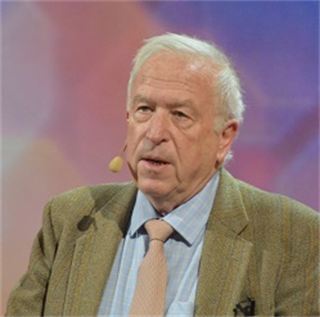
 Simon Blackburnborn 1944 · Ruling Passions
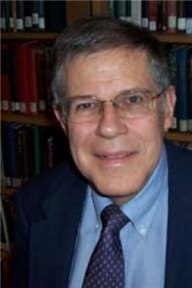 Allan Gibbardborn 1942 · Wise Choices, Apt Feelings: A Theory of Normative Judgment
Where it leans
About right, wrong and how to live. Positions are our estimates; philosophers argue about where many schools belong.
Most unusual position
87%On values (subjective or objective), it leans further toward subjective than 87% of the 135 schools on the map.
Middle of all schools on the map: 79 · This school: 33 (0 = subjective, 100 = objective)
Most typical position
Spirit or matterOn spirit or matter, it is nearest to the other schools on the map, though still not in the middle.
Middle of all schools on the map: 39 · This school: 83 (0 = Spirit, 100 = Matter)
Where it comes from
What came before Expressivism and led into it, and what grew out of it. Only links that historians agree on.
Came before it
- David Hume, A Treatise of Human Nature (1739)
- A. J. Ayer and Charles Stevenson (Emotivism, 1936 to 1944)
- R. M. Hare, The Language of Morals (1952)
Grew out of it
- Simon Blackburn, quasi-realism (1984)
- Allan Gibbard, Wise Choices, Apt Feelings (1990)
- Huw Price, global expressivism (2010s)
One thing to practise
A real practice from Expressivism, to try this week. Described in our words.
Swap places
When you make a moral judgement, ask whether you would still endorse it if you were the person on the receiving end, with their wants and their situation. Hare argued that a real moral judgement must hold for every similar case, including the one where you change places.
From: R. M. Hare, Freedom and Reason (1963)
Its strongest argument
The best case Expressivism makes against people who see the world very differently, in two sentences. People whose furthest school this is see it on their result.
Calling something wrong does work no plain description does: it guides choices, moves us to act and invites others to share a stance, just as you would expect if moral words express attitudes rather than report extra facts. So if you think morality needs mysterious facts out there to be serious, Blackburn would say it stays serious without them.
The argument in our own words, not a quotation.
Where it sits
On the maps
Each map puts two scales side by side. Each small square is a school, at its exact spot; its name shows where there is room. For the others, point at the square, or tap it once on a phone. The first, Reality & truth, puts spirit or matter across and subjective or objective up and down. Click a school, or tap it again, to open it.
Swipe sideways to see the whole chart.
Thinkers in this school
Pictured thinkers nearest this spot on the map
Neighbours on the map
The six schools closest to this one.
- Cyrenaic HedonismPleasure of the moment, especially bodily pleasure, is the only good; seize it now.
- AccelerationismCapitalism and technology form a runaway process that no one can stop or steer, so the only way forward is to push it further and faster.
- Logical PositivismA statement means something only if it can be checked by experience or is true by definition, so all metaphysics is meaningless.
- LegalismChinese school of statecraft: people follow their own interest, so a strong state rules by clear, public laws applied equally, with sure rewards and punishments, not moral appeals.
- PsychoanalysisHidden wishes and conflicts in the unconscious mind drive what we feel and do, and talking freely can bring them to light so we can face them.
- BehaviorismPsychology should study what people do, not hidden inner states; the mind shows itself in behaviour.
And you, where do you stand?
Take the quiz and see your match with Expressivism and the other 134 schools.
Take the quiz