In one sentence
I believe my real motives are hidden from me, and only by bringing them to light can I become free of them.
How someone from Psychoanalysis might sum up what they believe. Our summary, not a quotation.
Key thinkers
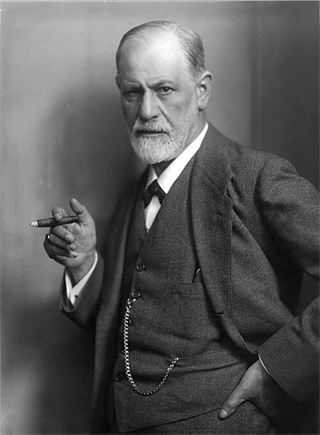
 Sigmund Freud1856–1939 · The Future of an Illusion
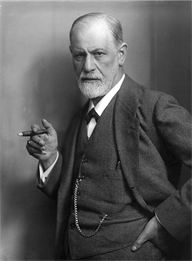
 Jacques Lacan1901–1981 · Écrits
 Melanie Klein1882–1960 · Envy and Gratitude
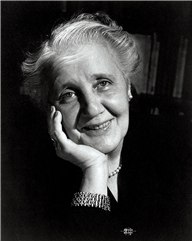
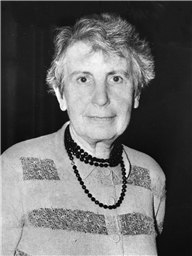 Anna Freud1895–1982 · The Ego and the Mechanisms of Defence
 Karen Horney1885–1952 · Neurosis and Human Growth: The Struggle Toward Self-Realization
Where it leans
A whole worldview, about both. Positions are our estimates; philosophers argue about where many schools belong.
Most unusual position
71%On spirit or matter, it leans further toward matter than 71% of the 135 schools on the map.
Middle of all schools on the map: 39 · This school: 75 (0 = Spirit, 100 = Matter)
Most typical position
Subjective or objectiveOn subjective or objective, it sits close to the middle of the schools on the map.
Middle of all schools on the map: 79 · This school: 80 (0 = Subjective, 100 = Objective)
Where it comes from
What came before Psychoanalysis and led into it, and what grew out of it. Only links that historians agree on.
Came before it
- 1859: Darwin's theory of evolution puts humans inside nature
- 1873-4: Brücke's physiology of living energy systems
- 1885: Freud studies hypnosis with Charcot in Paris
- 1895: Studies on Hysteria with Josef Breuer
Grew out of it
- 1912: Adler and Jung break away (analytical psychology)
- 1950s: Ego psychology in the United States
- 1952-1980: Lacan's 'return to Freud' seminars
- Early 1970s: Cognitive behavioural therapy, from a psychoanalytically trained psychiatrist
One thing to practise
A real practice from Psychoanalysis, to try this week. Described in our words.
Free association
Lie back or sit quietly and say everything that comes into your mind, without choosing, tidying or leaving out what seems silly, rude or unimportant. Do not aim for a particular memory. Over time the links between thoughts show what you have been keeping out of view.
From: Sigmund Freud, Vienna, developed between 1892 and 1895 as a replacement for hypnosis
Its strongest argument
The best case Psychoanalysis makes against people who see the world very differently, in two sentences. People whose furthest school this is see it on their result.
Slips of the tongue, dreams and symptoms that make no sense to the person who has them follow a pattern, so they must have causes, and if the causes are not in the conscious mind they must be in an unconscious one. The conscious self is therefore not in charge of its own house, and change comes only when buried conflicts are brought into the open and faced. To someone who trusts their own stated reasons, it says: the reasons you give may not be the ones that move you.
The argument in our own words, not a quotation.
Where it sits
On the maps
Each map puts two scales side by side. Each small square is a school, at its exact spot; its name shows where there is room. For the others, point at the square, or tap it once on a phone. The first, Reality & truth, puts spirit or matter across and subjective or objective up and down. Click a school, or tap it again, to open it.
Swipe sideways to see the whole chart.
Thinkers in this school
Pictured thinkers nearest this spot on the map
Neighbours on the map
The six schools closest to this one.
- Emotivism"Stealing is wrong" is not a fact but an expression of feeling, roughly "boo, stealing!"
- Moral RelativismRight and wrong depend on the culture or person judging; there is no single moral truth for everyone.
- Milesian schoolThe first Greek philosophers, in Miletus: explain nature by one basic stuff and natural causes instead of gods, and test each other's theories in open debate.
- UtilitarianismThe right action is the one that produces the most happiness for everyone affected.
- Effective AltruismUse evidence and reason to do the most good you can with your time and money.
- AccelerationismCapitalism and technology form a runaway process that no one can stop or steer, so the only way forward is to push it further and faster.
And you, where do you stand?
Take the quiz and see your match with Psychoanalysis and the other 134 schools.
Take the quiz