In one sentence
The right action is always whichever one produces the most happiness for everyone affected.
How someone from Utilitarianism might sum up what they believe. Our summary, not a quotation.
Key thinkers
 John Stuart Mill1806–1873 · Utilitarianism
 Jeremy Bentham1748–1832 · An Introduction to the Principles of Morals and Legislation
 William Godwin1756–1836 · Enquiry Concerning Political Justice
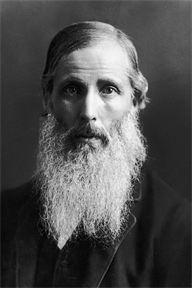 Henry Sidgwick1838–1900 · The Methods of Ethics
Where it leans
About right, wrong and how to live. Positions are our estimates; philosophers argue about where many schools belong.
Most unusual position
71%On spirit or matter, it leans further toward matter than 71% of the 135 schools on the map.
Middle of all schools on the map: 39 · This school: 75 (0 = Spirit, 100 = Matter)
Most typical position
ValuesOn values (subjective or objective), it sits close to the middle of the schools on the map.
Middle of all schools on the map: 79 · This school: 86 (0 = subjective, 100 = objective)
Where it comes from
What came before Utilitarianism and led into it, and what grew out of it. Only links that historians agree on.
Came before it
- Epicurus (about 300 BC)
- Francis Hutcheson, the greatest happiness for the greatest numbers (1725)
- David Hume (18th century)
- Claude Adrien Helvétius (1758)
Grew out of it
- John Stuart Mill, Utilitarianism (1861)
- Henry Sidgwick, The Methods of Ethics (1874)
- Peter Singer (from the 1970s)
- Effective Altruism (2010s)
One thing to practise
A real practice from Utilitarianism, to try this week. Described in our words.
Bentham's happiness sum
Before a choice, list everyone it affects. For each, rate the pleasure or pain it brings by how strong, how long, how certain and how soon it is, whether it leads to more of the same, and how many people it reaches, then pick the option with the best total.
From: Jeremy Bentham, An Introduction to the Principles of Morals and Legislation (1789), chapter 4
Its strongest argument
The best case Utilitarianism makes against people who see the world very differently, in two sentences. People whose furthest school this is see it on their result.
Nearly everyone agrees that suffering is bad and happiness good, so when a rule, a tradition or a gut feeling causes more suffering than it prevents, nothing is left to justify keeping it. So if you would follow a principle while seeing it make lives worse, Bentham and Mill would ask whose good it serves.
The argument in our own words, not a quotation.
Where it sits
On the maps
Each map puts two scales side by side. Each small square is a school, at its exact spot; its name shows where there is room. For the others, point at the square, or tap it once on a phone. The first, Reality & truth, puts spirit or matter across and subjective or objective up and down. Click a school, or tap it again, to open it.
Swipe sideways to see the whole chart.
Thinkers in this school
Pictured thinkers nearest this spot on the map
Neighbours on the map
The six schools closest to this one.
- ObjectivismAyn Rand's view: reality is objective, reason is our only guide, and each person should live by rational self-interest, with their own happiness as life's moral purpose.
- Effective AltruismUse evidence and reason to do the most good you can with your time and money.
- Milesian schoolThe first Greek philosophers, in Miletus: explain nature by one basic stuff and natural causes instead of gods, and test each other's theories in open debate.
- Critical RationalismKarl Popper's view that knowledge grows by bold guesses and attempts to prove them wrong, never by proof.
- PositivismReal knowledge comes only from observing the laws that link facts, and society should be rebuilt on science and on serving humanity.
- AristotelianismStudy the world as it is; everything has a purpose, and a good life is a flourishing life built from virtuous habits.
And you, where do you stand?
Take the quiz and see your match with Utilitarianism and the other 134 schools.
Take the quiz