In one sentence
I trust only knowledge drawn from observed laws, and I want society rebuilt on science and on serving humanity.
How someone from Positivism might sum up what they believe. Our summary, not a quotation.
Key thinkers
 Auguste Comte1798–1857 · Course of Positive Philosophy
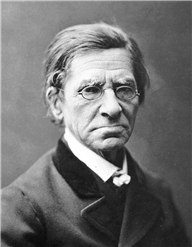 Émile Littré1801–1881 · Auguste Comte et la philosophie positive
 Harriet Martineau1802–1876 · The Positive Philosophy of Auguste Comte (freely translated and condensed)
Where it leans
A whole worldview, about both. Positions are our estimates; philosophers argue about where many schools belong.
Most unusual position
83%On spirit or matter, it leans further toward matter than 83% of the 135 schools on the map.
Middle of all schools on the map: 39 · This school: 83 (0 = Spirit, 100 = Matter)
Most typical position
Subjective or objectiveOn subjective or objective, it sits close to the middle of the schools on the map.
Middle of all schools on the map: 79 · This school: 78 (0 = Subjective, 100 = Objective)
Where it comes from
What came before Positivism and led into it, and what grew out of it. Only links that historians agree on.
Came before it
- The early 19th-century push to use scientific method everywhere (Saint-Simon, Laplace)
- Comte's years as Henri de Saint-Simon's secretary (1817 to 1824)
- Comte's science training at the École Polytechnique (from 1818)
Grew out of it
- Émile Littré's Positivist Review (1867)
- The Positivist Church of Brazil (1881), and Brazil's flag motto "Order and Progress"
- Émile Durkheim's scientific sociology, Rules of the Sociological Method (1895)
- Logical Positivism, the Vienna Circle (late 1920s)
One thing to practise
A real practice from Positivism, to try this week. Described in our words.
The Positivist calendar
Live by a calendar in which each month is named after a great figure from history and each day is given to a thinker. On each day, remember that person and what they gave to humanity. For Comte this was worship of Humanity, which is made of the dead as well as the living.
From: Auguste Comte's calendar reform of 1849, part of his Religion of Humanity
Its strongest argument
The best case Positivism makes against people who see the world very differently, in two sentences. People whose furthest school this is see it on their result.
People who explain the world through gods or hidden forces keep asking the same questions about first causes, and each new answer only swaps one invisible cause for another. Science stops asking for ultimate causes and finds the laws that link what we can observe, and only that kind of knowledge lets people agree. A society cannot hold together without shared beliefs, so it should build them on science instead of on revelation.
The argument in our own words, not a quotation.
Where it sits
On the maps
Each map puts two scales side by side. Each small square is a school, at its exact spot; its name shows where there is room. For the others, point at the square, or tap it once on a phone. The first, Reality & truth, puts spirit or matter across and subjective or objective up and down. Click a school, or tap it again, to open it.
Swipe sideways to see the whole chart.
Thinkers in this school
Pictured thinkers nearest this spot on the map
Neighbours on the map
The six schools closest to this one.
- TranshumanismUse science and technology to overcome ageing, death and the limits of the human body and mind, so that humans can grow into something more than human.
- ExpressivismMoral statements express our attitudes and commitments rather than describe facts, yet can still be argued about.
- Effective AltruismUse evidence and reason to do the most good you can with your time and money.
- AccelerationismCapitalism and technology form a runaway process that no one can stop or steer, so the only way forward is to push it further and faster.
- Emotivism"Stealing is wrong" is not a fact but an expression of feeling, roughly "boo, stealing!"
- FunctionalismA mental state is defined by what it does, its role between input and behaviour, not by what it is made of.
And you, where do you stand?
Take the quiz and see your match with Positivism and the other 134 schools.
Take the quiz