
In one sentence
When I say stealing is wrong, I'm not stating a fact but voicing a feeling, roughly "boo, stealing!"
How someone from Emotivism might sum up what they believe. Our summary, not a quotation.
Key thinkers
 A. J. Ayer1910–1989 · Language, Truth and Logic
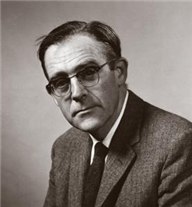 Charles L. Stevenson1908–1979 · Ethics and Language
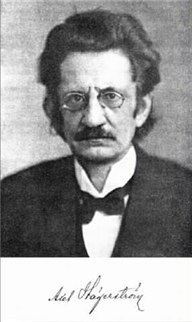 Axel Hägerström1868–1939 · On the Truth of Moral Propositions
Where it leans
About right, wrong and how to live. Positions are our estimates; philosophers argue about where many schools belong.
Most unusual position
96%On values (subjective or objective), it leans further toward subjective than 96% of the 135 schools on the map.
Middle of all schools on the map: 79 · This school: 8 (0 = subjective, 100 = objective)
Most typical position
Spirit or matterOn spirit or matter, it is nearest to the other schools on the map, though still not in the middle.
Middle of all schools on the map: 39 · This school: 78 (0 = Spirit, 100 = Matter)
Where it comes from
What came before Emotivism and led into it, and what grew out of it. Only links that historians agree on.
Came before it
- David Hume, A Treatise of Human Nature (1739)
- G. E. Moore, Principia Ethica (1903)
- C. K. Ogden and I. A. Richards, The Meaning of Meaning (1923)
- Logical Positivism (1920s to 1930s)
Grew out of it
- A. J. Ayer, Language, Truth and Logic (1936), chapter 6
- Charles Stevenson, Ethics and Language (1944)
- R. M. Hare, prescriptivism (1952)
- Simon Blackburn and Expressivism (1980s)
One thing to practise
A real practice from Emotivism, to try this week. Described in our words.
Belief or attitude?
Next time you argue about right and wrong, split the quarrel in two: the facts you disagree about, which evidence can settle, and the attitudes you disagree about, which only persuasion can change. Deal with each separately.
From: Charles Stevenson, Ethics and Language (1944), chapter 1
Its strongest argument
The best case Emotivism makes against people who see the world very differently, in two sentences. People whose furthest school this is see it on their result.
Two people can agree on every fact about an act, who did what with what result, and still disagree about whether it was wrong, which suggests the moral word adds no further fact, only a feeling and a push for others to share it. So if you think moral judgements are facts, ask what observation could ever check them.
The argument in our own words, not a quotation.
Where it sits
On the maps
Each map puts two scales side by side. Each small square is a school, at its exact spot; its name shows where there is room. For the others, point at the square, or tap it once on a phone. The first, Reality & truth, puts spirit or matter across and subjective or objective up and down. Click a school, or tap it again, to open it.
Swipe sideways to see the whole chart.
Thinkers in this school
Pictured thinkers nearest this spot on the map
Neighbours on the map
The six schools closest to this one.
- AbsurdismCamus' view that we crave meaning in a universe that offers none; the answer is to revolt and live fully anyway.
- NietzscheanismGod is dead, so create your own values, overcome yourself and say yes to life.
- EgoismMax Stirner's view: God, the state and morality are "spooks", and the individual should be their own master, answering to nothing above themselves.
- Moral Error TheoryMoral claims try to state objective facts, but there are none, so they are all false.
- Moral RelativismRight and wrong depend on the culture or person judging; there is no single moral truth for everyone.
- HumeanismDavid Hume's view: all ideas come from experience, causes are habits of expectation, and reason serves the passions.
And you, where do you stand?
Take the quiz and see your match with Emotivism and the other 134 schools.
Take the quiz