In one sentence
All my ideas come from experience, a cause is just my habit of expecting, and reason serves my passions, my feelings and desires.
How someone from Humeanism might sum up what they believe. Our summary, not a quotation.
Key thinkers
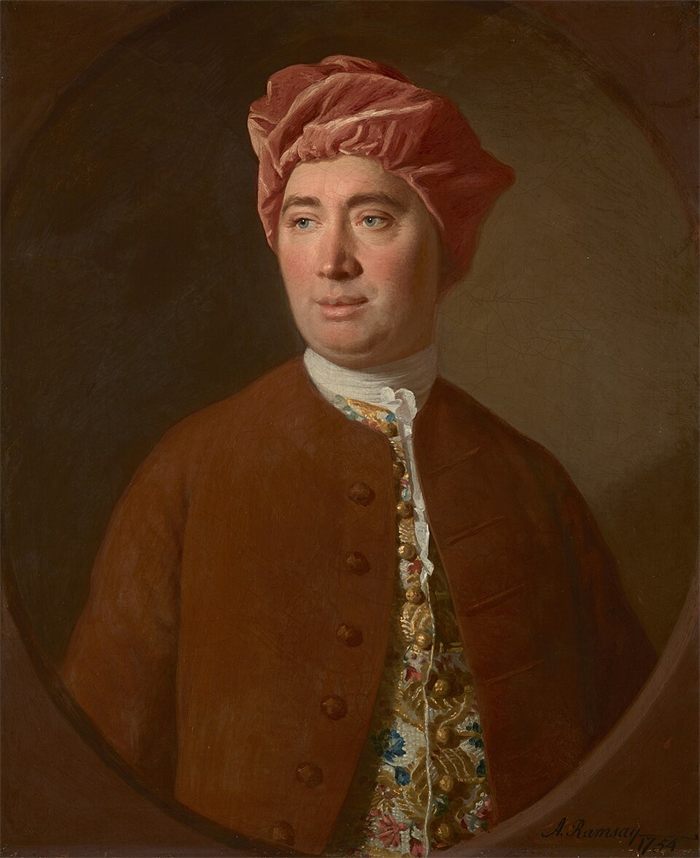
 David Hume1711–1776 · A Treatise of Human Nature
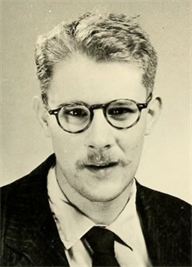 David Lewis1941–2001 · On the Plurality of Worlds
Where it leans
A whole worldview, about both. Positions are our estimates; philosophers argue about where many schools belong.
Most unusual position
71%On spirit or matter, it leans further toward matter than 71% of the 135 schools on the map.
Middle of all schools on the map: 39 · This school: 75 (0 = Spirit, 100 = Matter)
Most typical position
Subjective or objectiveOn subjective or objective, it is nearest to the other schools on the map, though still not in the middle.
Middle of all schools on the map: 79 · This school: 55 (0 = Subjective, 100 = Objective)
Where it comes from
What came before Humeanism and led into it, and what grew out of it. Only links that historians agree on.
Came before it
- Isaac Newton, the experimental method (1687)
- John Locke (1689)
- George Berkeley (1710)
- Francis Hutcheson, the moral sense (1725)
Grew out of it
- Adam Smith, The Theory of Moral Sentiments (1759)
- Immanuel Kant, woken from his dogmatic slumber (1781)
- Logical Positivism (1920s to 1930s)
- David Lewis, Humean supervenience (1986)
One thing to practise
A real practice from Humeanism, to try this week. Described in our words.
Find the impression
Take a big word you use, like cause, self or substance, and ask which actual experience the idea came from. If you cannot find one, Hume says you should suspect the word has no clear meaning.
From: David Hume, An Enquiry Concerning Human Understanding (1748), section 2
Its strongest argument
The best case Humeanism makes against people who see the world very differently, in two sentences. People whose furthest school this is see it on their result.
You never see one thing make another happen: you see one ball strike and a second roll, and only after many repeats does your mind learn to expect it, so necessary connection is felt, not found. So if you are sure the future must be like the past, Hume would ask for a reason that does not already assume it.
The argument in our own words, not a quotation.
Where it sits
On the maps
Each map puts two scales side by side. Each small square is a school, at its exact spot; its name shows where there is room. For the others, point at the square, or tap it once on a phone. The first, Reality & truth, puts spirit or matter across and subjective or objective up and down. Click a school, or tap it again, to open it.
Swipe sideways to see the whole chart.
Thinkers in this school
Pictured thinkers nearest this spot on the map
Neighbours on the map
The six schools closest to this one.
- AbsurdismCamus' view that we crave meaning in a universe that offers none; the answer is to revolt and live fully anyway.
- PragmatismAn idea is true if it works in practice; judge beliefs by their consequences for living.
- Critical TheoryFrankfurt School thinkers who join philosophy and social science to expose how capitalism, mass culture and narrow reason dominate people, with the aim of setting them free.
- Cyrenaic HedonismPleasure of the moment, especially bodily pleasure, is the only good; seize it now.
- Logical PositivismA statement means something only if it can be checked by experience or is true by definition, so all metaphysics is meaningless.
- UtilitarianismThe right action is the one that produces the most happiness for everyone affected.
And you, where do you stand?
Take the quiz and see your match with Humeanism and the other 134 schools.
Take the quiz