In one sentence
Moral claims try to state facts true for everyone, but I find no such facts, so every moral claim is false.
How someone from Moral Error Theory might sum up what they believe. Our summary, not a quotation.
Key thinkers
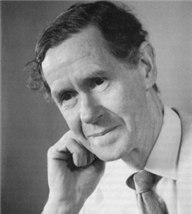 J. L. Mackie1917–1981 · Ethics: Inventing Right and Wrong
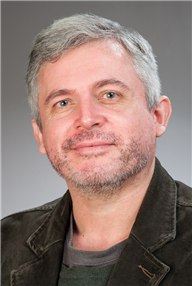 Richard Joyceborn 1966 · The Myth of Morality
Where it leans
About right, wrong and how to live. Positions are our estimates; philosophers argue about where many schools belong.
Most unusual position
99%On values (subjective or objective), it leans further toward subjective than 99% of the 135 schools on the map.
Middle of all schools on the map: 79 · This school: 5 (0 = subjective, 100 = objective)
Most typical position
Spirit or matterOn spirit or matter, it is nearest to the other schools on the map, though still not in the middle.
Middle of all schools on the map: 39 · This school: 88 (0 = Spirit, 100 = Matter)
Where it comes from
What came before Moral Error Theory and led into it, and what grew out of it. Only links that historians agree on.
Came before it
- David Hume (1739)
- Axel Hägerström and the Uppsala school (1910s)
- J. L. Mackie, A Refutation of Morals (1946)
Grew out of it
- J. L. Mackie, Ethics: Inventing Right and Wrong (1977)
- Richard Joyce, The Myth of Morality (2001)
- Jonas Olson, Moral Error Theory (2014)
One thing to practise
A real practice from Moral Error Theory, to try this week. Described in our words.
The queerness test
Pick a moral claim you hold, such as that lying is wrong. Ask what kind of fact would make it true even for someone who wants nothing it serves, and how you would ever detect that fact.
From: J. L. Mackie, Ethics: Inventing Right and Wrong (1977), chapter 1
Its strongest argument
The best case Moral Error Theory makes against people who see the world very differently, in two sentences. People whose furthest school this is see it on their result.
If objective moral facts existed, they would be unlike anything else in the universe, facts that order every person to act whatever they want, and we would need a strange extra sense to detect them. So if you think right and wrong are built into reality, Mackie asks what such a fact is made of and how you perceived it.
The argument in our own words, not a quotation.
Where it sits
On the maps
Each map puts two scales side by side. Each small square is a school, at its exact spot; its name shows where there is room. For the others, point at the square, or tap it once on a phone. The first, Reality & truth, puts spirit or matter across and subjective or objective up and down. Click a school, or tap it again, to open it.
Swipe sideways to see the whole chart.
Thinkers in this school
Pictured thinkers nearest this spot on the map
Neighbours on the map
The six schools closest to this one.
- EgoismMax Stirner's view: God, the state and morality are "spooks", and the individual should be their own master, answering to nothing above themselves.
- Emotivism"Stealing is wrong" is not a fact but an expression of feeling, roughly "boo, stealing!"
- AbsurdismCamus' view that we crave meaning in a universe that offers none; the answer is to revolt and live fully anyway.
- NietzscheanismGod is dead, so create your own values, overcome yourself and say yes to life.
- NihilismLife has no built-in meaning, value or purpose.
- PhysicalismEverything that exists is physical, or depends completely on the physical.
And you, where do you stand?
Take the quiz and see your match with Moral Error Theory and the other 134 schools.
Take the quiz