In one sentence
I become myself only when I meet you as a You, not when I use you as an It.
How someone from Philosophy of Dialogue might sum up what they believe. Our summary, not a quotation.
Key thinkers
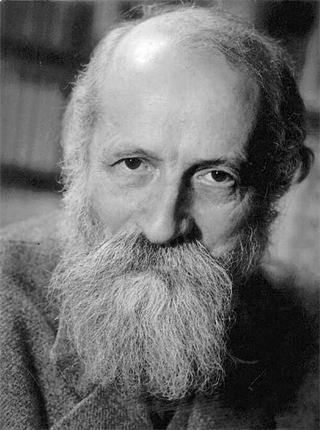
 Martin Buber1878–1965 · I and Thou
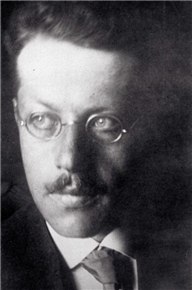 Franz Rosenzweig1886–1929 · The Star of Redemption
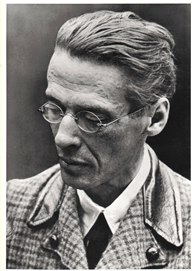 Ferdinand Ebner1882–1931 · The Word and the Spiritual Realities: Pneumatological Fragments
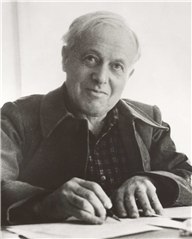 Eugen Rosenstock-Huessy1888–1973 · Out of Revolution: Autobiography of Western Man
Where it leans
A whole worldview, about both. Positions are our estimates; philosophers argue about where many schools belong.
Most unusual position
81%On subjective or objective, it leans further toward subjective than 81% of the 135 schools on the map.
Middle of all schools on the map: 79 · This school: 35 (0 = Subjective, 100 = Objective)
Most typical position
Spirit or matterOn spirit or matter, it is nearest to the other schools on the map, though still not in the middle.
Middle of all schools on the map: 39 · This school: 25 (0 = Spirit, 100 = Matter)
Where it comes from
What came before Philosophy of Dialogue and led into it, and what grew out of it. Only links that historians agree on.
Came before it
- Forerunners Hamann, Jacobi and Feuerbach (18th and 19th centuries)
- Hermann Cohen (1842 to 1918), an earlier dialogical thinker and Rosenzweig's teacher
- Dilthey's idea of lived experience
- Rosenzweig's all-night talk with Rosenstock (7 July 1913)
Grew out of it
- Buber's public dialogue with Carl Rogers and humanistic psychotherapy (1957)
- Martin Luther King Jr. cites I and Thou in his Letter from Birmingham Jail (1963)
- Theunissen reads it as an alternative to existentialism (1965)
- Post-Holocaust Jewish-Christian dialogue
One thing to practise
A real practice from Philosophy of Dialogue, to try this week. Described in our words.
Questioning-in-common (the Lehrhaus way of learning)
Study in a small group where the teacher does not arrive with the answers. Teacher and students ask their questions together and take their own not-knowing as the starting point. Learning happens in the exchange between people, not in a lecture.
From: Franz Rosenzweig's New Jewish Lehrhaus in Frankfurt, opened in 1920, where Buber also taught
Its strongest argument
The best case Philosophy of Dialogue makes against people who see the world very differently, in two sentences. People whose furthest school this is see it on their result.
No one is an 'I' alone: we become selves by being spoken to and answering. When we treat people and things only as objects to measure and use, we lose the very relation that makes us persons. So to the builder of abstract systems it says: by stripping things of their relations to us, your theory cuts away what makes them what they are.
The argument in our own words, not a quotation.
Where it sits
On the maps
Each map puts two scales side by side. Each small square is a school, at its exact spot; its name shows where there is room. For the others, point at the square, or tap it once on a phone. The first, Reality & truth, puts spirit or matter across and subjective or objective up and down. Click a school, or tap it again, to open it.
Swipe sideways to see the whole chart.
Thinkers in this school
Pictured thinkers nearest this spot on the map
Neighbours on the map
The six schools closest to this one.
- AnimismAnimals, plants, places and objects have spirits or souls of their own.
- InstrumentalismScientific theories are useful tools for predicting, not literal descriptions of hidden reality.
- RomanticismFeeling, imagination and nature reveal truths that cold reason misses.
- Kyoto SchoolJapanese philosophers who joined Zen Buddhism with Western philosophy around the idea of "absolute nothingness".
- Christian ExistentialismKierkegaard's line: each person must face God alone, and faith is a passionate leap rather than a proof.
- HermeneuticsUnderstanding is always interpretation, shaped by the history and point of view the interpreter brings.
And you, where do you stand?
Take the quiz and see your match with Philosophy of Dialogue and the other 134 schools.
Take the quiz