In one sentence
My suffering comes from craving and clinging to a fixed self; letting go through the Eightfold Path sets me free.
How someone from Buddhism might sum up what they believe. Our summary, not a quotation.
Key thinkers
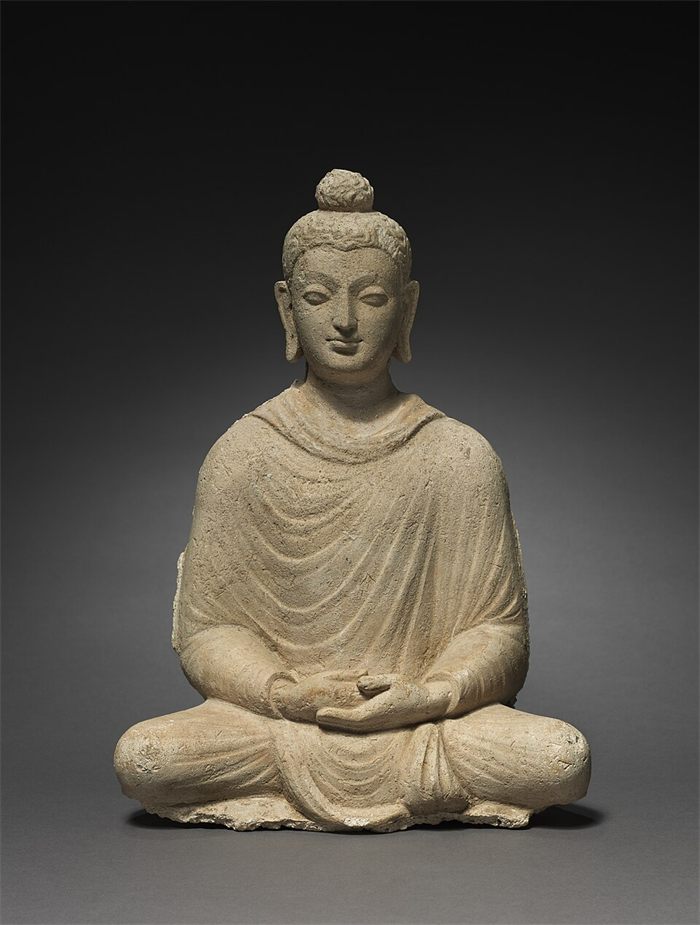
 The Buddhac. 5th century BC · Dhammapada
 Nagarjunac. 150–250 · Mūlamadhyamakakārikā (Fundamental Verses on the Middle Way)
 Vasubandhufl. 4th–5th century · Twenty Verses on Consciousness Only (Viṃśatikā)
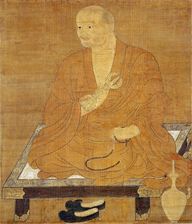 Kūkai774–835 · Attaining Enlightenment in This Very Existence
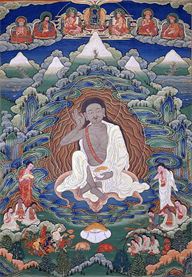 Milarepac. 1052–1135 · The Hundred Thousand Songs of Milarepa (compiled by Tsangnyön Heruka)
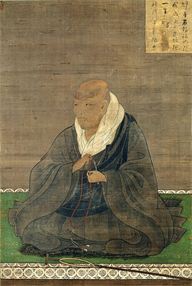 Shinran1173–1263 · Kyōgyōshinshō
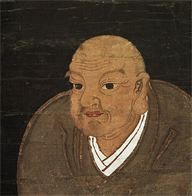 Nichiren1222–1282 · Risshō Ankoku Ron
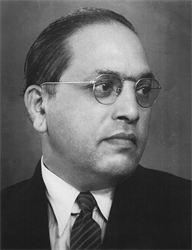 B. R. Ambedkar1891–1956 · Annihilation of Caste
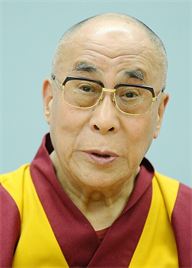 14th Dalai Lamaborn 1935 · Ethics for the New Millennium (also published as Ancient Wisdom, Modern World)
Where it leans
A whole worldview, about both. Positions are our estimates; philosophers argue about where many schools belong.
Most unusual position
77%On subjective or objective, it leans further toward subjective than 77% of the 135 schools on the map.
Middle of all schools on the map: 79 · This school: 45 (0 = Subjective, 100 = Objective)
Most typical position
Spirit or matterOn spirit or matter, it sits close to the middle of the schools on the map.
Middle of all schools on the map: 39 · This school: 35 (0 = Spirit, 100 = Matter)
Where it comes from
What came before Buddhism and led into it, and what grew out of it. Only links that historians agree on.
Came before it
- The Upanishads (about 800 to 500 BC)
- Jainism and other wandering ascetics (6th to 5th century BC)
Grew out of it
- Ashoka, who spread Buddhism across India and beyond (3rd century BC)
- Nagarjuna and Mahayana Madhyamaka (2nd century AD)
- Vasubandhu and Yogacara (4th century AD)
- Zen Buddhism (from about the 6th century AD)
One thing to practise
A real practice from Buddhism, to try this week. Described in our words.
Mindfulness of breathing
Sit somewhere quiet and pay attention to your breath. Notice when a breath is long and when it is short, and when your mind wanders, gently bring it back.
From: The Buddha, Anapanasati Sutta (Majjhima Nikaya 118)
Its strongest argument
The best case Buddhism makes against people who see the world very differently, in two sentences. People whose furthest school this is see it on their result.
Look for the self you cling to and you find only changing feelings, thoughts and sensations, none of which stays still, so suffering comes from grasping at a fixed self and at lasting things that are not there. So if you believe getting what you want will finally content you, the Buddha would ask how long past gains did.
The argument in our own words, not a quotation.
Where it sits
On the maps
Each map puts two scales side by side. Each small square is a school, at its exact spot; its name shows where there is room. For the others, point at the square, or tap it once on a phone. The first, Reality & truth, puts spirit or matter across and subjective or objective up and down. Click a school, or tap it again, to open it.
Swipe sideways to see the whole chart.
Thinkers in this school
Pictured thinkers nearest this spot on the map
Neighbours on the map
The six schools closest to this one.
- Zen BuddhismAwakening comes through meditation and direct seeing, not through scriptures or concepts.
- HermeneuticsUnderstanding is always interpretation, shaped by the history and point of view the interpreter brings.
- InstrumentalismScientific theories are useful tools for predicting, not literal descriptions of hidden reality.
- Kyoto SchoolJapanese philosophers who joined Zen Buddhism with Western philosophy around the idea of "absolute nothingness".
- Philosophy of DialogueJewish-German thinkers, above all Buber and Rosenzweig, who hold that a person becomes a self only by truly meeting another, the 'I and Thou', and through that meeting, God.
- AnimismAnimals, plants, places and objects have spirits or souls of their own.
And you, where do you stand?
Take the quiz and see your match with Buddhism and the other 134 schools.
Take the quiz