In one sentence
I practise non-violence towards every living being, and I know every view holds only part of the truth.
How someone from Jainism might sum up what they believe. Our summary, not a quotation.
Key thinkers
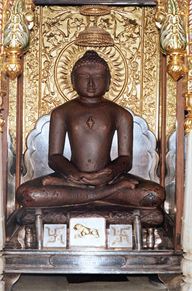 Mahaviratraditionally 599–527 BC · Ācārāṅga Sūtra (his teachings, compiled by his followers)
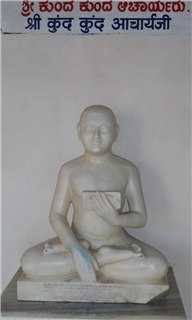 Kundakundac. 2nd–8th century (disputed) · Samayasāra
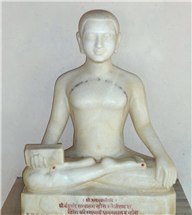 Umaswatic. 2nd–5th century · Tattvārtha Sūtra
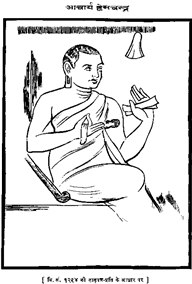 Hemachandrac. 1088–1173 · Yogaśāstra
Where it leans
A whole worldview, about both. Positions are our estimates; philosophers argue about where many schools belong.
Most unusual position
68%On spirit or matter, it leans further toward spirit than 68% of the 135 schools on the map.
Middle of all schools on the map: 39 · This school: 21 (0 = Spirit, 100 = Matter)
Most typical position
Subjective or objectiveOn subjective or objective, it is nearest to the other schools on the map, though still not in the middle.
Middle of all schools on the map: 79 · This school: 65 (0 = Subjective, 100 = Objective)
Where it comes from
What came before Jainism and led into it, and what grew out of it. Only links that historians agree on.
Came before it
- The shramana movement of wandering ascetics (first millennium BC)
- Parshvanatha (around the 8th century BC)
- Mahavira (6th to 5th century BC)
Grew out of it
- Umaswati, Tattvartha Sutra (around 2nd to 5th century)
- Hemachandra (12th century)
- Mahatma Gandhi (20th century), through his Jain friend Shrimad Rajchandra
One thing to practise
A real practice from Jainism, to try this week. Described in our words.
Samayika, 48 minutes of calm
Set aside 48 minutes, sit still in a quiet place, and give up all harmful activity for that time. Keep your mind even towards friend and foe, pleasure and pain, and reflect on friendliness towards all living beings.
From: The samayika vow, the first of the six daily duties (avashyaka) of Jain lay people and monks
Its strongest argument
The best case Jainism makes against people who see the world very differently, in two sentences. People whose furthest school this is see it on their result.
Every living being, as the Jain scriptures put it, loves its life and shrinks from pain just as you do, so hurting one for convenience treats your own suffering as special for no reason. If that is right, then the casual harm most of us accept, in food, in habits and in words, needs a justification few people ever try to give.
The argument in our own words, not a quotation.
Where it sits
On the maps
Each map puts two scales side by side. Each small square is a school, at its exact spot; its name shows where there is room. For the others, point at the square, or tap it once on a phone. The first, Reality & truth, puts spirit or matter across and subjective or objective up and down. Click a school, or tap it again, to open it.
Swipe sideways to see the whole chart.
Thinkers in this school
Pictured thinkers nearest this spot on the map
Neighbours on the map
The six schools closest to this one.
- Analytical PsychologyBeneath the personal mind lies a collective unconscious of shared images, and a good life means growing into your whole self by meeting them.
- PhenomenologyStart philosophy by carefully describing experience exactly as it shows itself, before any theory about it.
- African CommunitarianismAfrican ethics of community, called ubuntu in the south: a person becomes fully a person through other people, so character, sharing and the common good come first.
- PessimismLife holds more suffering than happiness; Schopenhauer, its best-known voice, traced this to a blind, restless will that drives everything, and saw compassion as what eases it.
- HermeticismAncient mystical teachings said to come from Hermes Trismegistus: "as above, so below", and hidden knowledge can unite you with the divine.
- TranscendentalismEmerson and Thoreau's view that intuition, nature and the individual soul reach truth better than institutions do.
And you, where do you stand?
Take the quiz and see your match with Jainism and the other 134 schools.
Take the quiz