In one sentence
I listen to my dreams and myths, because becoming my whole self is the task of my life.
How someone from Analytical Psychology might sum up what they believe. Our summary, not a quotation.
Key thinkers
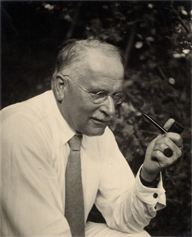 Carl Jung1875–1961 · Modern Man in Search of a Soul
 James Hillman1926–2011 · Re-Visioning Psychology
 Marie-Louise von Franz1915–1998 · An Introduction to the Psychology of Fairytales
Where it leans
A whole worldview, about both. Positions are our estimates; philosophers argue about where many schools belong.
Most unusual position
70%On subjective or objective, it leans further toward subjective than 70% of the 135 schools on the map.
Middle of all schools on the map: 79 · This school: 65 (0 = Subjective, 100 = Objective)
Most typical position
Spirit or matterOn spirit or matter, it is nearest to the other schools on the map, though still not in the middle.
Middle of all schools on the map: 39 · This school: 25 (0 = Spirit, 100 = Matter)
Where it comes from
What came before Analytical Psychology and led into it, and what grew out of it. Only links that historians agree on.
Came before it
- 1901: Burghölzli hospital under Bleuler, and Pierre Janet's courses in Paris
- 1907: Collaboration with Freud begins
- 1909: Meeting William James
Grew out of it
- 1935: Alcoholics Anonymous, shaped by Jung's advice on spiritual experience
- From 1962: Sandplay therapy (Dora Kalff)
- Early 1970s: Archetypal psychology (James Hillman)
- 21st century: Jordan Peterson's Jungian work
One thing to practise
A real practice from Analytical Psychology, to try this week. Described in our words.
Active imagination
Sit quietly, call up an image from a dream or a mood, and watch it change without steering it. Let it act, speak or answer, and you answer back; you can also paint, write or dance it out. Take care: Jung warned it can pull a person too far from reality.
From: Carl Jung, Zurich, developed between 1913 and 1916
Its strongest argument
The best case Analytical Psychology makes against people who see the world very differently, in two sentences. People whose furthest school this is see it on their result.
The same images and story patterns turn up in dreams, myths and religions of peoples who never met, so they cannot all come from one person's memories; there must be a deeper layer of mind that all humans share. When we ignore that layer it returns as one-sided moods and neurosis, and when we bring it into awareness we become whole. To a strict materialist it says: the inner world of dreams and myths is a fact of experience as real as the outer one.
The argument in our own words, not a quotation.
Where it sits
On the maps
Each map puts two scales side by side. Each small square is a school, at its exact spot; its name shows where there is room. For the others, point at the square, or tap it once on a phone. The first, Reality & truth, puts spirit or matter across and subjective or objective up and down. Click a school, or tap it again, to open it.
Swipe sideways to see the whole chart.
Thinkers in this school
Pictured thinkers nearest this spot on the map
Neighbours on the map
The six schools closest to this one.
- PhenomenologyStart philosophy by carefully describing experience exactly as it shows itself, before any theory about it.
- African CommunitarianismAfrican ethics of community, called ubuntu in the south: a person becomes fully a person through other people, so character, sharing and the common good come first.
- JainismAn Indian tradition of non-violence towards all living beings, and the idea that every view holds only part of the truth.
- PessimismLife holds more suffering than happiness; Schopenhauer, its best-known voice, traced this to a blind, restless will that drives everything, and saw compassion as what eases it.
- HermeticismAncient mystical teachings said to come from Hermes Trismegistus: "as above, so below", and hidden knowledge can unite you with the divine.
- TranscendentalismEmerson and Thoreau's view that intuition, nature and the individual soul reach truth better than institutions do.
And you, where do you stand?
Take the quiz and see your match with Analytical Psychology and the other 134 schools.
Take the quiz