In one sentence
I follow teachings said to come from Hermes Trismegistus: "as above, so below", and hidden knowledge can unite me with the divine.
How someone from Hermeticism might sum up what they believe. Our summary, not a quotation.
Key thinkers
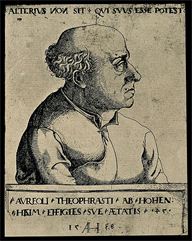 Paracelsus1493–1541 · Die grosse Wundartznei (The Great Surgery Book)
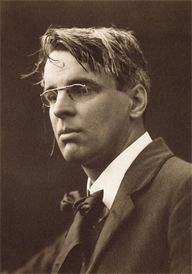 W. B. Yeats1865–1939 · A Vision
Where it leans
About what is real and how we know. Positions are our estimates; philosophers argue about where many schools belong.
Most unusual position
73%On spirit or matter, it leans further toward spirit than 73% of the 135 schools on the map.
Middle of all schools on the map: 39 · This school: 18 (0 = Spirit, 100 = Matter)
Most typical position
FactsOn facts (subjective or objective), it sits close to the middle of the schools on the map.
Middle of all schools on the map: 79 · This school: 73 (0 = subjective, 100 = objective)
Where it comes from
What came before Hermeticism and led into it, and what grew out of it. Only links that historians agree on.
Came before it
Grew out of it
- Marsilio Ficino (Latin translation, 1463)
- Renaissance alchemy, such as Paracelsus (16th century)
- The Hermetic Order of the Golden Dawn (1888)
One thing to practise
A real practice from Hermeticism, to try this week. Described in our words.
Grow as large as the cosmos
Close your eyes and imagine yourself everywhere at once: in the earth, the sea and the sky, not yet born, young, old and dead, and beyond death. The text says a mind that can hold all of this in thought can begin to understand God.
From: Corpus Hermeticum, book 11 (Mind to Hermes), section 20
Its strongest argument
The best case Hermeticism makes against people who see the world very differently, in two sentences. People whose furthest school this is see it on their result.
The Hermetic texts argue that an order as vast and beautiful as the cosmos points to a mind behind it, as a statue points to a sculptor, and that our minds, which grasp that order, are related to it. So if you think mind is an accident in a blind universe, explain why that universe opens its order to minds at all.
The argument in our own words, not a quotation.
Where it sits
On the maps
Each map puts two scales side by side. Each small square is a school, at its exact spot; its name shows where there is room. For the others, point at the square, or tap it once on a phone. The first, Reality & truth, puts spirit or matter across and subjective or objective up and down. Click a school, or tap it again, to open it.
Swipe sideways to see the whole chart.
Thinkers in this school
Pictured thinkers nearest this spot on the map
Neighbours on the map
The six schools closest to this one.
- Media EcologyEvery medium, from the alphabet to the smartphone, reshapes how we think and live, often more than the messages it carries.
- TranscendentalismEmerson and Thoreau's view that intuition, nature and the individual soul reach truth better than institutions do.
- Critique of TechnologyModern technology is not a neutral tool: it pushes efficiency over human ends, so people must decide what to keep and what to refuse.
- FideismThe deepest truths, above all about God, are known by faith, not by reason or evidence.
- PessimismLife holds more suffering than happiness; Schopenhauer, its best-known voice, traced this to a blind, restless will that drives everything, and saw compassion as what eases it.
- Integral YogaSri Aurobindo's and the Mother's path: spirit is hidden in matter, evolution is rising toward a divine consciousness, and yoga can speed that change within one life.
And you, where do you stand?
Take the quiz and see your match with Hermeticism and the other 134 schools.
Take the quiz