In one sentence
I refuse to let efficiency decide how I live, so I choose my tools instead of letting them choose me.
How someone from Critique of Technology might sum up what they believe. Our summary, not a quotation.
Key thinkers
 E. F. Schumacher1911–1977 · Small Is Beautiful: A Study of Economics As If People Mattered
 Jacques Ellul1912–1994 · The Technological Society
 Lewis Mumford1895–1990 · Technics and Civilization
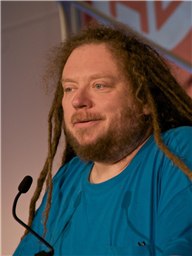 Jaron Lanierborn 1960 · You Are Not a Gadget: A Manifesto
 Ted Kaczynski1942–2023 · Industrial Society and Its Future
Where it leans
A whole worldview, about both. Positions are our estimates; philosophers argue about where many schools belong.
Most unusual position
72%On spirit or matter, it leans further toward spirit than 72% of the 135 schools on the map.
Middle of all schools on the map: 39 · This school: 18 (0 = Spirit, 100 = Matter)
Most typical position
Subjective or objectiveOn subjective or objective, it sits close to the middle of the schools on the map.
Middle of all schools on the map: 79 · This school: 78 (0 = Subjective, 100 = Objective)
Where it comes from
What came before Critique of Technology and led into it, and what grew out of it. Only links that historians agree on.
Came before it
- 1811-1816: the Luddites
- 1872: Samuel Butler's Erewhon, a land where machines are banned
- 1877: Ernst Kapp names 'philosophy of technology'
Grew out of it
- 1954: Heidegger's The Question Concerning Technology
- 1962-1973: Appropriate technology (Schumacher)
- 1979: Postphenomenology (Don Ihde), a more neutral heir
- 1990 and 1996: Neo-Luddism (Glendinning's manifesto; Second Neo-Luddite Congress)
One thing to practise
A real practice from Critique of Technology, to try this week. Described in our words.
Deliberate abstention (choosing which technologies to live without)
Before taking up a new device or app, ask what it will cost you and your community, and only adopt it once it has shown it does no harm. Give up the ones that fail, keep life simple, and treat the rest as plain tools, not as authorities. Lanier's version for today: delete your social media accounts.
From: The Neo-Luddite movement (Glendinning and Sale, 1990s), with Ellul's view of technique as a tool and Jaron Lanier's 2018 book
Its strongest argument
The best case Critique of Technology makes against people who see the world very differently, in two sentences. People whose furthest school this is see it on their result.
We call technology a neutral tool, but a method built for maximum efficiency has effects of its own, whatever its users want: people have to adapt to it, and it turns rivers, forests and even humans into resources on standby. So the real question is never only 'does it work?' but 'what does it do to us?', and people must decide what they are willing to lose. To a technology optimist it says: the danger is not a broken machine but a working one that slowly changes what you value.
The argument in our own words, not a quotation.
Where it sits
On the maps
Each map puts two scales side by side. Each small square is a school, at its exact spot; its name shows where there is room. For the others, point at the square, or tap it once on a phone. The first, Reality & truth, puts spirit or matter across and subjective or objective up and down. Click a school, or tap it again, to open it.
Swipe sideways to see the whole chart.
Thinkers in this school
Pictured thinkers nearest this spot on the map
Neighbours on the map
The six schools closest to this one.
- Media EcologyEvery medium, from the alphabet to the smartphone, reshapes how we think and live, often more than the messages it carries.
- Integral YogaSri Aurobindo's and the Mother's path: spirit is hidden in matter, evolution is rising toward a divine consciousness, and yoga can speed that change within one life.
- SikhismFaith founded by Guru Nanak: one formless Creator lives in everyone, and you reach God by remembering his name, working honestly, sharing and serving others as equals.
- TranscendentalismEmerson and Thoreau's view that intuition, nature and the individual soul reach truth better than institutions do.
- VitalismLiving things are driven by a life force that physics and chemistry alone cannot explain.
- HermeticismAncient mystical teachings said to come from Hermes Trismegistus: "as above, so below", and hidden knowledge can unite you with the divine.
And you, where do you stand?
Take the quiz and see your match with Critique of Technology and the other 134 schools.
Take the quiz