In one sentence
I become a person through other people, so I owe my community care, hospitality and a good character.
How someone from African Communitarianism might sum up what they believe. Our summary, not a quotation.
Key thinkers
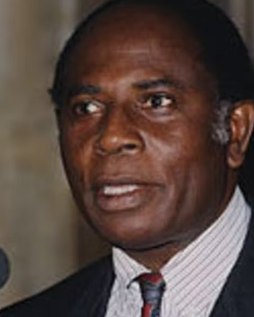
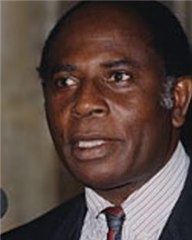 Kwasi Wiredu1931–2022 · Philosophy and an African Culture
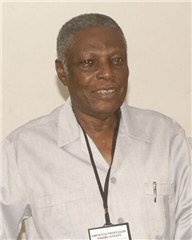 Kwame Gyekye1939–2019 · An Essay on African Philosophical Thought: The Akan Conceptual Scheme
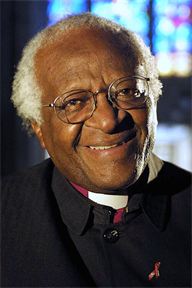 Desmond Tutu1931–2021 · No Future Without Forgiveness
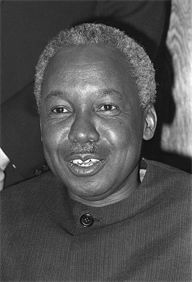 Julius Nyerere1922–1999 · Ujamaa: The Basis of African Socialism
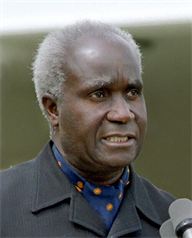 Kenneth Kaunda1924–2021 · A Humanist in Africa: Letters to Colin M. Morris
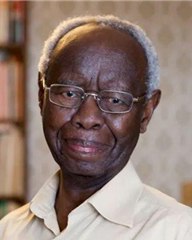 John Mbiti1931–2019 · African Religions and Philosophy
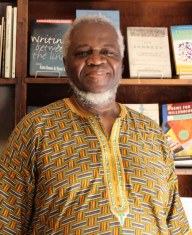 Ifeanyi Menkiti1940–2019 · Person and Community in African Traditional Thought
Where it leans
About right, wrong and how to live. Positions are our estimates; philosophers argue about where many schools belong.
Most unusual position
59%On spirit or matter, it leans further toward spirit than 59% of the 135 schools on the map.
Middle of all schools on the map: 39 · This school: 28 (0 = Spirit, 100 = Matter)
Most typical position
ValuesOn values (subjective or objective), it sits close to the middle of the schools on the map.
Middle of all schools on the map: 79 · This school: 75 (0 = subjective, 100 = objective)
Where it comes from
What came before African Communitarianism and led into it, and what grew out of it. Only links that historians agree on.
Came before it
- Ubuntu in oral tradition, in writing from the mid-19th century
- Placide Tempels, Bantu Philosophy (1945)
- Ubuntu written up as a philosophy by Jordan Ngubane (1950s)
- Decolonisation and African socialism, Nyerere's Ujamaa (1960s)
Grew out of it
- First book on ubuntu as philosophy, Samkange (1980)
- Ubuntu in South Africa's interim constitution (1993) and the Truth and Reconciliation Commission (1995)
- Gyekye's moderate communitarianism against Menkiti's radical version (1997)
- Ubuntu as a moral theory in academic ethics, Metz (2007)
One thing to practise
A real practice from African Communitarianism, to try this week. Described in our words.
Hospitality to the stranger
When a stranger or traveller comes to you, give food, drink and your attention without being asked and without expecting a return. Talk openly with them, as someone you are already bound to. The tradition treats this as the plainest daily form of ubuntu.
From: Bantu and wider African village tradition, as described by Nelson Mandela, Kenneth Kaunda and Julius Nyerere
Its strongest argument
The best case African Communitarianism makes against people who see the world very differently, in two sentences. People whose furthest school this is see it on their result.
No human being is self-sufficient: we are born into a community and cannot meet our needs alone. So "person" is not just a fact about a body but a title you earn by how you live with others, and the good is what serves human welfare and the common good. To a Western individualist it says: the common good is no threat to your freedom, because it is made of the basic goods every individual needs, your freedom included.
The argument in our own words, not a quotation.
Where it sits
On the maps
Each map puts two scales side by side. Each small square is a school, at its exact spot; its name shows where there is room. For the others, point at the square, or tap it once on a phone. The first, Reality & truth, puts spirit or matter across and subjective or objective up and down. Click a school, or tap it again, to open it.
Swipe sideways to see the whole chart.
Thinkers in this school
Pictured thinkers nearest this spot on the map
Neighbours on the map
The six schools closest to this one.
- AvicennismAvicenna's philosophy: God is the one Necessary Being from whom everything flows, and the soul exists apart from the body.
- Philosophy of DialogueJewish-German thinkers, above all Buber and Rosenzweig, who hold that a person becomes a self only by truly meeting another, the 'I and Thou', and through that meeting, God.
- Kyoto SchoolJapanese philosophers who joined Zen Buddhism with Western philosophy around the idea of "absolute nothingness".
- ConservatismBurke's political philosophy: society is too complex to rebuild from a theory, so keep the institutions that experience has tested and reform them slowly, piece by piece.
- Cartesian DualismDescartes' view that the mind and the body are two different kinds of thing, a thinking thing and an extended one.
- TranscendentalismEmerson and Thoreau's view that intuition, nature and the individual soul reach truth better than institutions do.
And you, where do you stand?
Take the quiz and see your match with African Communitarianism and the other 134 schools.
Take the quiz