In one sentence
I trust what generations have tested over any blueprint, so I mend what is broken and keep the rest.
How someone from Conservatism might sum up what they believe. Our summary, not a quotation.
Key thinkers
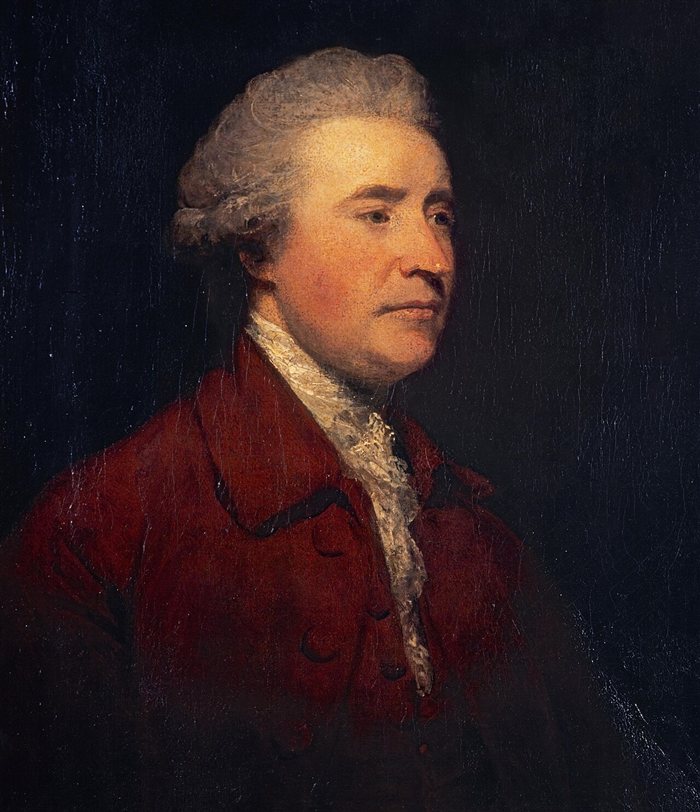
 Roger Scruton1944–2020 · How to Be a Conservative
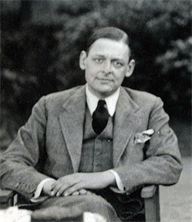 T. S. Eliot1888–1965 · Four Quartets
 Edmund Burke1729–1797 · Reflections on the Revolution in France
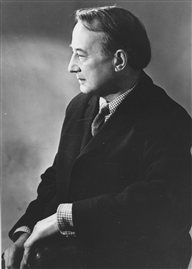 Michael Oakeshott1901–1990 · Rationalism in Politics and Other Essays
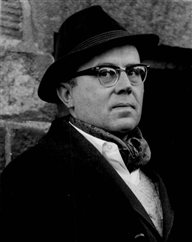 Russell Kirk1918–1994 · The Conservative Mind
Where it leans
About right, wrong and how to live. Positions are our estimates; philosophers argue about where many schools belong.
Most unusual position
67%On spirit or matter, it leans further toward spirit than 67% of the 135 schools on the map.
Middle of all schools on the map: 39 · This school: 22 (0 = Spirit, 100 = Matter)
Most typical position
ValuesOn values (subjective or objective), it is nearest to the other schools on the map, though still not in the middle.
Middle of all schools on the map: 79 · This school: 70 (0 = subjective, 100 = objective)
Where it comes from
What came before Conservatism and led into it, and what grew out of it. Only links that historians agree on.
Came before it
- 1552-1634: English common law and precedent (Edward Coke)
- 1688: the Glorious Revolution, Burke's model of good change
- 1789: the French Revolution and the Declaration of the Rights of Man
Grew out of it
- 1818: 'conservative' first used as a political term (Chateaubriand)
- 1953: Russell Kirk's The Conservative Mind
- 1956: Oakeshott's essay 'On Being Conservative'
- 1980: Scruton's The Meaning of Conservatism
One thing to practise
A real practice from Conservatism, to try this week. Described in our words.
Mend, don't rebuild
Before you change a habit, a rule or an arrangement in your life or work, find out what it is doing now and why it may have grown that way. Go and look at the real case, not the theory. Then change one part, watch what happens, and keep a way back; change more only once the first step has proved itself.
From: Edmund Burke, 1790s ('I must see the things; I must see the men'); taken up by Oakeshott and Scruton
Its strongest argument
The best case Conservatism makes against people who see the world very differently, in two sentences. People whose furthest school this is see it on their result.
Society is less like a machine than like an old living body: much of what holds it together works for reasons nobody wrote down, and a plan drawn up from first principles cannot see them. So reform what clearly fails, in small steps you can watch and undo, and keep what works even if you cannot fully explain why. To a radical it says: you are already a conservative about whatever you know best.
The argument in our own words, not a quotation.
Where it sits
On the maps
Each map puts two scales side by side. Each small square is a school, at its exact spot; its name shows where there is room. For the others, point at the square, or tap it once on a phone. The first, Reality & truth, puts spirit or matter across and subjective or objective up and down. Click a school, or tap it again, to open it.
Swipe sideways to see the whole chart.
Thinkers in this school
Pictured thinkers nearest this spot on the map
Neighbours on the map
The six schools closest to this one.
- Kyoto SchoolJapanese philosophers who joined Zen Buddhism with Western philosophy around the idea of "absolute nothingness".
- Philosophy of DialogueJewish-German thinkers, above all Buber and Rosenzweig, who hold that a person becomes a self only by truly meeting another, the 'I and Thou', and through that meeting, God.
- TranscendentalismEmerson and Thoreau's view that intuition, nature and the individual soul reach truth better than institutions do.
- Media EcologyEvery medium, from the alphabet to the smartphone, reshapes how we think and live, often more than the messages it carries.
- Critique of TechnologyModern technology is not a neutral tool: it pushes efficiency over human ends, so people must decide what to keep and what to refuse.
- African CommunitarianismAfrican ethics of community, called ubuntu in the south: a person becomes fully a person through other people, so character, sharing and the common good come first.
And you, where do you stand?
Take the quiz and see your match with Conservatism and the other 134 schools.
Take the quiz