In one sentence
My mind and my body are two different kinds of thing: one that thinks and one that takes up space.
How someone from Cartesian Dualism might sum up what they believe. Our summary, not a quotation.
Key thinkers
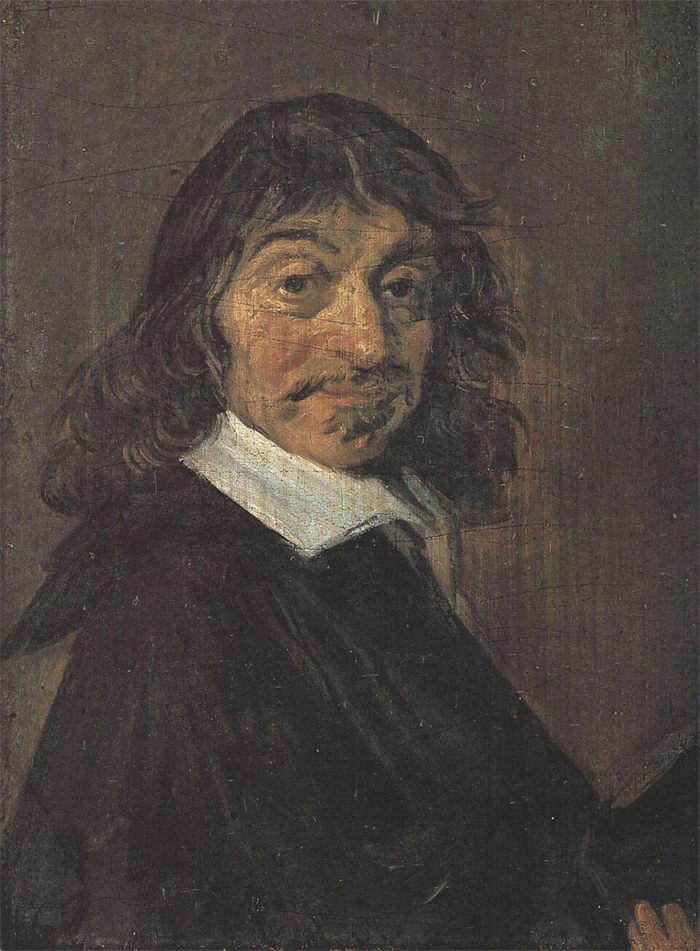
 René Descartes1596–1650 · Meditations on First Philosophy
 Mary Astell1666–1731 · A Serious Proposal to the Ladies
Where it leans
About what is real and how we know. Positions are our estimates; philosophers argue about where many schools belong.
Most unusual position
81%On facts (subjective or objective), it leans further toward objective than 81% of the 135 schools on the map.
Middle of all schools on the map: 79 · This school: 90 (0 = subjective, 100 = objective)
Most typical position
Spirit or matterOn spirit or matter, it is nearest to the other schools on the map, though still not in the middle.
Middle of all schools on the map: 39 · This school: 30 (0 = Spirit, 100 = Matter)
Where it comes from
What came before Cartesian Dualism and led into it, and what grew out of it. Only links that historians agree on.
Came before it
- Plato (4th century BC)
- Augustine (4th to 5th century)
- Scholasticism
Grew out of it
- Princess Elisabeth of Bohemia (1643), who asked how a mind can move a body
- Nicolas Malebranche (17th century)
- Gilbert Ryle (1949), its best-known critic
- David Chalmers (1990s), who revived dualist arguments
One thing to practise
A real practice from Cartesian Dualism, to try this week. Described in our words.
Change your desires, not the world
When something you want is out of your reach, follow Descartes's third rule for living: work to change your own wishes rather than the order of the world. Remind yourself that only your own thoughts are fully in your power.
From: René Descartes, Discourse on Method (1637), part 3
Its strongest argument
The best case Cartesian Dualism makes against people who see the world very differently, in two sentences. People whose furthest school this is see it on their result.
You can doubt you have a body, since you might be dreaming, but you cannot doubt you are thinking while you doubt, so the thinking you seems different from the body. If that holds, a view on which you are only brain chemistry must explain how pain, colour and thought, as felt from inside, could be just matter moving.
The argument in our own words, not a quotation.
Where it sits
On the maps
Each map puts two scales side by side. Each small square is a school, at its exact spot; its name shows where there is room. For the others, point at the square, or tap it once on a phone. The first, Reality & truth, puts spirit or matter across and subjective or objective up and down. Click a school, or tap it again, to open it.
Swipe sideways to see the whole chart.
Thinkers in this school
Pictured thinkers nearest this spot on the map
Neighbours on the map
The six schools closest to this one.
- Natural LawThere is a moral law built into human nature that reason can discover and every human law should follow.
- AvicennismAvicenna's philosophy: God is the one Necessary Being from whom everything flows, and the soul exists apart from the body.
- Neo-ConfucianismA later Confucianism that added a metaphysics: a single principle runs through all things, and self-cultivation lets you see it.
- LogotherapyThe deepest human drive is the will to meaning, and life keeps its meaning in every situation, even in suffering we cannot avoid.
- RationalismReason alone, without the senses, can give us certain knowledge of how things are.
- LongtermismPeople who will live in the future count as much as people alive today, and there may be vastly more of them, so protecting the long-term future comes first.
And you, where do you stand?
Take the quiz and see your match with Cartesian Dualism and the other 134 schools.
Take the quiz