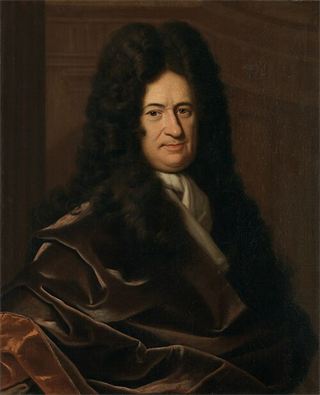
In one sentence
Reason alone, without the senses, can give me certain knowledge of how things are.
How someone from Rationalism might sum up what they believe. Our summary, not a quotation.
Key thinkers
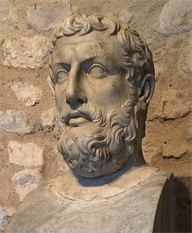 Parmenides5th century BC · On Nature
 Zera Yacob1599–1692 · Hatata (Inquiry)
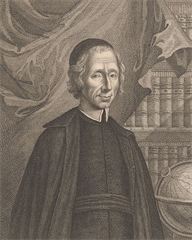 Nicolas Malebranche1638–1715 · The Search After Truth
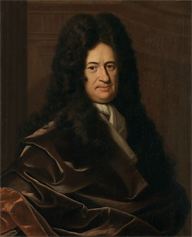 Gottfried Wilhelm Leibniz1646–1716 · Monadology
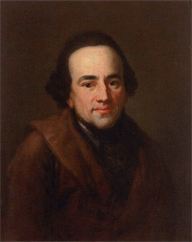 Moses Mendelssohn1729–1786 · Jerusalem, or on Religious Power and Judaism
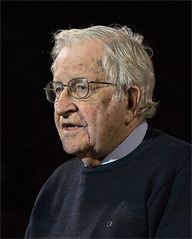 Noam Chomskyborn 1928 · Language and Mind
Where it leans
About what is real and how we know. Positions are our estimates; philosophers argue about where many schools belong.
Most unusual position
65%On spirit or matter, it leans further toward spirit than 65% of the 135 schools on the map.
Middle of all schools on the map: 39 · This school: 23 (0 = Spirit, 100 = Matter)
Most typical position
FactsOn facts (subjective or objective), it is nearest to the other schools on the map, though still not in the middle.
Middle of all schools on the map: 79 · This school: 92 (0 = subjective, 100 = objective)
Where it comes from
What came before Rationalism and led into it, and what grew out of it. Only links that historians agree on.
Came before it
- Parmenides (5th century BC)
- Plato (4th century BC)
- René Descartes (17th century)
Grew out of it
- Baruch Spinoza and Gottfried Wilhelm Leibniz (17th century)
- Christian Wolff (18th century)
- Immanuel Kant (1781), who tried to join it with Empiricism
One thing to practise
A real practice from Rationalism, to try this week. Described in our words.
Descartes's four rules
Take a problem you are stuck on. Accept nothing you do not clearly see to be true, break the problem into its smallest parts, work from the simplest part to the hardest, and finally check the whole so nothing is left out.
From: René Descartes, Discourse on Method (1637), part 2
Its strongest argument
The best case Rationalism makes against people who see the world very differently, in two sentences. People whose furthest school this is see it on their result.
You know that two plus two is four, that nothing can be red and green all over at once, and that a triangle's angles add up to two right angles, and you know these must hold everywhere, which no amount of looking could show. So if you think all knowledge comes from the senses, explain where that certainty comes from.
The argument in our own words, not a quotation.
Where it sits
On the maps
Each map puts two scales side by side. Each small square is a school, at its exact spot; its name shows where there is room. For the others, point at the square, or tap it once on a phone. The first, Reality & truth, puts spirit or matter across and subjective or objective up and down. Click a school, or tap it again, to open it.
Swipe sideways to see the whole chart.
Thinkers in this school
Pictured thinkers nearest this spot on the map
Neighbours on the map
The six schools closest to this one.
- AvicennismAvicenna's philosophy: God is the one Necessary Being from whom everything flows, and the soul exists apart from the body.
- Neo-ConfucianismA later Confucianism that added a metaphysics: a single principle runs through all things, and self-cultivation lets you see it.
- ThomismThomas Aquinas' joining of Aristotle and Christianity: reason and faith agree, and morality follows from human nature as God made it.
- PythagoreanismPythagoras' community: the soul is immortal and reborn, the world is ordered by number, and a disciplined shared life of silence and purity frees the soul.
- Natural LawThere is a moral law built into human nature that reason can discover and every human law should follow.
- Cartesian DualismDescartes' view that the mind and the body are two different kinds of thing, a thinking thing and an extended one.
And you, where do you stand?
Take the quiz and see your match with Rationalism and the other 134 schools.
Take the quiz