In one sentence
A moral law is built into human nature, my reason can discover it, and every human law should follow it.
How someone from Natural Law might sum up what they believe. Our summary, not a quotation.
Key thinkers
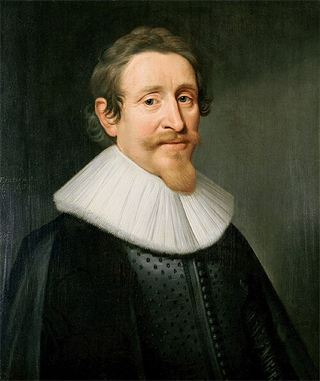
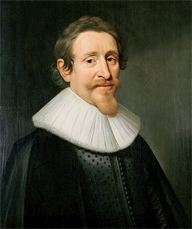 Hugo Grotius1583–1645 · On the Law of War and Peace
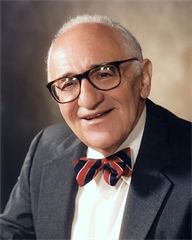 Murray Rothbard1926–1995 · The Ethics of Liberty
Where it leans
About right, wrong and how to live. Positions are our estimates; philosophers argue about where many schools belong.
Most unusual position
93%On values (subjective or objective), it leans further toward objective than 93% of the 135 schools on the map.
Middle of all schools on the map: 79 · This school: 95 (0 = subjective, 100 = objective)
Most typical position
Spirit or matterOn spirit or matter, it is nearest to the other schools on the map, though still not in the middle.
Middle of all schools on the map: 39 · This school: 30 (0 = Spirit, 100 = Matter)
Where it comes from
What came before Natural Law and led into it, and what grew out of it. Only links that historians agree on.
Came before it
- Aristotle (4th century BC)
- Zeno of Citium and the Stoics (3rd century BC)
- Cicero (1st century BC)
- Thomas Aquinas (13th century)
Grew out of it
- Hugo Grotius (17th century)
- John Locke (17th century)
- Thomas Jefferson, Declaration of Independence (1776)
- John Finnis, Natural Law and Natural Rights (1980)
One thing to practise
A real practice from Natural Law, to try this week. Described in our words.
The Birmingham test
Take a rule you are asked to follow, at work, at school or in law, and ask: does it lift up human persons or degrade them? King argued that a rule that degrades people is not a true law, and that anyone who breaks it should do so openly and accept the penalty.
From: Martin Luther King Jr., Letter from Birmingham Jail (1963), drawing on Augustine and Aquinas
Its strongest argument
The best case Natural Law makes against people who see the world very differently, in two sentences. People whose furthest school this is see it on their result.
Cultures everywhere forbid murder, theft and betraying your own people, and anyone who is wronged protests as if the wrongdoer broke a rule they both already knew. So if you think morality is just custom or feeling, you need to explain why you, too, appeal to a law above custom the moment someone treats you unfairly.
The argument in our own words, not a quotation.
Where it sits
On the maps
Each map puts two scales side by side. Each small square is a school, at its exact spot; its name shows where there is room. For the others, point at the square, or tap it once on a phone. The first, Reality & truth, puts spirit or matter across and subjective or objective up and down. Click a school, or tap it again, to open it.
Swipe sideways to see the whole chart.
Thinkers in this school
Pictured thinkers nearest this spot on the map
Neighbours on the map
The six schools closest to this one.
- Rabbinic JudaismMainstream Judaism since the Temple's fall: God gave Moses a written and an oral Torah, lived out through law, study, debate and kindness in community.
- LogotherapyThe deepest human drive is the will to meaning, and life keeps its meaning in every situation, even in suffering we cannot avoid.
- KantianismKant's view that the mind shapes how we experience the world, and that morality means acting only on rules everyone could follow.
- MohismMozi's ancient Chinese school: care for everyone equally, judge actions by how much they benefit people, and take Heaven's will as the standard.
- Neo-ConfucianismA later Confucianism that added a metaphysics: a single principle runs through all things, and self-cultivation lets you see it.
- JainismAn Indian tradition of non-violence towards all living beings, and the idea that every view holds only part of the truth.
And you, where do you stand?
Take the quiz and see your match with Natural Law and the other 134 schools.
Take the quiz