In one sentence
I believe my life has a meaning in every situation, and my task is to find it and answer for it.
How someone from Logotherapy might sum up what they believe. Our summary, not a quotation.
Key thinkers
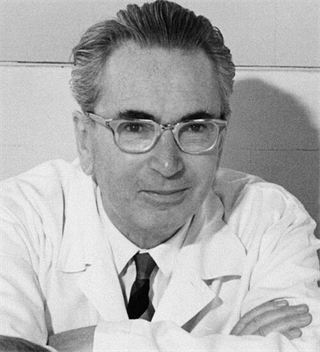
 Viktor Frankl1905–1997 · Man's Search for Meaning
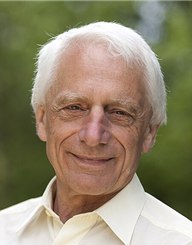 Alfried Längleborn 1951 · Lehrbuch zur Existenzanalyse. Grundlagen
 Paul T. P. Wong1937–2024 · The Human Quest for Meaning: A Handbook of Psychological Research and Clinical Applications (edited by Paul T. P. Wong and P. S. Fry)
Where it leans
A whole worldview, about both. Positions are our estimates; philosophers argue about where many schools belong.
Most unusual position
99%On subjective or objective, it leans further toward objective than 99% of the 135 schools on the map.
Middle of all schools on the map: 79 · This school: 97 (0 = Subjective, 100 = Objective)
Most typical position
Spirit or matterOn spirit or matter, it is nearest to the other schools on the map, though still not in the middle.
Middle of all schools on the map: 39 · This school: 30 (0 = Spirit, 100 = Matter)
Where it comes from
What came before Logotherapy and led into it, and what grew out of it. Only links that historians agree on.
Came before it
- From the 1890s: Freud's psychoanalysis and Adler's individual psychology, the first two Viennese schools
- 1925: Frankl in Adler's circle, expelled for putting meaning first
- Max Scheler's ethics of objective values (Scheler 1874–1928)
- Kierkegaard's will to meaning
Grew out of it
- 1997: Meaning therapy (Paul T. P. Wong)
- Since the 1990s: spread of logotherapy institutes
- ICD-11: 'demoralisation crisis' added
- Last 20 years: existential positive psychology
One thing to practise
A real practice from Logotherapy, to try this week. Described in our words.
Paradoxical intention
When fear of something makes it happen (you lie awake because you are afraid of not sleeping), deliberately wish for the very thing you fear. Go to bed and try on purpose to stay awake. The fear loses its grip and the problem often fades.
From: Viktor Frankl, Vienna, as part of logotherapy
Its strongest argument
The best case Logotherapy makes against people who see the world very differently, in two sentences. People whose furthest school this is see it on their result.
In the worst conditions some people keep going and others give up, and the difference is often whether they have something to live for, not how much pleasure or power they have. So the main human drive is the search for meaning, and when it is blocked people fall into emptiness and illness. Even when nothing else can be chosen, the attitude we take to suffering is still ours, so no life is ever without meaning. To someone who thinks life is meaningless it says: meaning is not something you lack, it is a question your life is asking you.
The argument in our own words, not a quotation.
Where it sits
On the maps
Each map puts two scales side by side. Each small square is a school, at its exact spot; its name shows where there is room. For the others, point at the square, or tap it once on a phone. The first, Reality & truth, puts spirit or matter across and subjective or objective up and down. Click a school, or tap it again, to open it.
Swipe sideways to see the whole chart.
Thinkers in this school
Pictured thinkers nearest this spot on the map
Neighbours on the map
The six schools closest to this one.
- Natural LawThere is a moral law built into human nature that reason can discover and every human law should follow.
- Cartesian DualismDescartes' view that the mind and the body are two different kinds of thing, a thinking thing and an extended one.
- RationalismReason alone, without the senses, can give us certain knowledge of how things are.
- AvicennismAvicenna's philosophy: God is the one Necessary Being from whom everything flows, and the soul exists apart from the body.
- Neo-ConfucianismA later Confucianism that added a metaphysics: a single principle runs through all things, and self-cultivation lets you see it.
- PythagoreanismPythagoras' community: the soul is immortal and reborn, the world is ordered by number, and a disciplined shared life of silence and purity frees the soul.
And you, where do you stand?
Take the quiz and see your match with Logotherapy and the other 134 schools.
Take the quiz