In one sentence
One single principle runs through all things, and by cultivating myself I can come to see it.
How someone from Neo-Confucianism might sum up what they believe. Our summary, not a quotation.
Key thinkers
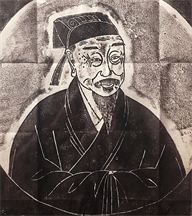 Zhu Xi1130–1200 · Reflections on Things at Hand (Jinsilu) · by Zhu Xi and Lü Zuqian
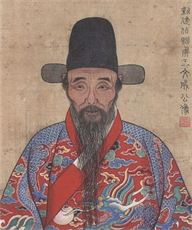 Wang Yangming1472–1529 · Instructions for Practical Living (Chuanxi lu)
Where it leans
A whole worldview, about both. Positions are our estimates; philosophers argue about where many schools belong.
Most unusual position
61%On spirit or matter, it leans further toward spirit than 61% of the 135 schools on the map.
Middle of all schools on the map: 39 · This school: 25 (0 = Spirit, 100 = Matter)
Most typical position
Subjective or objectiveOn subjective or objective, it is nearest to the other schools on the map, though still not in the middle.
Middle of all schools on the map: 79 · This school: 90 (0 = Subjective, 100 = Objective)
Where it comes from
What came before Neo-Confucianism and led into it, and what grew out of it. Only links that historians agree on.
Came before it
Grew out of it
- Zhu Xi (12th century)
- Wang Yangming (15th to 16th century)
- Yi Hwang and Korean Neo-Confucianism (16th century)
- Japanese Neo-Confucianism of the Edo period (17th to 19th century)
One thing to practise
A real practice from Neo-Confucianism, to try this week. Described in our words.
Quiet sitting and study
Spend part of each day in quiet sitting, calming the mind without trying to empty it, and part in reading and thinking about something worth learning. Zhu Xi once advised a student to split the day in half between the two.
From: Zhu Xi (12th century), in the Classified Conversations of Master Zhu (Zhuzi yulei)
Its strongest argument
The best case Neo-Confucianism makes against people who see the world very differently, in two sentences. People whose furthest school this is see it on their result.
When you suddenly see a child about to fall into a well, you feel alarm before any thought of reward or reputation, and Neo-Confucians held that this shows moral sense is part of the same principle that orders all of nature. So if you think values are merely invented, ask why that alarm arrives in you before you have chosen anything.
The argument in our own words, not a quotation.
Where it sits
On the maps
Each map puts two scales side by side. Each small square is a school, at its exact spot; its name shows where there is room. For the others, point at the square, or tap it once on a phone. The first, Reality & truth, puts spirit or matter across and subjective or objective up and down. Click a school, or tap it again, to open it.
Swipe sideways to see the whole chart.
Thinkers in this school
Pictured thinkers nearest this spot on the map
Neighbours on the map
The six schools closest to this one.
- AvicennismAvicenna's philosophy: God is the one Necessary Being from whom everything flows, and the soul exists apart from the body.
- RationalismReason alone, without the senses, can give us certain knowledge of how things are.
- ThomismThomas Aquinas' joining of Aristotle and Christianity: reason and faith agree, and morality follows from human nature as God made it.
- Natural LawThere is a moral law built into human nature that reason can discover and every human law should follow.
- Cartesian DualismDescartes' view that the mind and the body are two different kinds of thing, a thinking thing and an extended one.
- PythagoreanismPythagoras' community: the soul is immortal and reborn, the world is ordered by number, and a disciplined shared life of silence and purity frees the soul.
And you, where do you stand?
Take the quiz and see your match with Neo-Confucianism and the other 134 schools.
Take the quiz