In one sentence
I study and keep God's law with my community, arguing over the text, because this world is the hallway to the next.
How someone from Rabbinic Judaism might sum up what they believe. Our summary, not a quotation.
Key thinkers
 Hillel the Elderc. 110 BC–AD 10 · Pirkei Avot (by early rabbis, including Hillel)
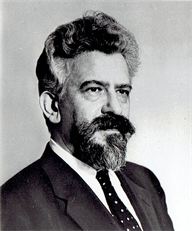 Abraham Joshua Heschel1907–1972 · God in Search of Man
 Rabbi Akivac. 50–135 · Mishnah (by Judah ha-Nasi, on the basis of Rabbi Akiva's arrangement)
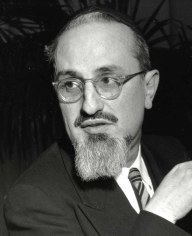 Joseph B. Soloveitchik1903–1993 · The Lonely Man of Faith
Where it leans
A whole worldview, about both. Positions are our estimates; philosophers argue about where many schools belong.
Most unusual position
61%On spirit or matter, it leans further toward spirit than 61% of the 135 schools on the map.
Middle of all schools on the map: 39 · This school: 25 (0 = Spirit, 100 = Matter)
Most typical position
Subjective or objectiveOn subjective or objective, it sits close to the middle of the schools on the map.
Middle of all schools on the map: 79 · This school: 80 (0 = Subjective, 100 = Objective)
Where it comes from
What came before Rabbinic Judaism and led into it, and what grew out of it. Only links that historians agree on.
Came before it
- From 332 BC: Hellenistic rule (Alexander defeats Persia)
- 110-37 BC and after: the Pharisees and the 'pairs', ending with Hillel and Shammai
- 70 AD: the Temple destroyed; worship rebuilt around rabbis, prayer and study
- 132-135 AD: the Bar Kokhba revolt
Grew out of it
- c. 200: the Mishnah
- c. 600: the Babylonian Talmud completed
- 12th century: Maimonides' Mishneh Torah (d. 1204)
- 1563: the Shulchan Aruch (Joseph Karo)
- 1923: Daf Yomi, a daily page of Talmud worldwide
One thing to practise
A real practice from Rabbinic Judaism, to try this week. Described in our words.
Study in pairs (chavruta)
Choose a study partner and a short text. Read it aloud together, then each of you explains what you think it means and why; listen to the other's reasoning, push back, and sharpen each other's ideas until you reach something neither of you saw alone. Do it at a fixed time, not only 'when you have leisure'.
From: The rabbis of the Mishnah and Talmud; still the main method in yeshivas
Its strongest argument
The best case Rabbinic Judaism makes against people who see the world very differently, in two sentences. People whose furthest school this is see it on their result.
A written law on its own cannot be lived: the Torah forbids 'work' on the Sabbath but never says what counts as work. So it needs a living tradition of interpretation, passed on and argued over by teachers, that turns the text into a way of life. That tradition lets ordinary people meet the holy in daily life, at the table and at work, not only in a temple; to someone far from it, its shortest summary is Hillel's: what is hateful to you, do not do to your fellow.
The argument in our own words, not a quotation.
Where it sits
On the maps
Each map puts two scales side by side. Each small square is a school, at its exact spot; its name shows where there is room. For the others, point at the square, or tap it once on a phone. The first, Reality & truth, puts spirit or matter across and subjective or objective up and down. Click a school, or tap it again, to open it.
Swipe sideways to see the whole chart.
Thinkers in this school
Pictured thinkers nearest this spot on the map
Neighbours on the map
The six schools closest to this one.
- TranscendentalismEmerson and Thoreau's view that intuition, nature and the individual soul reach truth better than institutions do.
- Critique of TechnologyModern technology is not a neutral tool: it pushes efficiency over human ends, so people must decide what to keep and what to refuse.
- PessimismLife holds more suffering than happiness; Schopenhauer, its best-known voice, traced this to a blind, restless will that drives everything, and saw compassion as what eases it.
- Media EcologyEvery medium, from the alphabet to the smartphone, reshapes how we think and live, often more than the messages it carries.
- Integral YogaSri Aurobindo's and the Mother's path: spirit is hidden in matter, evolution is rising toward a divine consciousness, and yoga can speed that change within one life.
- SikhismFaith founded by Guru Nanak: one formless Creator lives in everyone, and you reach God by remembering his name, working honestly, sharing and serving others as equals.
And you, where do you stand?
Take the quiz and see your match with Rabbinic Judaism and the other 134 schools.
Take the quiz