In one sentence
I start philosophy by carefully describing experience exactly as it shows itself, before any theory about it.
How someone from Phenomenology might sum up what they believe. Our summary, not a quotation.
Key thinkers
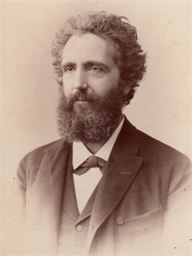 Franz Brentano1838–1917 · Psychology from an Empirical Standpoint
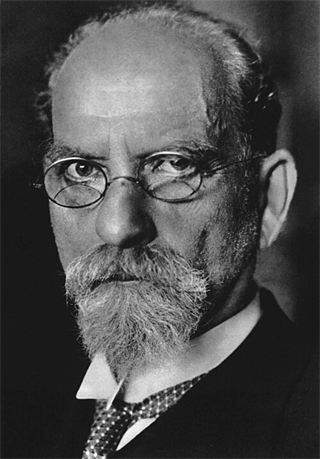
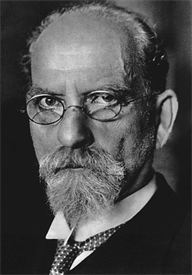 Edmund Husserl1859–1938 · Logical Investigations
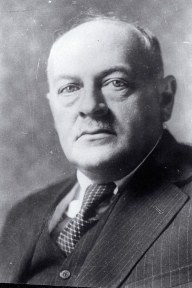 Max Scheler1874–1928 · Formalism in Ethics and Non-Formal Ethics of Values
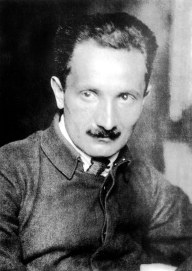 Martin Heidegger1889–1976 · Being and Time
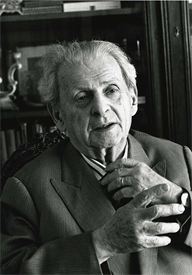 Emmanuel Levinas1906–1995 · Totality and Infinity
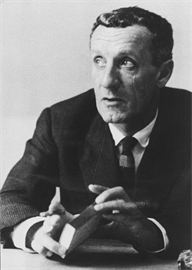 Maurice Merleau-Ponty1908–1961 · Phenomenology of Perception
Where it leans
About what is real and how we know. Positions are our estimates; philosophers argue about where many schools belong.
Most unusual position
69%On facts (subjective or objective), it leans further toward subjective than 69% of the 135 schools on the map.
Middle of all schools on the map: 79 · This school: 67 (0 = subjective, 100 = objective)
Most typical position
Spirit or matterOn spirit or matter, it is nearest to the other schools on the map, though still not in the middle.
Middle of all schools on the map: 39 · This school: 27 (0 = Spirit, 100 = Matter)
Where it comes from
What came before Phenomenology and led into it, and what grew out of it. Only links that historians agree on.
Came before it
- René Descartes, Meditations (1641)
- Franz Brentano, intentionality (1874)
Grew out of it
- Martin Heidegger, Being and Time (1927)
- Jean-Paul Sartre, Being and Nothingness (1943)
- Maurice Merleau-Ponty, Phenomenology of Perception (1945)
One thing to practise
A real practice from Phenomenology, to try this week. Described in our words.
Bracketing, the epoché
Pick an ordinary object, like a cup, and for ten minutes set aside what you know or believe about it. Describe only how it shows up: its sides, its shine, how it changes as you move, and what you expect from the side you cannot see.
From: Edmund Husserl, Ideas I (1913), sections 31 and 32
Its strongest argument
The best case Phenomenology makes against people who see the world very differently, in two sentences. People whose furthest school this is see it on their result.
Every theory about the world, physics included, starts from things appearing to someone, so if you skip careful description of that experience, you build on a foundation you have never looked at. So if you think science alone tells you what is real, Husserl would point out that science itself grows from the lived world it so often forgets.
The argument in our own words, not a quotation.
Where it sits
On the maps
Each map puts two scales side by side. Each small square is a school, at its exact spot; its name shows where there is room. For the others, point at the square, or tap it once on a phone. The first, Reality & truth, puts spirit or matter across and subjective or objective up and down. Click a school, or tap it again, to open it.
Swipe sideways to see the whole chart.
Thinkers in this school
Pictured thinkers nearest this spot on the map
Neighbours on the map
The six schools closest to this one.
- African CommunitarianismAfrican ethics of community, called ubuntu in the south: a person becomes fully a person through other people, so character, sharing and the common good come first.
- Analytical PsychologyBeneath the personal mind lies a collective unconscious of shared images, and a good life means growing into your whole self by meeting them.
- PessimismLife holds more suffering than happiness; Schopenhauer, its best-known voice, traced this to a blind, restless will that drives everything, and saw compassion as what eases it.
- JainismAn Indian tradition of non-violence towards all living beings, and the idea that every view holds only part of the truth.
- ConfucianismA good life and a good society come from virtue, respect, ritual and duty within the family and the state.
- TranscendentalismEmerson and Thoreau's view that intuition, nature and the individual soul reach truth better than institutions do.
And you, where do you stand?
Take the quiz and see your match with Phenomenology and the other 134 schools.
Take the quiz