In one sentence
Much of what we take as natural, like categories and norms, is built by society and could have been different.
How someone from Social Constructionism might sum up what they believe. Our summary, not a quotation.
Key thinkers
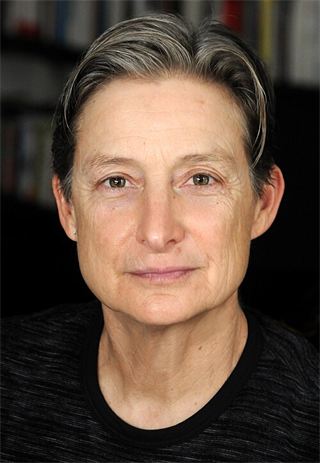
 Judith Butlerborn 1956 · Gender Trouble
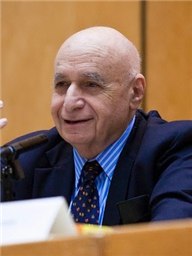 Peter L. Berger1929–2017 · The Social Construction of Reality: A Treatise in the Sociology of Knowledge (by Peter L. Berger and Thomas Luckmann)
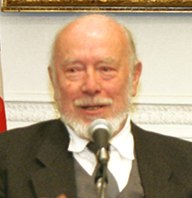 Thomas Luckmann1927–2016 · The Invisible Religion
Where it leans
About what is real and how we know. Positions are our estimates; philosophers argue about where many schools belong.
Most unusual position
88%On facts (subjective or objective), it leans further toward subjective than 88% of the 135 schools on the map.
Middle of all schools on the map: 79 · This school: 30 (0 = subjective, 100 = objective)
Most typical position
Spirit or matterOn spirit or matter, it is nearest to the other schools on the map, though still not in the middle.
Middle of all schools on the map: 39 · This school: 48 (0 = Spirit, 100 = Matter)
Where it comes from
What came before Social Constructionism and led into it, and what grew out of it. Only links that historians agree on.
Came before it
- Karl Marx (19th century)
- Émile Durkheim, social facts (1895)
- Alfred Schutz, The Phenomenology of the Social World (1932)
Grew out of it
- Peter Berger and Thomas Luckmann, The Social Construction of Reality (1966)
- John Searle, The Construction of Social Reality (1995)
- Ian Hacking, The Social Construction of What? (1999)
One thing to practise
A real practice from Social Constructionism, to try this week. Described in our words.
Be a lodger at home
For a short while at home, behave like a polite lodger: speak formally, ask permission for small things and say nothing personal. Notice how fast people react, which shows how much everyday order rests on unspoken shared rules.
From: Harold Garfinkel, Studies in Ethnomethodology (1967), chapter 2
Its strongest argument
The best case Social Constructionism makes against people who see the world very differently, in two sentences. People whose furthest school this is see it on their result.
Money, borders, marriage and the lines between races exist only because people treat them as real, and history shows such categories being drawn differently in different places and times. So if you treat a social category as fixed by nature, the constructionist asks whether you would find it drawn the same way on another continent or in another century.
The argument in our own words, not a quotation.
Where it sits
On the maps
Each map puts two scales side by side. Each small square is a school, at its exact spot; its name shows where there is room. For the others, point at the square, or tap it once on a phone. The first, Reality & truth, puts spirit or matter across and subjective or objective up and down. Click a school, or tap it again, to open it.
Swipe sideways to see the whole chart.
Thinkers in this school
Pictured thinkers nearest this spot on the map
Neighbours on the map
The six schools closest to this one.
- ExistentialismExistence comes before essence: there is no given human nature, so you make yourself through your choices.
- TaoismLive in harmony with the Tao, the Way of nature: act without forcing, stay simple, and softness overcomes hardness.
- Humanistic PsychologyPeople are whole, conscious and free to choose, and with real acceptance they naturally grow towards their full potential.
- SkepticismWe cannot know things for certain, so we should doubt claims to knowledge.
- HermeneuticsUnderstanding is always interpretation, shaped by the history and point of view the interpreter brings.
- PoststructuralismMeaning is never fixed; language, power and history shape what counts as true or normal.
And you, where do you stand?
Take the quiz and see your match with Social Constructionism and the other 134 schools.
Take the quiz