In one sentence
Since we can't know things for certain, I doubt claims to knowledge.
How someone from Skepticism might sum up what they believe. Our summary, not a quotation.
Key thinkers
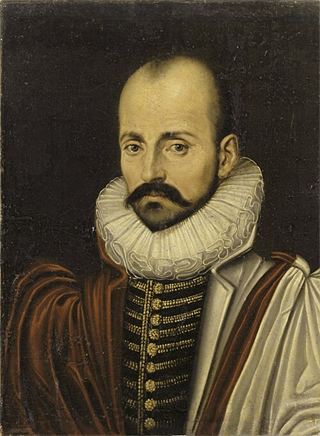
 Michel de Montaigne1533–1592 · Essays
 Pierre Bayle1647–1706 · Historical and Critical Dictionary
 Nassim Nicholas Talebborn 1960 · The Black Swan: The Impact of the Highly Improbable
Jayarashi Bhattac. 800–840 · Tattvopaplavasimha
Where it leans
About what is real and how we know. Positions are our estimates; philosophers argue about where many schools belong.
Most unusual position
94%On facts (subjective or objective), it leans further toward subjective than 94% of the 135 schools on the map.
Middle of all schools on the map: 79 · This school: 15 (0 = subjective, 100 = objective)
Most typical position
Spirit or matterOn spirit or matter, it sits close to the middle of the schools on the map.
Middle of all schools on the map: 39 · This school: 45 (0 = Spirit, 100 = Matter)
Where it comes from
What came before Skepticism and led into it, and what grew out of it. Only links that historians agree on.
Came before it
- Pyrrho (about 300 BC), founder of Pyrrhonism
- Arcesilaus and Carneades, the Academic sceptics (3rd to 2nd century BC)
- Sextus Empiricus (2nd century AD)
Grew out of it
- Michel de Montaigne, Essays (1580)
- René Descartes, the method of doubt (1641)
- David Hume (1739)
One thing to practise
A real practice from Skepticism, to try this week. Described in our words.
Run the ten modes
Take something that seems obvious, like a food tasting good or a room feeling warm. Ask how it would seem to an animal, to another person, to another sense, in another mood or another place; where the answers differ, hold back from saying how it really is.
From: Sextus Empiricus, Outlines of Pyrrhonism, book 1, chapter 14
Its strongest argument
The best case Skepticism makes against people who see the world very differently, in two sentences. People whose furthest school this is see it on their result.
You cannot step outside your own experience to check whether it matches the world, and any test of your senses or reasoning must itself rely on your senses or reasoning, so every claim to certainty argues in a circle. So if you feel certain about something, the sceptic asks how you know you are not dreaming, deceived or simply wrong.
The argument in our own words, not a quotation.
Where it sits
On the maps
Each map puts two scales side by side. Each small square is a school, at its exact spot; its name shows where there is room. For the others, point at the square, or tap it once on a phone. The first, Reality & truth, puts spirit or matter across and subjective or objective up and down. Click a school, or tap it again, to open it.
Swipe sideways to see the whole chart.
Thinkers in this school
Pictured thinkers nearest this spot on the map
Neighbours on the map
The six schools closest to this one.
- PostmodernismSuspicion of grand stories and universal truths; knowledge is local, plural and shaped by language and power.
- TaoismLive in harmony with the Tao, the Way of nature: act without forcing, stay simple, and softness overcomes hardness.
- PyrrhonismSuspend judgement on every question, and peace of mind follows.
- PoststructuralismMeaning is never fixed; language, power and history shape what counts as true or normal.
- Social ConstructionismMuch of what we take as natural, like categories and norms, is built by society and could have been different.
- ExistentialismExistence comes before essence: there is no given human nature, so you make yourself through your choices.
And you, where do you stand?
Take the quiz and see your match with Skepticism and the other 134 schools.
Take the quiz