In one sentence
I distrust grand stories and universal truths; knowledge is local, comes in many forms, and is shaped by language and power.
How someone from Postmodernism might sum up what they believe. Our summary, not a quotation.
Key thinkers
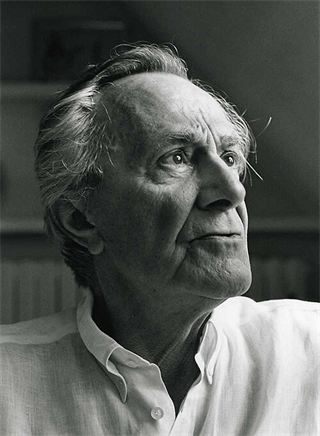
 Jean-François Lyotard1924–1998 · The Postmodern Condition
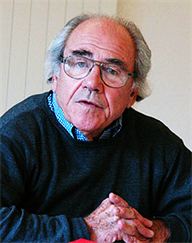 Jean Baudrillard1929–2007 · Simulacra and Simulation
Where it leans
A whole worldview, about both. Positions are our estimates; philosophers argue about where many schools belong.
Most unusual position
98%On subjective or objective, it leans further toward subjective than 98% of the 135 schools on the map.
Middle of all schools on the map: 79 · This school: 7 (0 = Subjective, 100 = Objective)
Most typical position
Spirit or matterOn spirit or matter, it is nearest to the other schools on the map, though still not in the middle.
Middle of all schools on the map: 39 · This school: 50 (0 = Spirit, 100 = Matter)
Where it comes from
What came before Postmodernism and led into it, and what grew out of it. Only links that historians agree on.
Came before it
- Friedrich Nietzsche (19th century)
- Ferdinand de Saussure and structuralism (1916)
- Martin Heidegger (20th century)
- Jean-François Lyotard, The Postmodern Condition (1979)
Grew out of it
- Jean Baudrillard, Simulacra and Simulation (1981)
- Richard Rorty (1980s)
- Judith Butler, Gender Trouble (1990)
One thing to practise
A real practice from Postmodernism, to try this week. Described in our words.
Find the hidden pair
Take a text, an advert or a speech, and find the pairs of opposites it relies on, such as natural and artificial, normal and abnormal, or reason and emotion. Ask which side it treats as better, and what happens to its argument if you flip them.
From: Jacques Derrida's method of deconstruction, in Of Grammatology (1967) and Positions (1972)
Its strongest argument
The best case Postmodernism makes against people who see the world very differently, in two sentences. People whose furthest school this is see it on their result.
Grand stories that claimed to explain all of history and tell everyone how to live, such as the march of progress or the triumph of reason, have often been used to silence people who did not fit them. So if you trust one big story about the world, postmodernists ask whose voice it leaves out and who gains when you believe it.
The argument in our own words, not a quotation.
Where it sits
On the maps
Each map puts two scales side by side. Each small square is a school, at its exact spot; its name shows where there is room. For the others, point at the square, or tap it once on a phone. The first, Reality & truth, puts spirit or matter across and subjective or objective up and down. Click a school, or tap it again, to open it.
Swipe sideways to see the whole chart.
Thinkers in this school
Pictured thinkers nearest this spot on the map
Neighbours on the map
The six schools closest to this one.
- PyrrhonismSuspend judgement on every question, and peace of mind follows.
- SkepticismWe cannot know things for certain, so we should doubt claims to knowledge.
- PoststructuralismMeaning is never fixed; language, power and history shape what counts as true or normal.
- TaoismLive in harmony with the Tao, the Way of nature: act without forcing, stay simple, and softness overcomes hardness.
- SophistsAncient Greek teachers who were paid to teach persuasion and how to succeed; the best known, Protagoras, said "man is the measure of all things", making truth depend on the person.
- Social ConstructionismMuch of what we take as natural, like categories and norms, is built by society and could have been different.
And you, where do you stand?
Take the quiz and see your match with Postmodernism and the other 134 schools.
Take the quiz