In one sentence
I cannot reach God by reason, culture or feeling; I can only listen when he speaks to me in Jesus Christ.
How someone from Neo-orthodoxy might sum up what they believe. Our summary, not a quotation.
Key thinkers
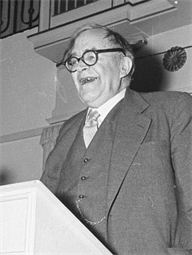 Karl Barth1886–1968 · The Epistle to the Romans
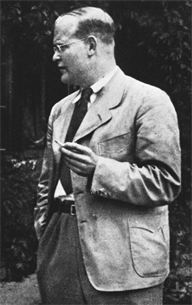 Dietrich Bonhoeffer1906–1945 · The Cost of Discipleship
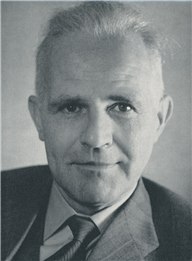 Emil Brunner1889–1966 · Truth as Encounter
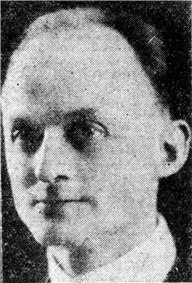 Reinhold Niebuhr1892–1971 · The Nature and Destiny of Man
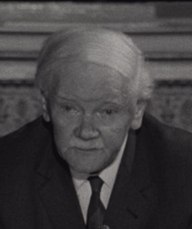 Friedrich Gogarten1887–1967 · Die religiöse Entscheidung
Where it leans
A whole worldview, about both. Positions are our estimates; philosophers argue about where many schools belong.
Most unusual position
84%On spirit or matter, it leans further toward spirit than 84% of the 135 schools on the map.
Middle of all schools on the map: 39 · This school: 10 (0 = Spirit, 100 = Matter)
Most typical position
Subjective or objectiveOn subjective or objective, it sits close to the middle of the schools on the map.
Middle of all schools on the map: 79 · This school: 75 (0 = Subjective, 100 = Objective)
Where it comes from
What came before Neo-orthodoxy and led into it, and what grew out of it. Only links that historians agree on.
Came before it
- 19th-century liberal theology, which it reacted against
- Kierkegaard's writings (19th century)
- The Manifesto of the Ninety-Three German intellectuals backing the war (August 1914)
- Barth's visit to Christoph Blumhardt (1915)
Grew out of it
- The Barmen Declaration and the Confessing Church (1934)
- Reinhold Niebuhr's Christian realism in the United States (1930s)
- Liberation theology (1970s and 1980s) and post-liberal theology (1990s and 2000s)
- The label fades as new Protestant theologies arise (1960s)
One thing to practise
A real practice from Neo-orthodoxy, to try this week. Described in our words.
Life together (Christ-centred common life)
Live and pray with a small community whose bond is Christ, not shared taste or a common project. Confess your sins to one another. Meet each day with thanks for forgiveness, daily bread and fellowship, instead of accusing the others.
From: Dietrich Bonhoeffer, at the underground Finkenwalde seminary of the Confessing Church (1935 to 1937); his book Life Together (1939)
Its strongest argument
The best case Neo-orthodoxy makes against people who see the world very differently, in two sentences. People whose furthest school this is see it on their result.
In 1914 the leading liberal theologians signed a manifesto backing their nation's war, which showed that a God built out of culture and religious feeling simply mirrors human wishes. If God is truly God, he is infinitely different from us and must speak for himself, and the evil in us is too deep for education or progress to cure. So to someone who trusts in human progress: that trust is exactly the idol that the war exposed.
The argument in our own words, not a quotation.
Where it sits
On the maps
Each map puts two scales side by side. Each small square is a school, at its exact spot; its name shows where there is room. For the others, point at the square, or tap it once on a phone. The first, Reality & truth, puts spirit or matter across and subjective or objective up and down. Click a school, or tap it again, to open it.
Swipe sideways to see the whole chart.
Thinkers in this school
Pictured thinkers nearest this spot on the map
Neighbours on the map
The six schools closest to this one.
- FideismThe deepest truths, above all about God, are known by faith, not by reason or evidence.
- TheosophyA 19th-century movement claiming hidden wisdom behind all religions, with karma, reincarnation and spiritual evolution.
- HasidismJewish mystical revival that teaches God is present in everything, so even simple acts done with joy can bind you to God.
- IdealismReality is basically mental; the material world depends on minds.
- GnosticismThe material world is a flawed prison, and salvation comes through secret spiritual knowledge of where the soul really belongs.
- SufismIslamic mysticism: the heart can come to know God directly through love, remembrance and the dissolving of the self.
And you, where do you stand?
Take the quiz and see your match with Neo-orthodoxy and the other 134 schools.
Take the quiz