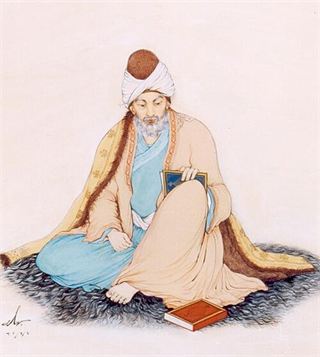
In one sentence
Through love, remembrance and letting my self dissolve, my heart can come to know God directly.
How someone from Sufism might sum up what they believe. Our summary, not a quotation.
Key thinkers
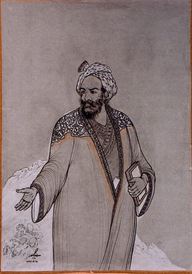 Saadi Shirazi1210–c. 1291 · Gulistan
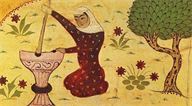 Rabia of Basrac. 716–801 · Tazkirat al-Awliya (by Farid al-Din Attar)
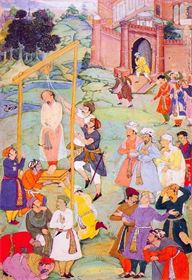 Mansur al-Hallajc. 858–922 · Kitab al-Tawasin
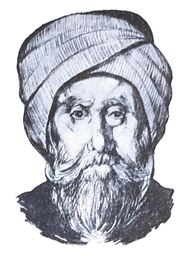 Al-Ghazalic. 1058–1111 · The Incoherence of the Philosophers
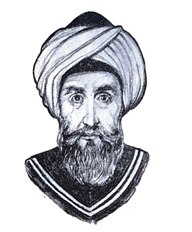 Ibn Arabi1165–1240 · Fusus al-Hikam
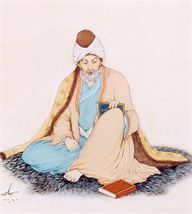 Rumi1207–1273 · Masnavi
 Ahmed el-Tayebborn 1946 · Document on Human Fraternity for World Peace and Living Together (by Ahmed el-Tayeb and Pope Francis)
 Fethullah Gülen1941–2024 · The Essentials of the Islamic Faith
Where it leans
A whole worldview, about both. Positions are our estimates; philosophers argue about where many schools belong.
Most unusual position
93%On spirit or matter, it leans further toward spirit than 93% of the 135 schools on the map.
Middle of all schools on the map: 39 · This school: 8 (0 = Spirit, 100 = Matter)
Most typical position
Subjective or objectiveOn subjective or objective, it sits close to the middle of the schools on the map.
Middle of all schools on the map: 79 · This school: 79 (0 = Subjective, 100 = Objective)
Where it comes from
What came before Sufism and led into it, and what grew out of it. Only links that historians agree on.
Came before it
- Muhammad (7th century)
- Hasan al-Basri (7th to 8th century)
- Rabia of Basra (8th century)
- Mansur al-Hallaj (10th century)
Grew out of it
- Al-Ghazali (11th to 12th century)
- Ibn Arabi (12th to 13th century)
- Rumi (13th century)
- Mulla Sadra (17th century)
One thing to practise
A real practice from Sufism, to try this week. Described in our words.
Dhikr, remembrance of God
Sit quietly and repeat a short phrase of remembrance, such as the name Allah or la ilaha illa Allah (there is no god but God), slowly and with attention on the heart, for about ten minutes. When your mind drifts, return to the phrase.
From: Taught in all Sufi orders; described in al-Qushayri's Epistle on Sufism (11th century) and al-Ghazali's Revival of the Religious Sciences
Its strongest argument
The best case Sufism makes against people who see the world very differently, in two sentences. People whose furthest school this is see it on their result.
Al-Ghazali studied the philosophers and theologians first, then found that what they could only describe in words, the Sufis knew by taste, through a changed life. So if you trust only argument and measurement, you may be judging a kind of knowledge you have never tested in the only way it can be tested.
The argument in our own words, not a quotation.
Where it sits
On the maps
Each map puts two scales side by side. Each small square is a school, at its exact spot; its name shows where there is room. For the others, point at the square, or tap it once on a phone. The first, Reality & truth, puts spirit or matter across and subjective or objective up and down. Click a school, or tap it again, to open it.
Swipe sideways to see the whole chart.
Thinkers in this school
Pictured thinkers nearest this spot on the map
Neighbours on the map
The six schools closest to this one.
- KabbalahJewish mysticism that reads hidden meanings in scripture and maps how the infinite God shows itself through creation.
- Advaita VedantaA Hindu school holding that your deepest self and ultimate reality, Brahman, are one, and separateness is an illusion.
- MysticismThe deepest truth is reached by direct inner experience of the divine or the One, beyond words and reasoning.
- TheosophyA 19th-century movement claiming hidden wisdom behind all religions, with karma, reincarnation and spiritual evolution.
- GnosticismThe material world is a flawed prison, and salvation comes through secret spiritual knowledge of where the soul really belongs.
- HasidismJewish mystical revival that teaches God is present in everything, so even simple acts done with joy can bind you to God.
And you, where do you stand?
Take the quiz and see your match with Sufism and the other 134 schools.
Take the quiz