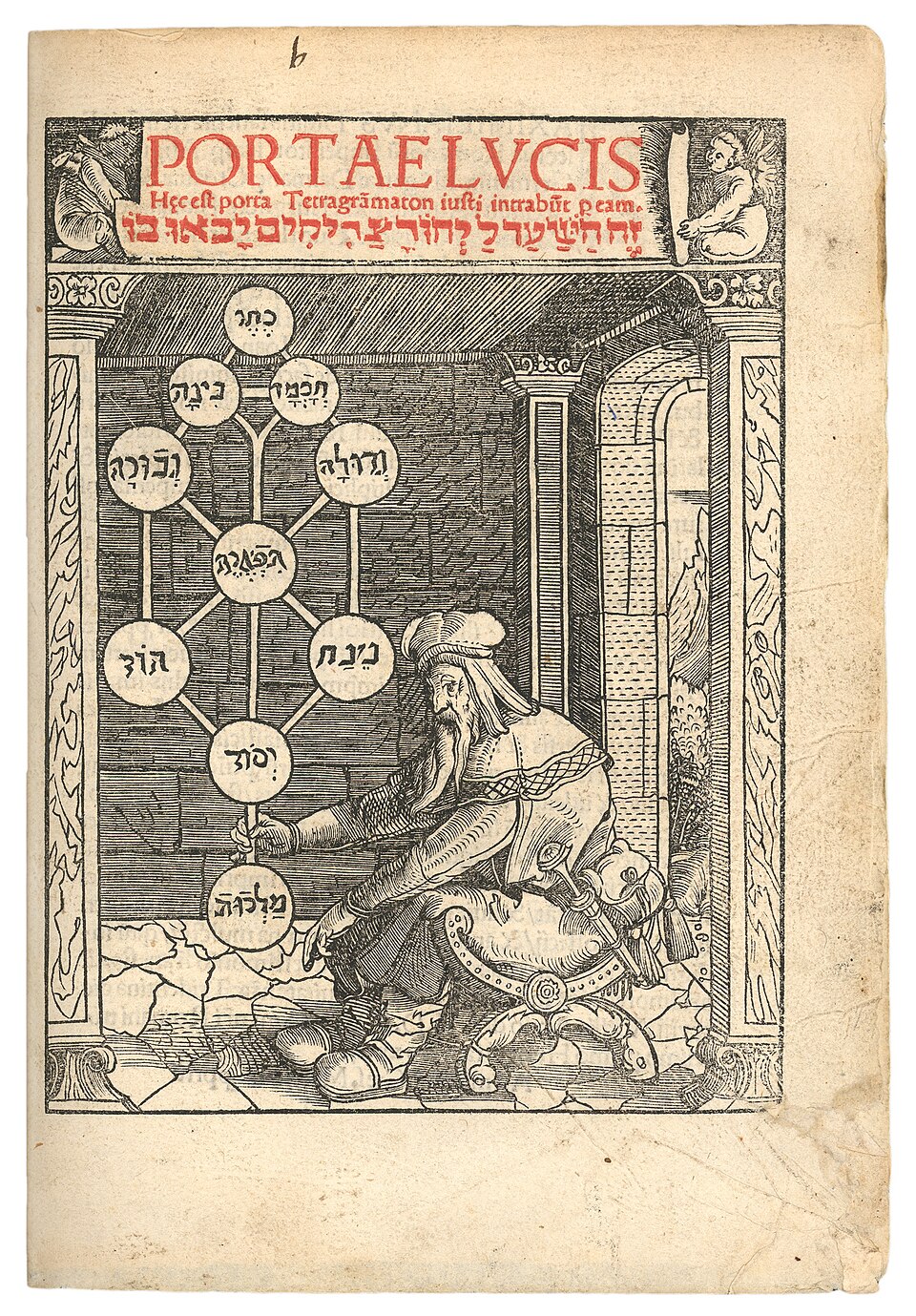
In one sentence
I read hidden meanings in scripture and map how the infinite God shows itself through creation.
How someone from Kabbalah might sum up what they believe. Our summary, not a quotation.
Key thinkers
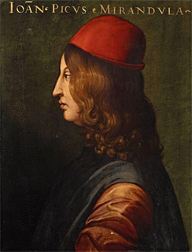 Giovanni Pico della Mirandola1463–1494 · Oration on the Dignity of Man
 Isaac Luriac. 1534–1572 · Etz Chaim (by Hayyim Vital, from the teachings of Isaac Luria)
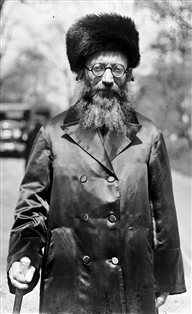 Abraham Isaac Kook1865–1935 · Orot (Lights)
Where it leans
A whole worldview, about both. Positions are our estimates; philosophers argue about where many schools belong.
Most unusual position
91%On spirit or matter, it leans further toward spirit than 91% of the 135 schools on the map.
Middle of all schools on the map: 39 · This school: 8 (0 = Spirit, 100 = Matter)
Most typical position
Subjective or objectiveOn subjective or objective, it sits close to the middle of the schools on the map.
Middle of all schools on the map: 79 · This school: 80 (0 = Subjective, 100 = Objective)
Where it comes from
What came before Kabbalah and led into it, and what grew out of it. Only links that historians agree on.
Came before it
- The Hebrew Bible and the Talmud
- Merkavah mysticism (early first millennium)
- Sefer Yetzirah, the Book of Creation (roughly 2nd to 6th century)
- The Bahir (12th century, Provence)
Grew out of it
- Giovanni Pico della Mirandola (15th century), Christian Kabbalah
- Isaac Luria (16th century)
- Baal Shem Tov (18th century), Hasidism
One thing to practise
A real practice from Kabbalah, to try this week. Described in our words.
A week of the sefirot
For seven days, take one of the seven lower sefirot (the qualities through which God shows itself) each day: loving-kindness, restraint, harmony, endurance, humility, bonding and receptiveness. Notice where that quality shows in you that day, and where it is missing or out of balance.
From: The Kabbalistic way of Counting the Omer, developed by Isaac Luria's circle in 16th-century Safed, which links each of the 49 days between Passover and Shavuot to the sefirot
Its strongest argument
The best case Kabbalah makes against people who see the world very differently, in two sentences. People whose furthest school this is see it on their result.
The Zohar argues that if scripture were only its surface stories, people could write better stories themselves, so the stories must be a garment over a deeper meaning. In the same way, if you take the world only at its surface, as matter and events, you may be reading the garment and missing what it clothes.
The argument in our own words, not a quotation.
Where it sits
On the maps
Each map puts two scales side by side. Each small square is a school, at its exact spot; its name shows where there is room. For the others, point at the square, or tap it once on a phone. The first, Reality & truth, puts spirit or matter across and subjective or objective up and down. Click a school, or tap it again, to open it.
Swipe sideways to see the whole chart.
Thinkers in this school
Pictured thinkers nearest this spot on the map
Neighbours on the map
The six schools closest to this one.
- SufismIslamic mysticism: the heart can come to know God directly through love, remembrance and the dissolving of the self.
- MysticismThe deepest truth is reached by direct inner experience of the divine or the One, beyond words and reasoning.
- Advaita VedantaA Hindu school holding that your deepest self and ultimate reality, Brahman, are one, and separateness is an illusion.
- TheosophyA 19th-century movement claiming hidden wisdom behind all religions, with karma, reincarnation and spiritual evolution.
- GnosticismThe material world is a flawed prison, and salvation comes through secret spiritual knowledge of where the soul really belongs.
- VitalismLiving things are driven by a life force that physics and chemistry alone cannot explain.
And you, where do you stand?
Take the quiz and see your match with Kabbalah and the other 134 schools.
Take the quiz