In one sentence
I see God in everything, so I serve him with joy in every act, even the smallest.
How someone from Hasidism might sum up what they believe. Our summary, not a quotation.
Key thinkers
 Baal Shem Tovc. 1700–1760 · Shivchei ha-Besht (by Dov Ber ben Shmuel)
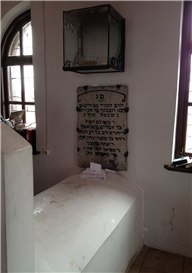 Dov Ber of Mezeritchc. 1704–1772 · Maggid Devarav L'Yaakov (recorded by his students)
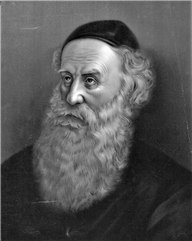 Shneur Zalman of Liadi1745–1812 · Tanya
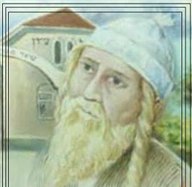 Nachman of Breslov1772–1810 · Likutey Moharan
Where it leans
A whole worldview, about both. Positions are our estimates; philosophers argue about where many schools belong.
Most unusual position
94%On spirit or matter, it leans further toward spirit than 94% of the 135 schools on the map.
Middle of all schools on the map: 39 · This school: 7 (0 = Spirit, 100 = Matter)
Most typical position
Subjective or objectiveOn subjective or objective, it sits close to the middle of the schools on the map.
Middle of all schools on the map: 79 · This school: 75 (0 = Subjective, 100 = Objective)
Where it comes from
What came before Hasidism and led into it, and what grew out of it. Only links that historians agree on.
Came before it
- The medieval German Hasidim (about 1150 to 1250)
- Lurianic Kabbalah (from 1570)
- The Sabbatean movement, after Sabbatai Zevi declared himself Messiah (1665)
- Kabbalah spreading among ordinary Jews (late 17th century)
Grew out of it
- Chabad's "Rational Hasidism", Shneur Zalman's Tanya (1796)
- Breslov Hasidism, Nachman of Breslov's Likutei Moharan (1808)
- The dynasties of rebbes (by the 1860s)
- Neo-Hasidism: Martin Buber, Abraham Joshua Heschel (20th century)
One thing to practise
A real practice from Hasidism, to try this week. Described in our words.
Joyful, wholehearted prayer
Pray with your whole heart and full fire, not as a dull routine. Moving your body, shouting and singing are allowed if they help you rise. The aim is to cling to God and leave sadness behind, because sadness blocks that bond.
From: The Baal Shem Tov (18th century), who put joy and fervent prayer in place of fasting and self-punishment
Its strongest argument
The best case Hasidism makes against people who see the world very differently, in two sentences. People whose furthest school this is see it on their result.
If you look only with your physical eyes, you see a world of separate, solid things. But matter could not exist for a moment without the spiritual source that keeps it in being, so the deepest fact is that God is in everything. That is why eating, working and singing can bring you close to God, and why sadness and dry rule-keeping push you away from him.
The argument in our own words, not a quotation.
Where it sits
On the maps
Each map puts two scales side by side. Each small square is a school, at its exact spot; its name shows where there is room. For the others, point at the square, or tap it once on a phone. The first, Reality & truth, puts spirit or matter across and subjective or objective up and down. Click a school, or tap it again, to open it.
Swipe sideways to see the whole chart.
Thinkers in this school
Pictured thinkers nearest this spot on the map
Neighbours on the map
The six schools closest to this one.
- IdealismReality is basically mental; the material world depends on minds.
- Berkeleyan IdealismOnly minds and their ideas exist; to be is to be perceived, and God keeps the world in being by perceiving it.
- Neo-orthodoxyProtestant movement after the First World War that rejected liberal theology, teaching that God is wholly other and known only where he reveals himself in Christ.
- TheosophyA 19th-century movement claiming hidden wisdom behind all religions, with karma, reincarnation and spiritual evolution.
- SufismIslamic mysticism: the heart can come to know God directly through love, remembrance and the dissolving of the self.
- FideismThe deepest truths, above all about God, are known by faith, not by reason or evidence.
And you, where do you stand?
Take the quiz and see your match with Hasidism and the other 134 schools.
Take the quiz