In one sentence
I feel that kindness is right before I can argue for it, and that shared feeling is my moral guide.
How someone from Moral Sense Theory might sum up what they believe. Our summary, not a quotation.
Key thinkers
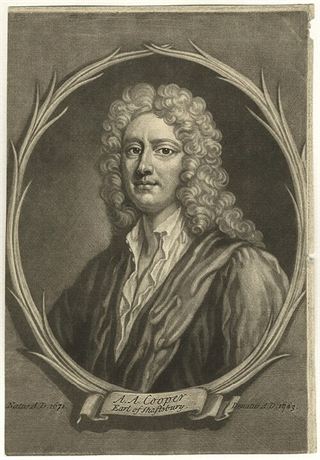
 Anthony Ashley-Cooper, 3rd Earl of Shaftesbury1671–1713 · Characteristicks of Men, Manners, Opinions, Times
 Francis Hutcheson1694–1746 · An Inquiry into the Original of Our Ideas of Beauty and Virtue
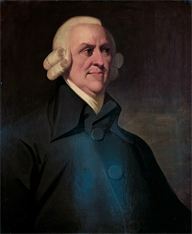 Adam Smith1723–1790 · The Theory of Moral Sentiments
 Sophie de Grouchy1764–1822 · Letters on Sympathy
 Michael Sloteactive since 1970 · Moral Sentimentalism
Where it leans
About right, wrong and how to live. Positions are our estimates; philosophers argue about where many schools belong.
Most unusual position
67%On values (subjective or objective), it leans further toward subjective than 67% of the 135 schools on the map.
Middle of all schools on the map: 79 · This school: 70 (0 = subjective, 100 = objective)
Most typical position
Spirit or matterOn spirit or matter, it sits close to the middle of the schools on the map.
Middle of all schools on the map: 39 · This school: 35 (0 = Spirit, 100 = Matter)
Where it comes from
What came before Moral Sense Theory and led into it, and what grew out of it. Only links that historians agree on.
Came before it
- Whichcote's 'good nature' set against Hobbes's egoism (1698)
- Samuel Clarke's rationalist ethics (1706)
- The self-interest theories of Hobbes and Mandeville
- Stoicism
Grew out of it
- Hume's mature moral sense theory (1751)
- Utilitarianism's phrase 'the greatest happiness for the greatest number', first used by Hutcheson
- Michael Slote's new sentimentalism (2010)
- Jonathan Haidt's moral psychology (2012)
One thing to practise
A real practice from Moral Sense Theory, to try this week. Described in our words.
Consulting the impartial spectator
Before you act, or when you look back on what you did, imagine a well-informed onlooker who has no stake in the matter. Ask whether that onlooker could share your feelings about it. Then calm or adjust your feelings until such a spectator could go along with them.
From: Adam Smith, The Theory of Moral Sentiments (1759), Glasgow
Its strongest argument
The best case Moral Sense Theory makes against people who see the world very differently, in two sentences. People whose furthest school this is see it on their result.
We do not approve of a kind act because it pays us or because logic proves it, yet we approve of it at once, and even small children react to good and bad acts. Reason alone cannot move anyone to act the way moral conviction does. So there must be a moral sense, and to the rationalist it says: your moral arguments only work because you already feel what they try to prove.
The argument in our own words, not a quotation.
Where it sits
On the maps
Each map puts two scales side by side. Each small square is a school, at its exact spot; its name shows where there is room. For the others, point at the square, or tap it once on a phone. The first, Reality & truth, puts spirit or matter across and subjective or objective up and down. Click a school, or tap it again, to open it.
Swipe sideways to see the whole chart.
Thinkers in this school
Pictured thinkers nearest this spot on the map
Neighbours on the map
The six schools closest to this one.
- Zen BuddhismAwakening comes through meditation and direct seeing, not through scriptures or concepts.
- PantheismGod and the universe are the same thing; the divine is everywhere in nature.
- African CommunitarianismAfrican ethics of community, called ubuntu in the south: a person becomes fully a person through other people, so character, sharing and the common good come first.
- BuddhismSuffering comes from craving and from clinging to a fixed self; letting go through the Eightfold Path brings freedom.
- LongtermismPeople who will live in the future count as much as people alive today, and there may be vastly more of them, so protecting the long-term future comes first.
- Philosophy of DialogueJewish-German thinkers, above all Buber and Rosenzweig, who hold that a person becomes a self only by truly meeting another, the 'I and Thou', and through that meeting, God.
And you, where do you stand?
Take the quiz and see your match with Moral Sense Theory and the other 134 schools.
Take the quiz