
In one sentence
In my view, some form of mind or experience is a basic feature of everything, not only of brains.
How someone from Panpsychism might sum up what they believe. Our summary, not a quotation.
Key thinkers
 Margaret Cavendish1623–1673 · Observations upon Experimental Philosophy
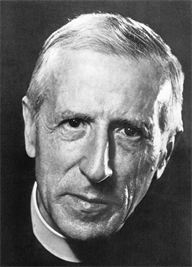 Pierre Teilhard de Chardin1881–1955 · The Phenomenon of Man
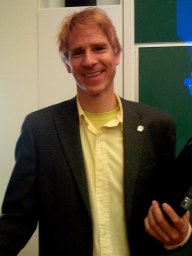 Christof Kochborn 1956 · The Feeling of Life Itself: Why Consciousness Is Widespread but Can't Be Computed
Where it leans
About what is real and how we know. Positions are our estimates; philosophers argue about where many schools belong.
Most unusual position
59%On spirit or matter, it leans further toward matter than 59% of the 135 schools on the map.
Middle of all schools on the map: 39 · This school: 52 (0 = Spirit, 100 = Matter)
Most typical position
FactsOn facts (subjective or objective), it sits close to the middle of the schools on the map.
Middle of all schools on the map: 79 · This school: 78 (0 = subjective, 100 = objective)
Where it comes from
What came before Panpsychism and led into it, and what grew out of it. Only links that historians agree on.
Came before it
- Thales of Miletus (6th century BC)
- Baruch Spinoza (17th century)
- Gottfried Wilhelm Leibniz (17th century)
- Gustav Fechner (19th century)
Grew out of it
- Bertrand Russell and Arthur Eddington (1920s)
- Alfred North Whitehead (1929)
- David Chalmers (21st century)
One thing to practise
A real practice from Panpsychism, to try this week. Described in our words.
Eddington's two tables
Look at the table in front of you: solid, coloured, familiar. Then picture the physicist's table, mostly empty space with electric charges moving through it, described only in numbers. Ask what the numbers leave out.
From: Arthur Eddington, The Nature of the Physical World (1928), introduction
Its strongest argument
The best case Panpsychism makes against people who see the world very differently, in two sentences. People whose furthest school this is see it on their result.
Physics tells us only what matter does, how it moves and pushes, never what it is in itself, and the one place we know matter from the inside, our own brains, it turns out to involve felt experience. So if you think matter is utterly without experience, you are claiming to know something about its inner nature that physics never told you.
The argument in our own words, not a quotation.
Where it sits
On the maps
Each map puts two scales side by side. Each small square is a school, at its exact spot; its name shows where there is room. For the others, point at the square, or tap it once on a phone. The first, Reality & truth, puts spirit or matter across and subjective or objective up and down. Click a school, or tap it again, to open it.
Swipe sideways to see the whole chart.
Thinkers in this school
Pictured thinkers nearest this spot on the map
Neighbours on the map
The six schools closest to this one.
- FallibilismNo belief is ever beyond doubt, yet tested beliefs are still far better than untested ones.
- Classical liberalismLocke's and Smith's liberalism: each person owns their life, labour and property, so government should be limited, laws equal, and markets and speech free.
- EmpiricismAll knowledge comes from experience; the mind starts as a blank slate.
- StoicismLive by reason in line with nature: master what is in your control, accept the rest, and virtue is the only true good.
- CypherpunkPrivacy and freedom will not be granted by governments or companies, so people must protect them themselves by building and using strong cryptography.
- Process PhilosophyReality is made of events and change rather than fixed things; becoming comes before being.
And you, where do you stand?
Take the quiz and see your match with Panpsychism and the other 134 schools.
Take the quiz