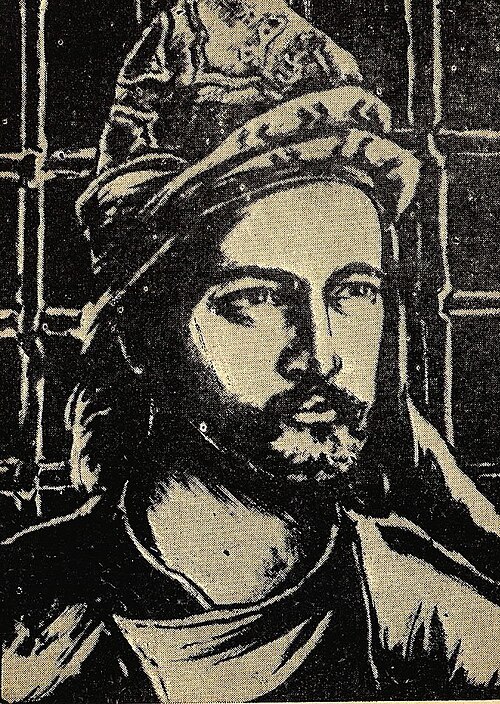
In one sentence
I see reality as light pouring down from the Light of Lights, and I know my own self directly, as a light.
How someone from Illuminationism might sum up what they believe. Our summary, not a quotation.
Key thinkers
 Shihab al-Din Suhrawardi1154–1191 · The Philosophy of Illumination (Hikmat al-Ishraq)
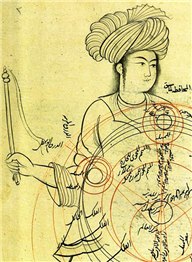 Qutb al-Din al-Shirazi1236–1311 · Commentary on The Philosophy of Illumination
Where it leans
A whole worldview, about both. Positions are our estimates; philosophers argue about where many schools belong.
Most unusual position
97%On spirit or matter, it leans further toward spirit than 97% of the 135 schools on the map.
Middle of all schools on the map: 39 · This school: 5 (0 = Spirit, 100 = Matter)
Most typical position
Subjective or objectiveOn subjective or objective, it sits close to the middle of the schools on the map.
Middle of all schools on the map: 79 · This school: 85 (0 = Subjective, 100 = Objective)
Where it comes from
What came before Illuminationism and led into it, and what grew out of it. Only links that historians agree on.
Came before it
- To 1037: Avicenna's philosophy, in which Suhrawardi was trained
- To 1111: al-Ghazali's mystical theory of light
- To about 1165: Abu al-Barakat al-Baghdadi, a critic of Avicenna
Grew out of it
- c. 1286: Shahrazuri's commentary
- 1295: Qutb al-Din Shirazi's commentary
- 17th century: Mulla Sadra's glosses and his own school
- Mid-20th century: Henry Corbin edits and publishes Suhrawardi in the West
One thing to practise
A real practice from Illuminationism, to try this week. Described in our words.
Spiritual exercises and retreat before seeking inner knowledge
Set aside time alone, away from noise and distraction, and practise simple self-denial (less food, less talk, fewer comforts). In that quiet, attend to your own direct awareness of yourself instead of thinking about things. Suhrawardi taught that this preparation comes before any 'seeing' of the lights.
From: Suhrawardi, 12th century, who lived as a wandering ascetic and wrote that his philosophy came from his retreats
Its strongest argument
The best case Illuminationism makes against people who see the world very differently, in two sentences. People whose furthest school this is see it on their result.
You know you are in pain without any concept or proof standing between you and the pain; the same goes for knowing that you exist. That direct, inner knowing is surer than any argument, and it shows that the self is a light aware of itself. So the way to the deepest truths is to clear that inner light by spiritual practice, not only by logic; to a strict logician it says: your own self-awareness already proves there is knowledge before argument.
The argument in our own words, not a quotation.
Where it sits
On the maps
Each map puts two scales side by side. Each small square is a school, at its exact spot; its name shows where there is room. For the others, point at the square, or tap it once on a phone. The first, Reality & truth, puts spirit or matter across and subjective or objective up and down. Click a school, or tap it again, to open it.
Swipe sideways to see the whole chart.
Thinkers in this school
Pictured thinkers nearest this spot on the map
Neighbours on the map
The six schools closest to this one.
- Absolute IdealismAll of reality is one single, all-embracing mind or spirit, the Absolute; after Hegel, thinkers like Bradley and Royce made it the leading view in Britain and America.
- NeoplatonismEverything flows out of one perfect source, the One, and the soul can climb back towards it through thought and contemplation.
- PersonalismThe person, with dignity and freedom, is the centre of reality and the measure of morality and politics.
- MysticismThe deepest truth is reached by direct inner experience of the divine or the One, beyond words and reasoning.
- PerennialismAll the great religions point to one shared, timeless truth beneath their different surfaces.
- KabbalahJewish mysticism that reads hidden meanings in scripture and maps how the infinite God shows itself through creation.
And you, where do you stand?
Take the quiz and see your match with Illuminationism and the other 134 schools.
Take the quiz