In one sentence
The person, free and full of dignity, is the centre of reality and the measure of morality and politics.
How someone from Personalism might sum up what they believe. Our summary, not a quotation.
Key thinkers
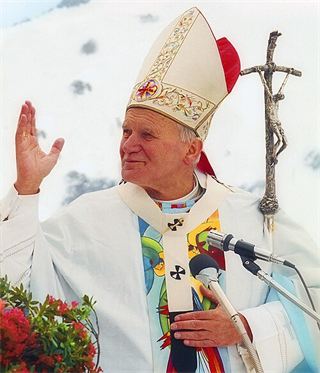
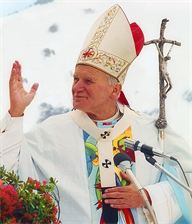 Pope John Paul II1920–2005 · Fides et ratio
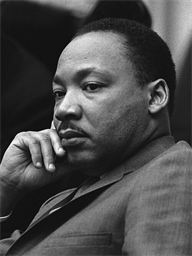 Martin Luther King Jr.1929–1968 · Strength to Love
Where it leans
A whole worldview, about both. Positions are our estimates; philosophers argue about where many schools belong.
Most unusual position
84%On spirit or matter, it leans further toward spirit than 84% of the 135 schools on the map.
Middle of all schools on the map: 39 · This school: 10 (0 = Spirit, 100 = Matter)
Most typical position
Subjective or objectiveOn subjective or objective, it sits close to the middle of the schools on the map.
Middle of all schools on the map: 79 · This school: 85 (0 = Subjective, 100 = Objective)
Where it comes from
What came before Personalism and led into it, and what grew out of it. Only links that historians agree on.
Came before it
- Boethius (6th century), who gave the classic definition of a person
- Immanuel Kant (18th century)
- Søren Kierkegaard (19th century)
- Borden Parker Bowne and Boston personalism (1908)
Grew out of it
- Emmanuel Mounier (1930s)
- Jacques Maritain (20th century)
- Martin Luther King Jr. (1950s), who studied it at Boston University
- Pope John Paul II (20th century)
One thing to practise
A real practice from Personalism, to try this week. Described in our words.
Meet one person as You
Today, with one person, a cashier, a colleague or a relative, set aside what they can do for you and give them your full attention as a whole person. Buber called this saying You to someone instead of It.
From: Martin Buber, I and Thou (1923)
Its strongest argument
The best case Personalism makes against people who see the world very differently, in two sentences. People whose furthest school this is see it on their result.
You can describe a person as an organism, a consumer or a set of data points, yet you would object at once if anyone treated you as only that, because you know yourself as a someone, not a something. So if your view of the world sees persons as only parts of a system, you have left yourself out.
The argument in our own words, not a quotation.
Where it sits
On the maps
Each map puts two scales side by side. Each small square is a school, at its exact spot; its name shows where there is room. For the others, point at the square, or tap it once on a phone. The first, Reality & truth, puts spirit or matter across and subjective or objective up and down. Click a school, or tap it again, to open it.
Swipe sideways to see the whole chart.
Thinkers in this school
Pictured thinkers nearest this spot on the map
Neighbours on the map
The six schools closest to this one.
- NeoplatonismEverything flows out of one perfect source, the One, and the soul can climb back towards it through thought and contemplation.
- MysticismThe deepest truth is reached by direct inner experience of the divine or the One, beyond words and reasoning.
- ScholasticismThe medieval method of settling questions by careful logic, quoting authorities and answering every objection in turn.
- IlluminationismSuhrawardi's philosophy of light: all reality is degrees of light flowing from God, the Light of Lights, and the self knows truth by direct inner presence.
- Absolute IdealismAll of reality is one single, all-embracing mind or spirit, the Absolute; after Hegel, thinkers like Bradley and Royce made it the leading view in Britain and America.
- AugustinianismAugustine's view that people are fallen and need God's grace, and that true happiness is found only in God.
And you, where do you stand?
Take the quiz and see your match with Personalism and the other 134 schools.
Take the quiz