In one sentence
I see one existence, stronger or weaker in everything, all moving toward God, and I seek it with both reason and the heart.
How someone from Transcendent Philosophy might sum up what they believe. Our summary, not a quotation.
Key thinkers
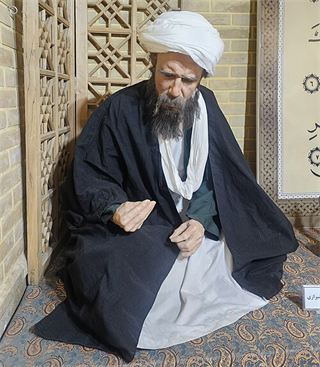
 Mulla Sadrac. 1571–1640 · The Transcendent Philosophy of the Four Journeys of the Intellect
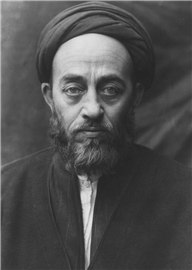 Muhammad Husayn Tabataba'i1903–1981 · The Principles of Philosophy and the Method of Realism (notes by Morteza Motahhari)
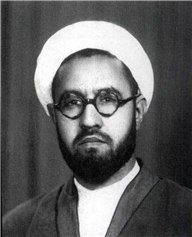 Morteza Motahhari1919–1979 · Notes to The Principles of Philosophy and the Method of Realism
Where it leans
A whole worldview, about both. Positions are our estimates; philosophers argue about where many schools belong.
Most unusual position
74%On spirit or matter, it leans further toward spirit than 74% of the 135 schools on the map.
Middle of all schools on the map: 39 · This school: 15 (0 = Spirit, 100 = Matter)
Most typical position
Subjective or objectiveOn subjective or objective, it is nearest to the other schools on the map, though still not in the middle.
Middle of all schools on the map: 79 · This school: 90 (0 = Subjective, 100 = Objective)
Where it comes from
What came before Transcendent Philosophy and led into it, and what grew out of it. Only links that historians agree on.
Came before it
- To 1037: Avicenna
- To 1191: Suhrawardi's Illuminationism
- To 1240: Ibn Arabi's Sufi metaphysics
- 1588-1629: the School of Isfahan under Shah Abbas I
Grew out of it
- From the 18th century: cornerstone of the Indian madrasa curriculum
- 19th century: dominant in Iran's seminaries; Hadi Sabzavari (d. 1873)
- 1979: thinkers of the Iranian Revolution (Khomeini, Motahhari) influenced by Sadra
- To 1981 and today: Tabataba'i's glosses; his school dominates the Shi'i seminary in Iran
One thing to practise
A real practice from Transcendent Philosophy, to try this week. Described in our words.
Philosophy as a spiritual exercise
Study and reason through hard questions, and alongside that study, work on yourself: purify your habits, control your appetites, and live more simply. Treat both as one path, so that each time you understand more you also try to live better. For serious work, take time in retreat.
From: Mulla Sadra, 17th century, about five years in retreat at Kahak near Qom while writing the Four Journeys
Its strongest argument
The best case Transcendent Philosophy makes against people who see the world very differently, in two sentences. People whose furthest school this is see it on their result.
Things look like separate fixed objects, but what they all share, and what makes each real, is existence itself, which is one reality present in stronger and weaker degrees. That is why the soul can start as something bodily and grow into something spiritual: it is one existence becoming more intense. To a pure logician it says that argument alone will not make you wise, and to a pure mystic that feeling alone will not either; you need both.
The argument in our own words, not a quotation.
Where it sits
On the maps
Each map puts two scales side by side. Each small square is a school, at its exact spot; its name shows where there is room. For the others, point at the square, or tap it once on a phone. The first, Reality & truth, puts spirit or matter across and subjective or objective up and down. Click a school, or tap it again, to open it.
Swipe sideways to see the whole chart.
Thinkers in this school
Pictured thinkers nearest this spot on the map
Neighbours on the map
The six schools closest to this one.
- Mu'tazilaEarly Islamic rationalist theology: God is one and perfectly just, so humans freely create their own acts, and reason can tell good from evil.
- Reformed EpistemologyChristian philosophers' view that belief in God can be rational, even knowledge, without arguments or evidence, just like belief in other minds or in the past.
- ScholasticismThe medieval method of settling questions by careful logic, quoting authorities and answering every objection in turn.
- ThomismThomas Aquinas' joining of Aristotle and Christianity: reason and faith agree, and morality follows from human nature as God made it.
- HegelianismReality is spirit coming to know itself through history, as each idea meets its opposite and both are lifted into something higher.
- AugustinianismAugustine's view that people are fallen and need God's grace, and that true happiness is found only in God.
And you, where do you stand?
Take the quiz and see your match with Transcendent Philosophy and the other 134 schools.
Take the quiz