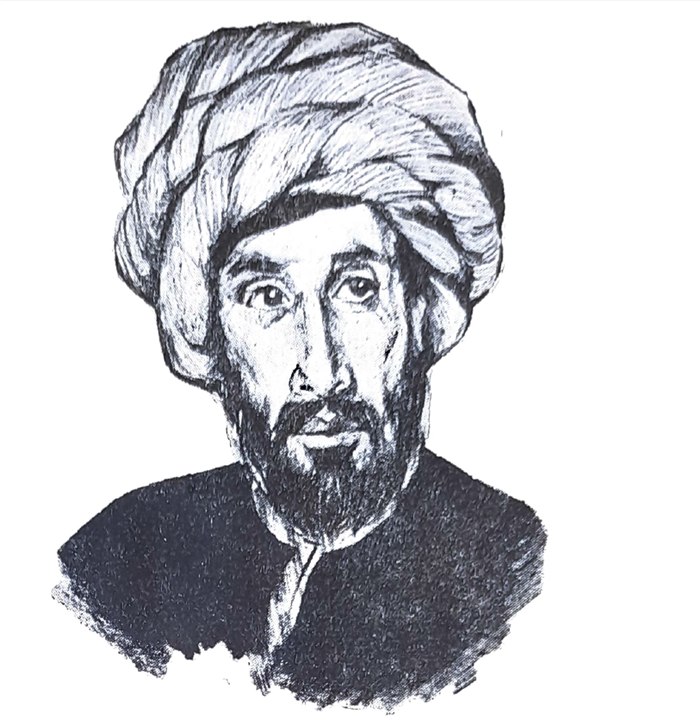
In one sentence
I believe God is just, so I am free and answerable for my acts, and my reason can tell good from evil.
How someone from Mu'tazila might sum up what they believe. Our summary, not a quotation.
Key thinkers
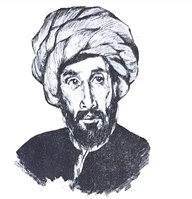 Wasil ibn Ata699–748 · al-Milal wa al-Nihal (The Book of Sects and Creeds) · by al-Shahrastani
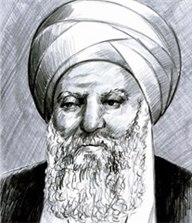 Qadi Abd al-Jabbar935–1025 · al-Mughni (Book of the Plenitude)
Where it leans
A whole worldview, about both. Positions are our estimates; philosophers argue about where many schools belong.
Most unusual position
74%On spirit or matter, it leans further toward spirit than 74% of the 135 schools on the map.
Middle of all schools on the map: 39 · This school: 15 (0 = Spirit, 100 = Matter)
Most typical position
Subjective or objectiveOn subjective or objective, it is nearest to the other schools on the map, though still not in the middle.
Middle of all schools on the map: 79 · This school: 90 (0 = Subjective, 100 = Objective)
Where it comes from
What came before Mu'tazila and led into it, and what grew out of it. Only links that historians agree on.
Came before it
- 694-699: the Qadariyya and the first free-will text
- c. 642-728: Hasan al-Basri's study circle in Basra, which Wasil left
Grew out of it
- 833-851: the Mihna, Mu'tazili doctrine as state policy under al-Ma'mun
- 10th century: al-Ash'ari (874-936) breaks away and founds the rival Ash'ari school
- 934-1062 and to 1144: revival under the Buyids (Abd al-Jabbar), then al-Zamakhshari; taken up by Zaydi Shi'ism
- 1950s onward: lost texts rediscovered; Neo-Mu'tazilites
One thing to practise
A real practice from Mu'tazila, to try this week. Described in our words.
The first duty: reason your way to God (nazar)
Before taking anyone's word for it, sit down and reason for yourself: does the world need a maker, and what must that maker be like? Ask what such a maker would want from you. Only after you have reasoned it through, turn to scripture and read it together with your reasoning.
From: The Mu'tazila, Basra and Baghdad, 8th to 11th century; stated by Abd al-Jabbar (d. 1025)
Its strongest argument
The best case Mu'tazila makes against people who see the world very differently, in two sentences. People whose furthest school this is see it on their result.
If God made people do evil and then punished them for it, punishment would be meaningless and God would be unjust. God is just, so humans must really choose their own acts and carry the blame for them. And since good and evil are real, a person can see most of right and wrong by reasoning, even before any scripture arrives; to someone who waits for commands, it says your own mind is already a gift for seeing what is right.
The argument in our own words, not a quotation.
Where it sits
On the maps
Each map puts two scales side by side. Each small square is a school, at its exact spot; its name shows where there is room. For the others, point at the square, or tap it once on a phone. The first, Reality & truth, puts spirit or matter across and subjective or objective up and down. Click a school, or tap it again, to open it.
Swipe sideways to see the whole chart.
Thinkers in this school
Pictured thinkers nearest this spot on the map
Neighbours on the map
The six schools closest to this one.
- Transcendent PhilosophyMulla Sadra's school: existence itself is the one reality, in degrees; all things keep moving toward God, and philosophy joins reasoning, mystical insight and scripture.
- Reformed EpistemologyChristian philosophers' view that belief in God can be rational, even knowledge, without arguments or evidence, just like belief in other minds or in the past.
- ScholasticismThe medieval method of settling questions by careful logic, quoting authorities and answering every objection in turn.
- ThomismThomas Aquinas' joining of Aristotle and Christianity: reason and faith agree, and morality follows from human nature as God made it.
- HegelianismReality is spirit coming to know itself through history, as each idea meets its opposite and both are lifted into something higher.
- AugustinianismAugustine's view that people are fallen and need God's grace, and that true happiness is found only in God.
And you, where do you stand?
Take the quiz and see your match with Mu'tazila and the other 134 schools.
Take the quiz