
In one sentence
I use and write only software that leaves its users free to run, study, change and share it.
How someone from Free Software Movement might sum up what they believe. Our summary, not a quotation.
Key thinkers
 Richard Stallmanborn 1953 · The GNU Manifesto
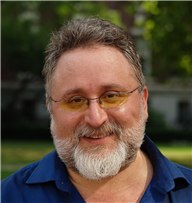 Eben Moglenborn 1959 · The dotCommunist Manifesto
Where it leans
About right, wrong and how to live. Positions are our estimates; philosophers argue about where many schools belong.
Most unusual position
81%On values (subjective or objective), it leans further toward objective than 81% of the 135 schools on the map.
Middle of all schools on the map: 79 · This school: 90 (0 = subjective, 100 = objective)
Most typical position
Spirit or matterOn spirit or matter, it sits close to the middle of the schools on the map.
Middle of all schools on the map: 39 · This school: 44 (0 = Spirit, 100 = Matter)
Where it comes from
What came before Free Software Movement and led into it, and what grew out of it. Only links that historians agree on.
Came before it
- Sharing software was normal (1950s to early 1970s)
- Stallman joins the MIT AI Lab hacker community (1971)
- The industry closes its code (1970s to early 1980s)
- Hacker culture fragments (late 1970s and early 1980s)
Grew out of it
- Free Software Foundation (1985)
- Linux under the GNU GPL (1991 to 1992)
- The open source split (1998)
- Creative Commons and free culture (no year on the page)
One thing to practise
A real practice from Free Software Movement, to try this week. Described in our words.
Refusing nonfree software
Do not install programs that deny you the freedom to run, study, change and share them, and choose free replacements instead. When you change a free program, pass your changes on so the whole community gains.
From: Richard Stallman and the free software movement (GNU, from 1983)
Its strongest argument
The best case Free Software Movement makes against people who see the world very differently, in two sentences. People whose furthest school this is see it on their result.
If a program's code is hidden and you may not change or share it, the developer controls you through the program. Sharing a useful program with a friend is plain decency, so a licence that forbids it asks you to let your neighbour down. So to someone who sees open code only as a practical bonus, it says the real question is right and wrong, not convenience.
The argument in our own words, not a quotation.
Where it sits
On the maps
Each map puts two scales side by side. Each small square is a school, at its exact spot; its name shows where there is room. For the others, point at the square, or tap it once on a phone. The first, Reality & truth, puts spirit or matter across and subjective or objective up and down. Click a school, or tap it again, to open it.
Swipe sideways to see the whole chart.
Thinkers in this school
Pictured thinkers nearest this spot on the map
Neighbours on the map
The six schools closest to this one.
- DeismGod created the universe and its laws, then let it run without stepping in; reason, not revelation, shows this.
- Common Sense RealismTrust the basic beliefs every sane person relies on, like the reality of the outside world and other minds.
- CypherpunkPrivacy and freedom will not be granted by governments or companies, so people must protect them themselves by building and using strong cryptography.
- KantianismKant's view that the mind shapes how we experience the world, and that morality means acting only on rules everyone could follow.
- MohismMozi's ancient Chinese school: care for everyone equally, judge actions by how much they benefit people, and take Heaven's will as the standard.
- ConfucianismA good life and a good society come from virtue, respect, ritual and duty within the family and the state.
And you, where do you stand?
Take the quiz and see your match with Free Software Movement and the other 134 schools.
Take the quiz