In one sentence
God made the universe and its laws, then let it run without stepping in, and I know this by reason, not revelation.
How someone from Deism might sum up what they believe. Our summary, not a quotation.
Key thinkers
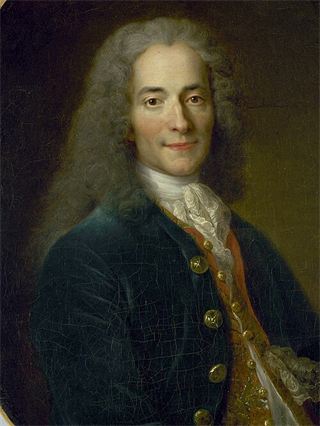
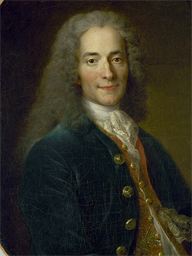 Voltaire1694–1778 · Candide
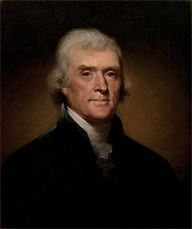 Thomas Jefferson1743–1826 · The Life and Morals of Jesus of Nazareth
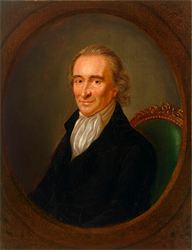 Thomas Paine1737–1809 · The Age of Reason
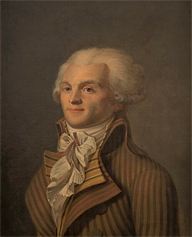 Maximilien Robespierre1758–1794 · On the Principles of Political Morality
Where it leans
About what is real and how we know. Positions are our estimates; philosophers argue about where many schools belong.
Most unusual position
51%On spirit or matter, it leans further toward matter than 51% of the 135 schools on the map.
Middle of all schools on the map: 39 · This school: 43 (0 = Spirit, 100 = Matter)
Most typical position
FactsOn facts (subjective or objective), it sits close to the middle of the schools on the map.
Middle of all schools on the map: 79 · This school: 83 (0 = subjective, 100 = objective)
Where it comes from
What came before Deism and led into it, and what grew out of it. Only links that historians agree on.
Came before it
- Lord Herbert of Cherbury (1624)
- Isaac Newton (1687)
- John Locke, The Reasonableness of Christianity (1695)
Grew out of it
- John Toland (1696)
- Voltaire (18th century)
- Thomas Paine, The Age of Reason (1794)
- Thomas Jefferson (18th to 19th century)
One thing to practise
A real practice from Deism, to try this week. Described in our words.
Make a Jefferson Bible
Take a sacred text you know and, with a pen or scissors, keep only what reason and conscience can stand behind on their own, setting aside the miracle stories. Read what moral teaching is left.
From: Thomas Jefferson, The Life and Morals of Jesus of Nazareth (finished around 1820)
Its strongest argument
The best case Deism makes against people who see the world very differently, in two sentences. People whose furthest school this is see it on their result.
Thomas Paine argued that a revelation is revelation only to the person who receives it; to everyone else it is hearsay, while the order of nature is open for anyone to read. So if your faith rests on what others say God told them, a deist asks why you trust their report over the world God actually made.
The argument in our own words, not a quotation.
Where it sits
On the maps
Each map puts two scales side by side. Each small square is a school, at its exact spot; its name shows where there is room. For the others, point at the square, or tap it once on a phone. The first, Reality & truth, puts spirit or matter across and subjective or objective up and down. Click a school, or tap it again, to open it.
Swipe sideways to see the whole chart.
Thinkers in this school
Pictured thinkers nearest this spot on the map
Neighbours on the map
The six schools closest to this one.
- Process PhilosophyReality is made of events and change rather than fixed things; becoming comes before being.
- CypherpunkPrivacy and freedom will not be granted by governments or companies, so people must protect them themselves by building and using strong cryptography.
- PantheismGod and the universe are the same thing; the divine is everywhere in nature.
- LongtermismPeople who will live in the future count as much as people alive today, and there may be vastly more of them, so protecting the long-term future comes first.
- MohismMozi's ancient Chinese school: care for everyone equally, judge actions by how much they benefit people, and take Heaven's will as the standard.
- Classical liberalismLocke's and Smith's liberalism: each person owns their life, labour and property, so government should be limited, laws equal, and markets and speech free.
And you, where do you stand?
Take the quiz and see your match with Deism and the other 134 schools.
Take the quiz