In one sentence
My moral feelings were shaped by evolution because they helped our ancestors survive together.
How someone from Evolutionary Ethics might sum up what they believe. Our summary, not a quotation.
Key thinkers
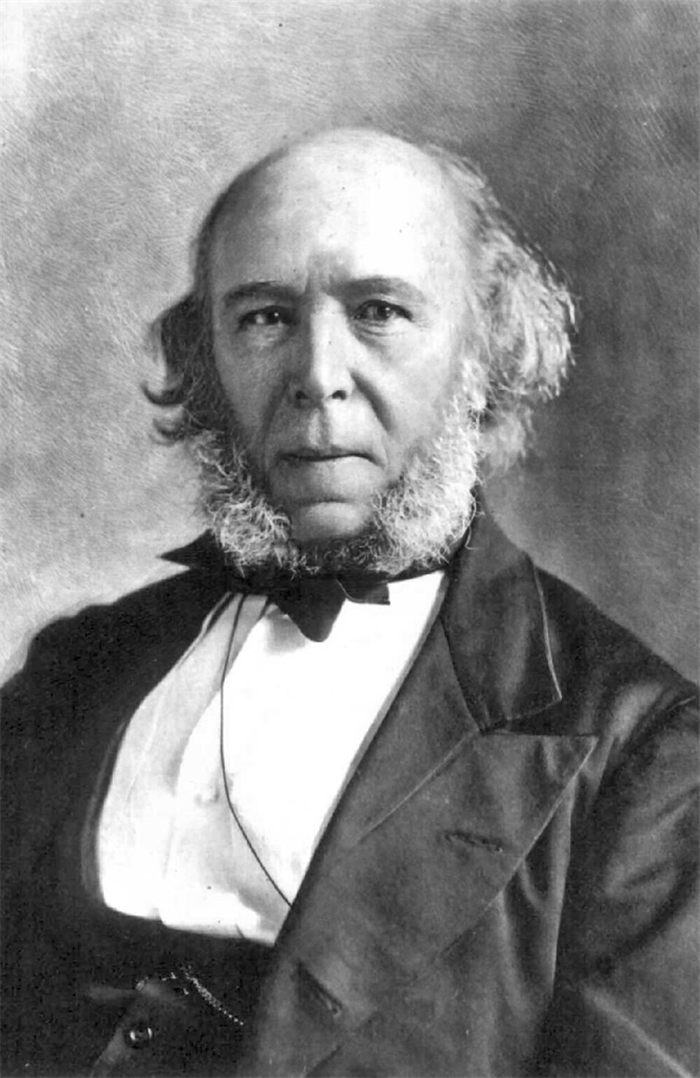
 Herbert Spencer1820–1903 · First Principles
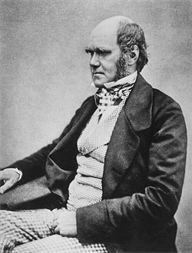 Charles Darwin1809–1882 · On the Origin of Species
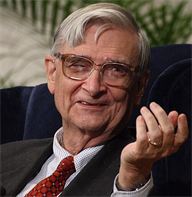 E. O. Wilson1929–2021 · Consilience: The Unity of Knowledge
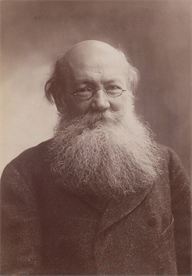 Peter Kropotkin1842–1921 · Mutual Aid: A Factor of Evolution
Where it leans
About right, wrong and how to live. Positions are our estimates; philosophers argue about where many schools belong.
Most unusual position
82%On spirit or matter, it leans further toward matter than 82% of the 135 schools on the map.
Middle of all schools on the map: 39 · This school: 83 (0 = Spirit, 100 = Matter)
Most typical position
ValuesOn values (subjective or objective), it is nearest to the other schools on the map, though still not in the middle.
Middle of all schools on the map: 79 · This school: 58 (0 = subjective, 100 = objective)
Where it comes from
What came before Evolutionary Ethics and led into it, and what grew out of it. Only links that historians agree on.
Came before it
- David Hume and Adam Smith, moral sentiments (18th century)
- Charles Darwin, The Descent of Man (1871)
- Herbert Spencer, The Data of Ethics (1879)
Grew out of it
- Peter Kropotkin, Mutual Aid (1902)
- E. O. Wilson, Sociobiology (1975)
- Frans de Waal, Primates and Philosophers (2006)
One thing to practise
A real practice from Evolutionary Ethics, to try this week. Described in our words.
Widen the circle
Notice who is inside your circle of concern: family, friends, your own town or country. This week do one kind act for someone outside it, since Darwin thought reason should push our inborn sympathy out to all people and then to animals.
From: Charles Darwin, The Descent of Man (1871), chapter 4; later Peter Singer, The Expanding Circle (1981)
Its strongest argument
The best case Evolutionary Ethics makes against people who see the world very differently, in two sentences. People whose furthest school this is see it on their result.
Rules about fairness, caring for children and returning favours turn up in human societies everywhere, and chimpanzees show the beginnings of them, just as you would expect if natural selection shaped our moral feelings. So if you think morality came from above or from pure reason, you must explain why it fits survival so closely.
The argument in our own words, not a quotation.
Where it sits
On the maps
Each map puts two scales side by side. Each small square is a school, at its exact spot; its name shows where there is room. For the others, point at the square, or tap it once on a phone. The first, Reality & truth, puts spirit or matter across and subjective or objective up and down. Click a school, or tap it again, to open it.
Swipe sideways to see the whole chart.
Thinkers in this school
Pictured thinkers nearest this spot on the map
Neighbours on the map
The six schools closest to this one.
- TranshumanismUse science and technology to overcome ageing, death and the limits of the human body and mind, so that humans can grow into something more than human.
- FunctionalismA mental state is defined by what it does, its role between input and behaviour, not by what it is made of.
- Scientific RealismOur best scientific theories are roughly true, and the unseen things they describe, like electrons, really exist.
- Rationalist CommunityTrain yourself to think clearly with evidence and probability, catch your own biases, change your mind, and take big risks like dangerous AI seriously.
- MarxismThe economy shapes ideas and politics; history is class struggle, ending in a classless society.
- EpicureanismPleasure, understood as calm and freedom from pain and fear, is the goal of life; death is nothing to fear.
And you, where do you stand?
Take the quiz and see your match with Evolutionary Ethics and the other 134 schools.
Take the quiz