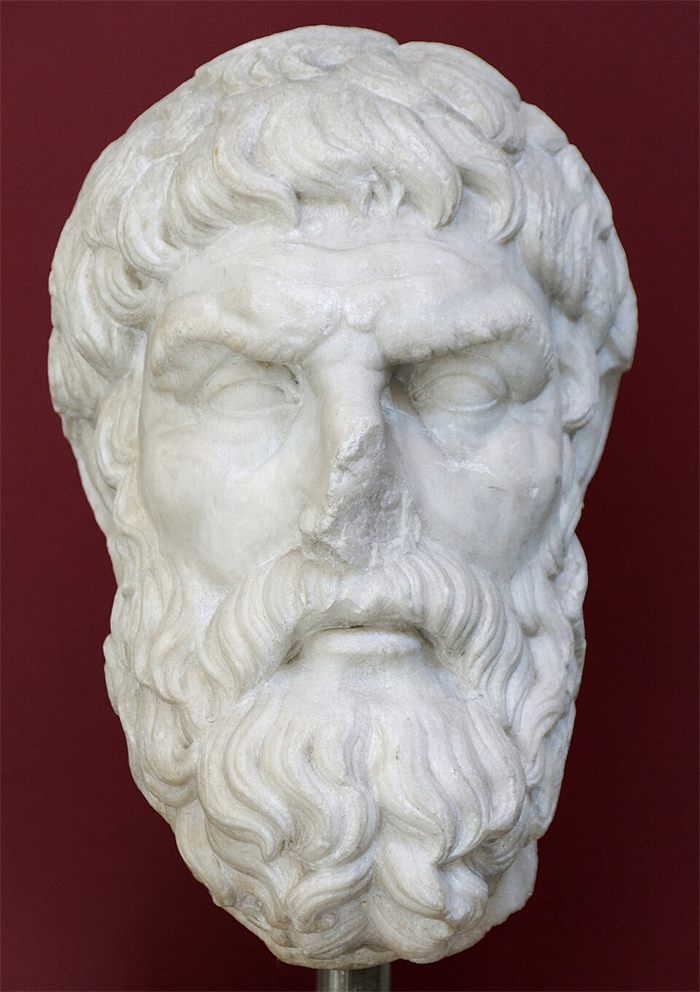
In one sentence
What I aim for is pleasure, meaning calm and freedom from pain and fear, and I see nothing to fear in death.
How someone from Epicureanism might sum up what they believe. Our summary, not a quotation.
Key thinkers
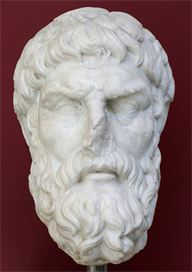 Epicurus341–270 BC · Letter to Menoeceus
 Lucretiusc. 99–55 BC · De rerum natura (On the Nature of Things)
Where it leans
A whole worldview, about both. Positions are our estimates; philosophers argue about where many schools belong.
Most unusual position
94%On spirit or matter, it leans further toward matter than 94% of the 135 schools on the map.
Middle of all schools on the map: 39 · This school: 95 (0 = Spirit, 100 = Matter)
Most typical position
Subjective or objectiveOn subjective or objective, it sits close to the middle of the schools on the map.
Middle of all schools on the map: 79 · This school: 75 (0 = Subjective, 100 = Objective)
Where it comes from
What came before Epicureanism and led into it, and what grew out of it. Only links that historians agree on.
Came before it
- Democritus and Atomism (5th century BC)
- Aristippus and the Cyrenaics (4th century BC)
- Nausiphanes, Epicurus' teacher (4th century BC)
Grew out of it
- Philodemus of Gadara (1st century BC)
- Lucretius, On the Nature of Things (1st century BC)
- Pierre Gassendi (17th century)
- Thomas Jefferson, who called himself an Epicurean (1819)
One thing to practise
A real practice from Epicureanism, to try this week. Described in our words.
A simple meal
Once this week, eat a plain meal of bread, water and something simple, and notice how satisfying it is when you are hungry. Epicurus taught that getting used to plain food frees you from fearing the loss of luxuries.
From: Epicurus, Letter to Menoeceus; Seneca, Letters to Lucilius 18, on Epicurus' days of plain fare
Its strongest argument
The best case Epicureanism makes against people who see the world very differently, in two sentences. People whose furthest school this is see it on their result.
Most human misery comes not from real pain but from fear of death, fear of the gods and wants that can never be filled, while the simple pleasures that truly content us are cheap and close at hand. So if you are wearing yourself out chasing more, Epicurus would ask what you are actually afraid of going without.
The argument in our own words, not a quotation.
Where it sits
On the maps
Each map puts two scales side by side. Each small square is a school, at its exact spot; its name shows where there is room. For the others, point at the square, or tap it once on a phone. The first, Reality & truth, puts spirit or matter across and subjective or objective up and down. Click a school, or tap it again, to open it.
Swipe sideways to see the whole chart.
Thinkers in this school
Pictured thinkers nearest this spot on the map
Neighbours on the map
The six schools closest to this one.
- HobbesianismPeople are driven by self-preservation, so without a strong sovereign life would be a war of all against all.
- Effective AccelerationismSpeed up technology, above all AI, as fast as possible, because growth and intelligence follow the universe's own push and will solve humanity's problems.
- ScientismScience is the only reliable route to knowledge; any claim it cannot test is not real knowledge.
- MechanismThe universe works like a machine, explained completely by matter in motion following fixed laws.
- Dialectical MaterialismMarx and Engels' view that matter comes first and that history moves through the conflict of opposing forces.
- MarxismThe economy shapes ideas and politics; history is class struggle, ending in a classless society.
And you, where do you stand?
Take the quiz and see your match with Epicureanism and the other 134 schools.
Take the quiz