In one sentence
I see the universe as a machine, explained completely by matter in motion following fixed laws.
How someone from Mechanism might sum up what they believe. Our summary, not a quotation.
Key thinkers
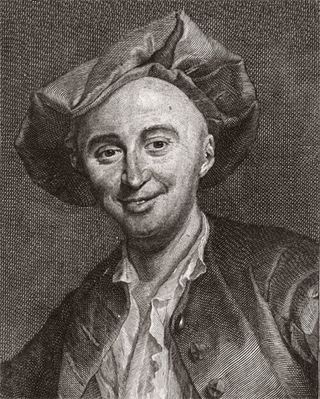
 Julien Offray de La Mettrie1709–1751 · Man a Machine
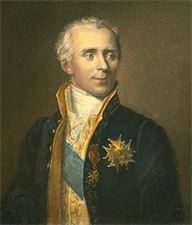 Pierre-Simon Laplace1749–1827 · A Philosophical Essay on Probabilities
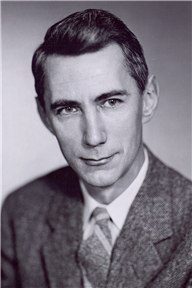 Claude Shannon1916–2001 · A Mathematical Theory of Communication
Where it leans
About what is real and how we know. Positions are our estimates; philosophers argue about where many schools belong.
Most unusual position
93%On spirit or matter, it leans further toward matter than 93% of the 135 schools on the map.
Middle of all schools on the map: 39 · This school: 94 (0 = Spirit, 100 = Matter)
Most typical position
FactsOn facts (subjective or objective), it sits close to the middle of the schools on the map.
Middle of all schools on the map: 79 · This school: 83 (0 = subjective, 100 = objective)
Where it comes from
What came before Mechanism and led into it, and what grew out of it. Only links that historians agree on.
Came before it
- Democritus (5th century BC)
- Lucretius (1st century BC)
- Galileo Galilei (early 17th century)
- René Descartes (17th century)
Grew out of it
- Robert Boyle (17th century)
- Isaac Newton (1687)
- Julien Offray de La Mettrie, Man a Machine (1747)
- Pierre-Simon Laplace (1814)
One thing to practise
A real practice from Mechanism, to try this week. Described in our words.
Laplace's demon
Imagine a mind that knew the position and motion of every particle in the universe at this moment, and every law of nature. Ask whether anything about tomorrow, including what you will do, could surprise it.
From: Pierre-Simon Laplace, A Philosophical Essay on Probabilities (1814)
Its strongest argument
The best case Mechanism makes against people who see the world very differently, in two sentences. People whose furthest school this is see it on their result.
When Harvey showed the heart is a pump driving blood round a closed circuit, and Newton showed one set of laws moves both apples and planets, explanations by hidden purposes gave way to parts pushing parts. So if you think some part of nature needs more than matter in motion, mechanists ask why a method that keeps working should stop there.
The argument in our own words, not a quotation.
Where it sits
On the maps
Each map puts two scales side by side. Each small square is a school, at its exact spot; its name shows where there is room. For the others, point at the square, or tap it once on a phone. The first, Reality & truth, puts spirit or matter across and subjective or objective up and down. Click a school, or tap it again, to open it.
Swipe sideways to see the whole chart.
Thinkers in this school
Pictured thinkers nearest this spot on the map
Neighbours on the map
The six schools closest to this one.
- ScientismScience is the only reliable route to knowledge; any claim it cannot test is not real knowledge.
- MarxismThe economy shapes ideas and politics; history is class struggle, ending in a classless society.
- Dialectical MaterialismMarx and Engels' view that matter comes first and that history moves through the conflict of opposing forces.
- HobbesianismPeople are driven by self-preservation, so without a strong sovereign life would be a war of all against all.
- NaturalismNature is all there is, and everything, including mind and morality, can be explained by natural causes.
- BehaviorismPsychology should study what people do, not hidden inner states; the mind shows itself in behaviour.
And you, where do you stand?
Take the quiz and see your match with Mechanism and the other 134 schools.
Take the quiz