
In one sentence
Everything, as I see it, is made of tiny particles that cannot be split, moving in empty space.
How someone from Atomism might sum up what they believe. Our summary, not a quotation.
Key thinkers
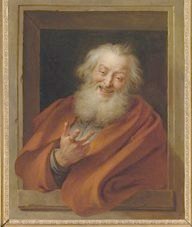 Democritusc. 460–370 BC · Lives and Opinions of Eminent Philosophers (by Diogenes Laërtius)
 Pierre Gassendi1592–1655 · Syntagma philosophicum
Where it leans
About what is real and how we know. Positions are our estimates; philosophers argue about where many schools belong.
Most unusual position
94%On spirit or matter, it leans further toward matter than 94% of the 135 schools on the map.
Middle of all schools on the map: 39 · This school: 95 (0 = Spirit, 100 = Matter)
Most typical position
FactsOn facts (subjective or objective), it is nearest to the other schools on the map, though still not in the middle.
Middle of all schools on the map: 79 · This school: 63 (0 = subjective, 100 = objective)
Where it comes from
What came before Atomism and led into it, and what grew out of it. Only links that historians agree on.
Came before it
- Parmenides (early 5th century BC)
- Democritus and his teacher Leucippus (5th century BC)
Grew out of it
- Epicurus and Epicureanism (about 300 BC)
- Lucretius, On the Nature of Things (1st century BC)
- Pierre Gassendi (17th century)
- John Dalton's atomic theory (1808)
One thing to practise
A real practice from Atomism, to try this week. Described in our words.
Watch the dust in a sunbeam
Darken a room, let in one beam of sunlight, and watch the specks of dust dart and collide in it. Lucretius used this sight to help readers picture the unseen particles moving beneath everything.
From: Lucretius, On the Nature of Things, book 2
Its strongest argument
The best case Atomism makes against people who see the world very differently, in two sentences. People whose furthest school this is see it on their result.
A ring on a finger thins over the years and stone steps wear down under feet, though no one sees a single piece leave, so matter must be made of particles too small to see, as chemistry later confirmed. So if you explain the world by hidden purposes, the atomist asks you to look at the parts first.
The argument in our own words, not a quotation.
Where it sits
On the maps
Each map puts two scales side by side. Each small square is a school, at its exact spot; its name shows where there is room. For the others, point at the square, or tap it once on a phone. The first, Reality & truth, puts spirit or matter across and subjective or objective up and down. Click a school, or tap it again, to open it.
Swipe sideways to see the whole chart.
Thinkers in this school
Pictured thinkers nearest this spot on the map
Neighbours on the map
The six schools closest to this one.
- EpicureanismPleasure, understood as calm and freedom from pain and fear, is the goal of life; death is nothing to fear.
- CharvakaAn ancient Indian materialism: only what can be perceived is real, there is no afterlife, so enjoy this life.
- Logical PositivismA statement means something only if it can be checked by experience or is true by definition, so all metaphysics is meaningless.
- HobbesianismPeople are driven by self-preservation, so without a strong sovereign life would be a war of all against all.
- ExpressivismMoral statements express our attitudes and commitments rather than describe facts, yet can still be argued about.
- Effective AccelerationismSpeed up technology, above all AI, as fast as possible, because growth and intelligence follow the universe's own push and will solve humanity's problems.
And you, where do you stand?
Take the quiz and see your match with Atomism and the other 134 schools.
Take the quiz