The two camps
How far we depend on experience to know the world: rationalists held that some of our knowledge or concepts are inborn, available independently of experience, and empiricists rejected that. The Stanford Encyclopedia of Philosophy now calls the two camps an artificial, simplifying split, first drawn by Kant; Hobbes fits neither, nor, it says, does Berkeley, whom Wikipedia’s page on empiricism counts among the empiricists, so the two sources disagree about him; Reid, whom it counts an empiricist, was also Hume’s earliest and fiercest critic.
In our words.
A. The Rationalists
Placed at the average of these 4 people. Their school on this site: Rationalism.
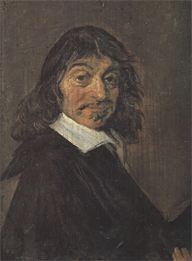 René Descartes1596–1650
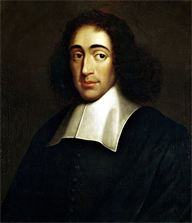 Baruch Spinoza1632–1677
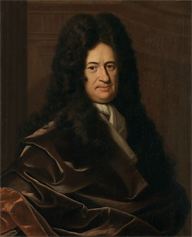 Gottfried Wilhelm Leibniz1646–1716
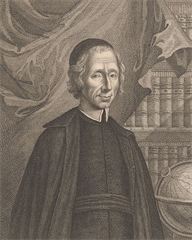 Nicolas Malebranche1638–1715
B. The Empiricists
Placed at the average of these 6 people. Their school on this site: Empiricism.
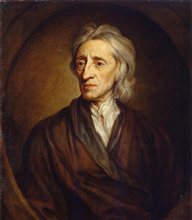 John Locke1632–1704
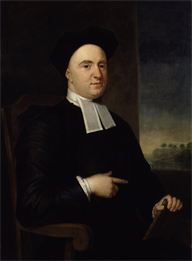 George Berkeley1685–1753
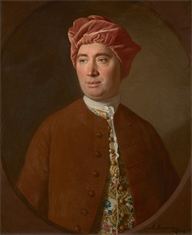 David Hume1711–1776
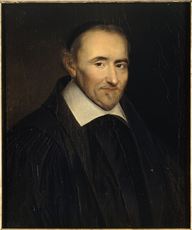 Pierre Gassendi1592–1655
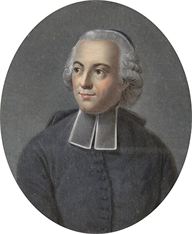 Étienne Bonnot de Condillac1714–1780
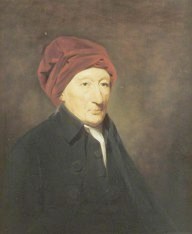 Thomas Reid1710–1796
Where they part ways
Each scale both camps have a position on, the biggest gap first.
The RationalistsThe Empiricists
The big letters are each camp's average; the small dots are its members (filled: The Rationalists, open: The Empiricists). A camp whose members are far apart on a scale is marked split.
Your side
Take the quiz to see which camp you would have joined.
Sources
Where each camp comes from: the exact words on each page.
Thus, Descartes, Spinoza, and Leibniz are the Continental Rationalists in opposition to Locke, Hume, and Reid, who are the British Empiricists
plato.stanford.eduboth George Berkeley in Ireland and David Hume in Scotland, all became leading exponents of empiricism
wikipedia.orgthe extent to which we are dependent upon experience in our effort to gain knowledge of the external world
plato.stanford.eduTo be a rationalist is to adopt at least one of them: either the Innate Knowledge Thesis
plato.stanford.eduhold that some foundational knowledge and concepts are available to us
plato.stanford.eduempiricists reject the Innate Knowledge and Innate Concept Theses
plato.stanford.edumistakenly seen as applying a reason-centered epistemology to a common metaphysical agenda
plato.stanford.eduartificial, simplifying distinction
plato.stanford.eduThis distinction, initially applied by Kant
plato.stanford.eduThere is no clear way of grouping Hobbes with either camp
plato.stanford.eduwas a French Oratorian Catholic priest and rationalist philosopher
wikipedia.orgof moderated skepticism and empiricism
wikipedia.orgHe clashed with his contemporary Descartes on the possibility of certain knowledge
wikipedia.orgHis polemic, which is inspired throughout by Locke, is directed against the innate ideas of the Cartesians, Malebranche’s faculty-psychology, Leibniz’s monadism and pre-established harmony
wikipedia.orgEmpiricists such as Locke and Reid also accept that we possess natural capacities through which experience enables us to acquire knowledge
plato.stanford.eduA contemporary of David Hume, Reid was also ‘Hume’s earliest and fiercest critic’
wikipedia.orgThere is no clear way of grouping Hobbes with either camp, let alone Elizabeth of Bohemia, Anne Conway, George Berkeley
plato.stanford.edu
And you, where do you stand?
Take the quiz and see which side of Rationalists or Empiricists you are on.
Take the quiz