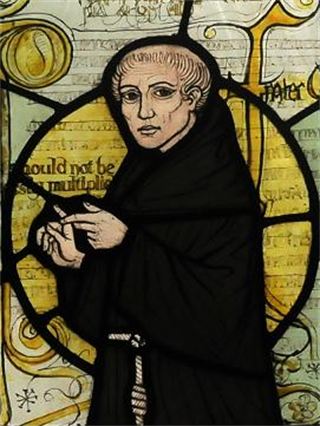
In one sentence
What makes something right is that God commands it, and what makes it wrong is that God forbids it.
How someone from Divine Command Theory might sum up what they believe. Our summary, not a quotation.
Key thinkers
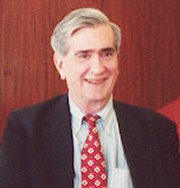 Philip L. Quinn1940–2004 · Divine Commands and Moral Requirements
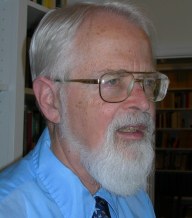 Robert Merrihew Adams1937–2024 · Finite and Infinite Goods
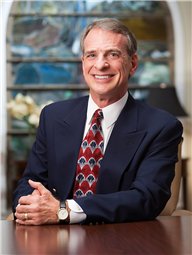 William Lane Craigborn 1949 · Reasonable Faith
Where it leans
About right, wrong and how to live. Positions are our estimates; philosophers argue about where many schools belong.
Most unusual position
80%On spirit or matter, it leans further toward spirit than 80% of the 135 schools on the map.
Middle of all schools on the map: 39 · This school: 13 (0 = Spirit, 100 = Matter)
Most typical position
ValuesOn values (subjective or objective), it is nearest to the other schools on the map, though still not in the middle.
Middle of all schools on the map: 79 · This school: 93 (0 = subjective, 100 = objective)
Where it comes from
What came before Divine Command Theory and led into it, and what grew out of it. Only links that historians agree on.
Came before it
- Moses (the Ten Commandments)
- Al-Ash'ari (10th century)
- Duns Scotus (around 1300)
- William of Ockham (14th century)
Grew out of it
- Søren Kierkegaard (19th century)
- Philip L. Quinn (1978)
- Robert Merrihew Adams, modified divine command theory (1970s to 1990s)
One thing to practise
A real practice from Divine Command Theory, to try this week. Described in our words.
Love because you are told
Pick one person you find hard to like. This week, do one concrete kind act for them, not because you feel like it, but because love of the neighbour is commanded. Kierkegaard held that love as a duty is steadier than love that depends on feeling.
From: Søren Kierkegaard, Works of Love (1847)
Its strongest argument
The best case Divine Command Theory makes against people who see the world very differently, in two sentences. People whose furthest school this is see it on their result.
Without God, it is hard to say what makes a moral duty binding on everyone, rather than a preference, a custom or a feeling that evolution gave us. So if you hold that cruelty is truly wrong for all people at all times, you owe an account of where that authority comes from, and a commanding God is the oldest answer.
The argument in our own words, not a quotation.
Where it sits
On the maps
Each map puts two scales side by side. Each small square is a school, at its exact spot; its name shows where there is room. For the others, point at the square, or tap it once on a phone. The first, Reality & truth, puts spirit or matter across and subjective or objective up and down. Click a school, or tap it again, to open it.
Swipe sideways to see the whole chart.
Thinkers in this school
Pictured thinkers nearest this spot on the map
Neighbours on the map
The six schools closest to this one.
- FideismThe deepest truths, above all about God, are known by faith, not by reason or evidence.
- Mu'tazilaEarly Islamic rationalist theology: God is one and perfectly just, so humans freely create their own acts, and reason can tell good from evil.
- SikhismFaith founded by Guru Nanak: one formless Creator lives in everyone, and you reach God by remembering his name, working honestly, sharing and serving others as equals.
- Reformed EpistemologyChristian philosophers' view that belief in God can be rational, even knowledge, without arguments or evidence, just like belief in other minds or in the past.
- VitalismLiving things are driven by a life force that physics and chemistry alone cannot explain.
- PlatonismBehind the changing world are perfect, unchanging Forms like Justice and Beauty, and reason, not the senses, can know them.
And you, where do you stand?
Take the quiz and see your match with Divine Command Theory and the other 134 schools.
Take the quiz