In one sentence
I believe God creates every moment and every act, and I take right and wrong from what he commands, not from my own sense of benefit.
How someone from Ash'arism might sum up what they believe. Our summary, not a quotation.
Key thinkers
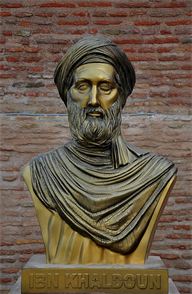 Ibn Khaldun1332–1406 · Muqaddimah
 Said Nursi1877–1960 · Risale-i Nur
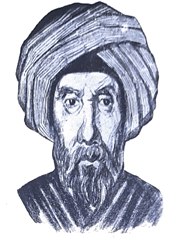 Abu al-Hasan al-Ash'ari874–936 · Maqalat al-Islamiyyin (The Teachings of the Muslims)
 Fakhr al-Din al-Razi1149–1210 · Mafatih al-Ghayb (The Great Commentary)
Where it leans
A whole worldview, about both. Positions are our estimates; philosophers argue about where many schools belong.
Most unusual position
84%On spirit or matter, it leans further toward spirit than 84% of the 135 schools on the map.
Middle of all schools on the map: 39 · This school: 10 (0 = Spirit, 100 = Matter)
Most typical position
Subjective or objectiveOn subjective or objective, it is nearest to the other schools on the map, though still not in the middle.
Middle of all schools on the map: 79 · This school: 90 (0 = Subjective, 100 = Objective)
Where it comes from
What came before Ash'arism and led into it, and what grew out of it. Only links that historians agree on.
Came before it
- 8th century: the Mu'tazila (Wasil ibn Ata, d. 748), the school al-Ash'ari studied in and left
- 833-851: the Mihna, when Mu'tazili doctrine was forced on scholars
Grew out of it
- 11th century: al-Juwayni (1028-85) at the Nizamiyya, and al-Ghazali (d. 1111)
- To 1210: Fakhr al-Din al-Razi
- To 1960: Said Nursi
- 2016: the Grozny conference defines Sunnis as Ash'aris and Maturidis
One thing to practise
A real practice from Ash'arism, to try this week. Described in our words.
Affirm without asking 'how' (tafwid)
When scripture says something about God that sounds human, such as his hand or his eyes, accept that it is true, but do not picture it and do not insist on a meaning. Leave the 'how' and the exact meaning to God. Use your reasoning to defend what you believe, not to reshape God in your own image.
From: Abu al-Hasan al-Ash'ari, Basra and Baghdad, early 10th century
Its strongest argument
The best case Ash'arism makes against people who see the world very differently, in two sentences. People whose furthest school this is see it on their result.
If God is truly all-powerful, nothing else can make anything happen: fire does not burn by its own power, it burns because God creates the burning each time. And when we feel sure that something is wrong, like lying, our judgment usually tracks what benefits us, not what is good in itself. So the safe guide to right and wrong is what God has revealed; to a rationalist it says that reason is a gift for defending the faith, not a court above God.
The argument in our own words, not a quotation.
Where it sits
On the maps
Each map puts two scales side by side. Each small square is a school, at its exact spot; its name shows where there is room. For the others, point at the square, or tap it once on a phone. The first, Reality & truth, puts spirit or matter across and subjective or objective up and down. Click a school, or tap it again, to open it.
Swipe sideways to see the whole chart.
Thinkers in this school
Pictured thinkers nearest this spot on the map
Neighbours on the map
The six schools closest to this one.
- AugustinianismAugustine's view that people are fallen and need God's grace, and that true happiness is found only in God.
- VishishtadvaitaA Hindu school holding that God is one, yet souls and the world are truly real as his body, and loving surrender to God brings freedom.
- ScholasticismThe medieval method of settling questions by careful logic, quoting authorities and answering every objection in turn.
- PerennialismAll the great religions point to one shared, timeless truth beneath their different surfaces.
- NeoplatonismEverything flows out of one perfect source, the One, and the soul can climb back towards it through thought and contemplation.
- PlatonismBehind the changing world are perfect, unchanging Forms like Justice and Beauty, and reason, not the senses, can know them.
And you, where do you stand?
Take the quiz and see your match with Ash'arism and the other 134 schools.
Take the quiz